
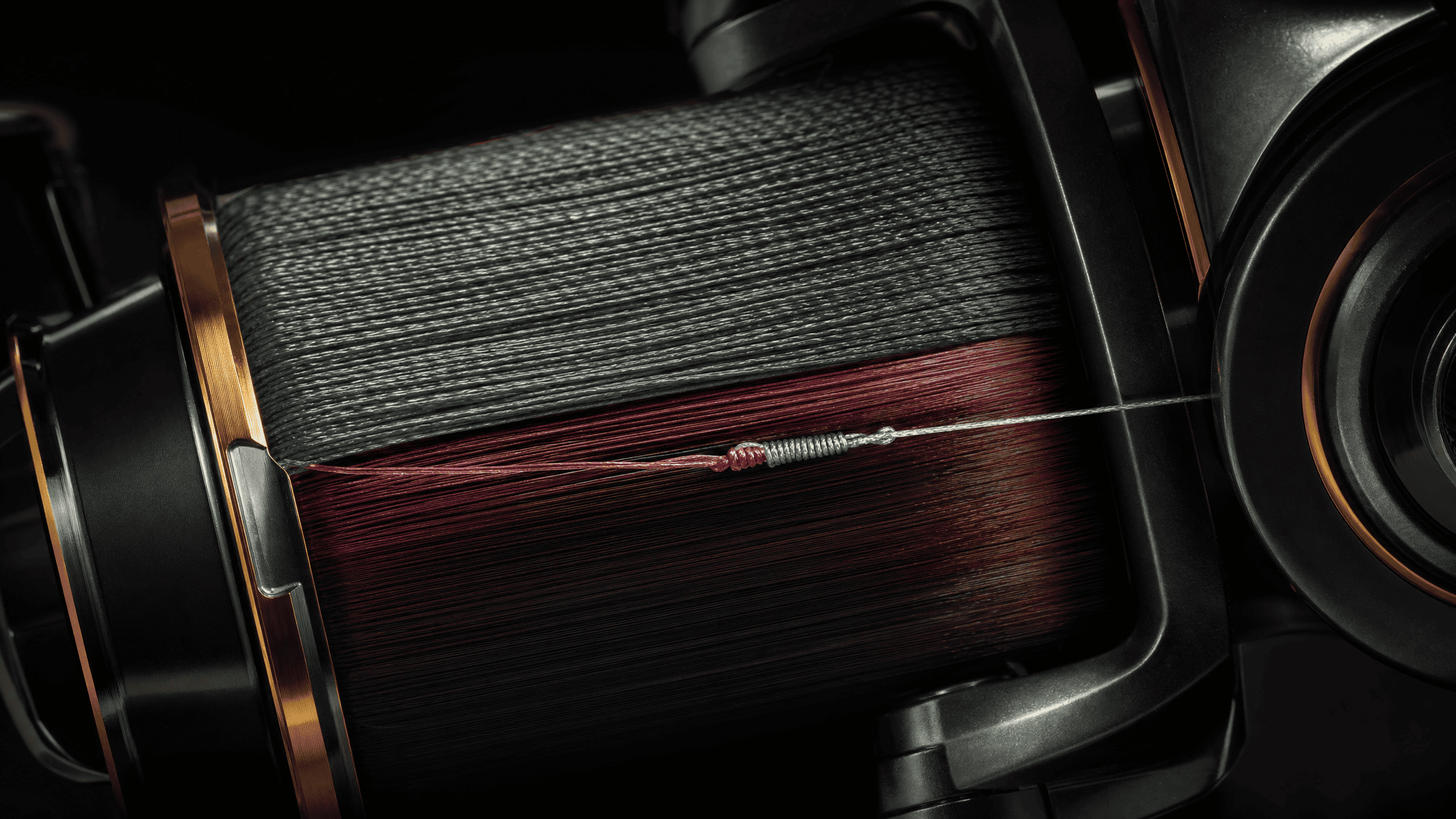
FISHING KNOTS · EVERY PROFILE, SORTED BY JOB
You don’t get to argue with a curly tag end.
Pick the knot for what you’re joining — line to hook, line to leader, a loop that has to stay a loop — then for the line in your hands and whether the thing has to run through guides all day. The wraps make sense after that.
OR SKIP THE ARGUMENT ENTIRELY
There’s a tool here that does the crossing-off for you.
Everything below is true at the same time, and that’s exactly what makes choosing hard. The knot that wins depends on what you’re joining, what the line really is, the light and weather you’re standing in, and how many times you’ll rebuild it before dark. Change any one of those and the answer moves. Working that out by hand is a lousy use of a cold morning on a bank.
Knot Analyst asks those four questions, throws out everything that can’t work, and hands back two or three knots with the reason each one’s there and the way each one fails. You won’t get a percentage or a strongest-knot league table, and when the honest answer is a splice or a wire termination instead of a knot, it says so.
What Knot Analyst does → Open the tool → Start from what broke →
START WITH THE CONNECTION
“What’s the strongest knot” is the wrong first question.
Watch a knot argument run its course sometime. Somebody names a knot. Somebody names a stronger one. Five minutes in, nobody has asked whether the line is braid, fluorocarbon, heavy mono, fly tippet, wire, or a leader connection that has to slap through the guides on every cast.
Easier question, and it comes first: what are you connecting? A knot that’s perfect at a hook eye can be bulky, slippery, or flat-out wrong where two different diameters meet.
Line to hook, lure, swivel, or snap
The terminal connection. Palomar, Improved Clinch, Uni, Trilene, San Diego Jam, Orvis, Davy, the snell variations. What sorts them out is eye size, line material, lure size, and whether you can physically pass a treble-hung crankbait through a doubled loop.
Main line to leader
This one might need to cross rod guides without clicking, hold two very different diameters together, or be retied with cold hands in wind. Sometimes all three at once. Double Uni, Alberto, Albright, FG, Blood, Surgeon’s, Slim Beauty and Yucatan each solve a different version of that.
A loop that should stay a loop
These leave movement at the eye on purpose, or build a fixed loop into the line itself. Non-Slip Loop/Kreh, Rapala, Perfection Loop, Surgeon’s End Loop, King Sling, Dropper Loop. None of them is a terminal knot somebody forgot to snug down — the loop is the structure.
Line to spool, fly line, wire, or specialty material
Arbor connections, nail and needle knots, haywire twists, tenkara connections, strike-indicator knots, offshore swivels, lead core. Your one favorite knot runs out of road here, and it runs out fast.
A knot name on its own recommends nothing. The connection points you at a family, and then material, diameter, hardware, guide passage and presentation do the narrowing.
THE FIVE-KNOT START
Five is plenty for a while.
Nobody hands out a prize for carrying the whole library in your head and tying half of it badly. Five, tied clean, covers most ordinary freshwater days and gives you something to measure everything else against. Full walkthrough: Five Fishing Knots That Cover Most Freshwater Jobs →
Palomar
Doubled line, quick, and forgiving as long as the two strands never cross and the hook, lure, swivel or snap fits back through the loop. Best part if you’re starting out: when you tie it badly, you can see it.
Improved Clinch
Compact, and nothing has to pass through a loop — which matters the day you’re tying onto a lure with three trebles hanging off it. Good around small eyes in ordinary mono or fluoro. Neat wraps and slow tightening still decide whether it holds.
Uni / Grinner
The generalist. Same structure works as a terminal knot and turns into the Double Uni when you need a line-to-line connection. It’s also where most people finally learn that wrap count tracks material and diameter, not superstition.
Double Uni
Two Uni knots facing each other, doing leader duty. It isn’t the slimmest connection out there. It is one you can look at and tell whether it came out right, which counts for more than it sounds like.
Non-Slip Loop / Kreh
A fixed loop for baits that swim better with some slack at the eye. Tie it when the lure or fly actually gains something. Plenty of them don’t.
Open Knot Finder → Explore the full knot library →
Once those five stop taking thought, the rest of the library reads differently. You’re comparing solutions instead of memorizing choreography.
LINE CHANGES THE ANSWER
Line isn’t string.
Diameter, surface texture, stiffness, stretch, hardness, coating, and how the stuff behaves while you’re pulling it tight — all of it changes what a knot does. A knot that seats like butter in supple mono can fight you in stiff fluorocarbon, then creep on slick braid unless you give it more to grip.
Monofilament
Mono stretches a little and grips itself, so it forgives a lot. Diameter still runs the show. Heavy mono and fine mono are barely the same material once a knot is closing on them, and wrap counts should move with the size instead of getting copied across.
Fluorocarbon
Stiffer than comparable mono, and much less forgiving of an ugly seat. Watch for sharp bends, wraps stacked on wraps, fast dry cinching, and a knot that never quite closes. A finished fluoro knot should look organized rather than crushed into a hard little lump you can’t read.
Braid
Almost no stretch, and extremely thin for what it holds. Slick and skinny is a rough combination for anything that relies on friction, and braid will happily saw into another line. Braid-specific knots and extra wraps help, right up until the wraps bunch instead of loading together.
Fly line, tippet, wire, and specialty line
Ordinary terminal-knot advice runs out here. Fly-line coating, very fine tippet, stiff wire, lead core and tenkara line each hand you a different problem, and each has its own family of answers. Improvising a favorite bass knot onto wire is mostly a way to find out what wire does.
Manufacturer guidance for their own material is real evidence, so use it. When two solid sources contradict each other, check the diameters, the test conditions, and which version of the knot each one tied before you decide somebody is wrong.
WHY KNOTS FAIL
The knot usually fails before the fish shows up.
Sometimes it really was the wrong knot. More often the knot was fine and something else went sideways — a nicked leader, a crossed strand, a hook eye with a burr in it, a connection that never fully closed. Switching knots repairs none of that.
Crossed or overlapping strands
Doubled-line knots want their strands running parallel and sharing the load. Let them cross, or let wraps stack on each other, and one strand takes the hit for both. It looks finished from the outside. That’s the trouble with it.
Heat and friction during the cinch
Drag the wraps home fast and you’re rubbing line against line at speed. Where the material and the knot call for it, wet the connection and pull it closed smoothly. Spit isn’t a ritual — it just lets the wraps slide into place without scuffing each other.
The knot never fully seats
A half-tight knot finishes tightening later, usually with a fish attached. Watch it form. Pull the standing line and the tag in the order the knot asks for. Wraps that stall halfway, overlap, or leave a gap you keep glancing back at — cut it off and start over.
The lines are a bad diameter match
Line-to-line knots need both lines gripping and loading each other. A connection that’s elegant between similar diameters turns bulky or unreliable the moment one side is much heavier or much stiffer than the other.
The line or hardware is already damaged
A perfect knot in abraded line is a perfect knot in abraded line. Run the first few feet through your fingers after rock, wood, shell, dock, guide or tooth contact. Check hook and lure eyes for burrs, corrosion and gaps, and look at the split rings while you’re there.
The tag slips because the structure never locked
Some materials need more wraps, a different knot, or one specific finishing sequence before they stop creeping. Trimming the tag flush doesn’t make the knot tidier if the line can pull it back through under load.
When something lets go, find out where. A clean break out in the line, a curly tag that pulled through, a leader sliced at a sharp eye, a knot that simply opened — those are four different failures asking for four different fixes.
TYING DISCIPLINE
A finished knot should be boring to look at.
All the work happens before the cast. Leave yourself tag end to hold, keep the strands where they belong, and watch the thing close instead of hauling until something stops moving.
1. Inspect the connection point
Look at the hook eye, split ring, swivel, snap, lure eye, leader or spool first. Tying fresh line onto a burr and then blaming knot strength is a popular move.
2. Leave enough line to tie cleanly
Saving four inches of leader with a stubby tag end costs you a foot the second you have to start over. Give your hands room.
3. Count wraps with a reason
Wrap count moves with material and diameter. Fine, slick line usually wants more gripping surface than thick, stiff line. Follow the number in the knot guide, and change it only when the material or a source you trust says to.
4. Lubricate when appropriate
Most mono and fluorocarbon knots want moisture before the final pull. Some specialty connections don’t. Read the method for the material rather than wetting everything out of habit.
5. Cinch slowly enough to watch it form
Steady tension, wraps in order, eyes on it. If the shape going tight isn’t the shape in the diagram, stop. Pulling harder has never rescued a bad first attempt.
6. Seat, inspect, test, then trim
Seat it fully, look it over for crossed wraps or damage, give it a controlled pull, then trim the tag with a margin. Test it before the first cast. A fish is not a quality-control department.
Thin braid and fine mono cut skin under tension. Do not wrap line around bare fingers and pull hard. Use safe grips and tools appropriate to the load.
LEADER CONNECTIONS
The leader knot has a second job.
It gets hit by the guides on every cast. It might be joining a limp line to a stiff one. And there’s a decent chance you’ll be rebuilding it on a windy bank, in a rocking boat, with hands that quit an hour ago. A connection can post a great number in a controlled test and still be wrong for the way you fish.
Double Uni
Easy to understand, easy to redo. You pay for that in bulk. Parked outside the tip top, the diameter hardly matters. Running in and out of the guides all day, it starts to.
Alberto and Albright
Both join lines of different materials or diameters and stay relatively compact doing it. Both punish disorganized wraps and going through the loop the wrong direction.
FG
The leader gets gripped by a long series of braid wraps instead of buried inside a conventional bulky knot, which is why a good one slides through guides like it isn’t there. It also asks more of the person tying it than anything else in this section.
Thinnest doesn’t win by default, and neither does the biggest published strength number. What matters is whether the knot suits the two diameters, survives the guide and abrasion job, and comes out right when you’re tying it in bad light.
LOOPS AND LURE ACTION
Some baits want slack at the eye.
A fixed terminal knot cinches down and pulls straight against the eye. A loop knot leaves a controlled gap between line and lure, so the thing can pivot on it. Sometimes that wakes a bait up. Sometimes it just hands a treble something extra to wrap around. The presentation decides.
Non-Slip Loop / Kreh
The workhorse fixed loop, used on lures and flies both. Size it deliberately. A loop cinched almost closed is a worse version of a terminal knot, and one left the size of a dime turns into a moving part you have to think about.
Rapala Knot
Different structure, same decision family as the Kreh. Tie it when the lure swims better for the freedom. Loop knots do look more specialized, which is not a reason.
Perfection and Surgeon’s End Loops
These build a loop into the line itself, for loop-to-loop systems and leader construction, rather than attaching to a lure the way the other two do. Same word, different job.
Check the hardware before you retie. Plenty of lures already hang on a split ring or a snap that exists to give exactly that freedom, and stacking a loop knot behind one solves a problem you didn’t have.
HOOK GEOMETRY
A snell moves the pull off the eye and onto the shank.
Snell knots run the line along the hook shank instead of stopping at the eye like a conventional terminal knot. That geometry earns its keep on some bait rigs, on circle-hook applications, and with certain hook designs. It is not automatically stronger, and it is not a graduation.
Traditional Snell
The classic shank wrap. Hook eye, shank, which direction the leader exits, and how tidy the wraps sit all show up in the result. Finished, it should pull cleanly in the direction you meant.
Uni Snell
Uni wrapping logic applied to a shank. If the Uni already lives in your hands this one takes about a minute, which is the whole argument for learning knot families instead of isolated names.
Egg Loop and Knotless Knot
Related shank-based connections built for specific rigs. They’re worth tying when you’re building that rig, and not much use as a random substitute for a normal hook knot.
FLY, TIPPET, AND SMALL EYES
Bulk shows up fast down here.
Fly fishing leans hard on knot size, fine tippet, leader construction, loop-to-loop systems, and connections between materials that behave nothing alike. A knot that’s comfortable on 12-pound mono looks absurd sitting on fine tippet next to a tiny dry.
Davy and Double Davy
Compact terminal knots that leave almost nothing at the fly. Nobody’s saying abandon the fly knots you already tie. It’s that once the hook eye gets tiny, the knot’s bulk stops being cosmetic.
Orvis, Pitzen, Turle, Harvey Dry Fly
Four answers to four slightly different fly and tippet problems. The Turle family is about how certain flies sit in relation to the leader. The others are chasing small profile and straightforward seating.
Nail and Needle connections
Fly-line-and-leader territory, not ordinary lure tying. They make a clean handoff between two materials without pretending coated fly line behaves like monofilament.
Orvis Tippet, Blood, Surgeon’s, Loop-to-Loop
In a leader, diameter and taper and turnover matter as much as raw strength. These line-to-line connections are part of how the whole thing unrolls at the end of a cast.
SPECIALTY CONNECTIONS
Wire does not care what your favorite knot is.
Wire, lead core, offshore double-line systems, strike indicators, tenkara lines and spool connections each break a different assumption. Treat them as strange versions of mono and they stay confusing longer than they need to.
Haywire Twist
A wire technique, not a mono knot tied with more confidence. The opening twists and the finishing wraps are doing two different jobs, and wire behavior decides both.
Arbor and 100 Percent Arbor
Line to spool. The connection starts the system and provides appropriate security. It will not rescue you from a badly filled spool or a skipped backing decision.
Willis and lead-core connections
Lead core is a sheath over a core, and that construction becomes part of the line-to-leader connection instead of something the knot works around.
Tenkara and indicator connections
Tenkara level and traditional lines, plus strike-indicator rigging, use methods built around how those lines are actually made. Lifted out of that context they look like fuss. Inside it they make sense.
WHEN THE CONNECTION IS THE QUESTION
Use the library here first. Open Knot Analyst when the connection is still unresolved.
This page already sorts every profile by the job the connection has to do, and each one covers how the knot is built, where it fits and how it fails. No reason to go run some generic finder. Open the specialist when something specific is still bugging you — a line material, a piece of hardware, getting through the guides, tying it on the water, or a knot that keeps letting go.
Browse the knot library
Start with what you are connecting, then narrow by material, diameter, hardware, guide passage and the job the connection has to survive. The profile links below are the reference layer.
Browse the profiles →Knot Analyst
Use the specialist when a real connection still needs choosing or diagnosing. It should return the connection choice, likely failure mode, and what to inspect or retie—not send you back through the whole tackle system.
Open Knot Analyst →When the connection is sorted, put the answer back with the trip in Field Ops and go use it. Knot Analyst does not need to become another stop once the knot is no longer the problem.
THE KNOT LIBRARY
Knot and connection profiles, sorted by what you need them to do.
Every name below opens one profile. Knots with two names, like Uni / Grinner and Non-Slip Loop / Kreh Loop, land on the same page, so you won’t find two articles arguing about the same knot.
The last family is rope. Those knots hold a boat to a cleat and a trailer on the drive home, and they fail on the same day, in the same weather, as everything above them — so they’re filed here and not somewhere you’d have to already know about.
27 profiles
Terminal: hook, lure, swivel, snap, fly, and hook-shank connections
18 profiles
Line-to-line and leader connections
11 profiles
Loops and double-line structures
9 profiles
Spool, stopper, wire, indicator, and specialty connections
10 profiles
Boat, dock, trailer and shore-tie rope work
COMPARE NEARBY KNOTS
Compare knots that want the same job.
Palomar vs Uni vs Improved Clinch vs Trilene
Terminal bulk, whether the lure has to pass through a loop, line material, eye size, and how easily you can spot a bad seat. Better question than which one wins an abstract strength contest.
FG vs Alberto vs Double Uni vs Albright
Guide passage, diameter difference, time to tie, and whether you can rebuild it under field conditions. How often the connection moves through the guides decides most of this one.
Blood vs Surgeon’s vs Orvis Tippet vs J Knot
Diameter compatibility, leader construction, speed, and how cleanly each one seats in the tippet or leader material you actually own.
Kreh vs Rapala vs Homer Rhode vs Baja
Loop structure, ease of tying, control over loop size, line material, lure hardware — and whether the presentation wanted a loop in the first place.
Traditional Snell vs Uni Snell vs Easy Snell
Three ways to wrap a shank. The thing to keep in view while you compare them is line direction and where the load lands on the hook.
Nail vs Needle vs Loop-to-Loop
How the leader transitions to the fly line, what tools it takes, the finished profile, and the specific fly-line construction in front of you.
Davy vs Double Davy vs Orvis vs Pitzen
Small flies, fine tippet, and the point where bulk at the eye turns into the whole problem.
Bimini Twist vs Spider Hitch vs Australian Plait
Double-line structures for shock absorption, leader attachment, or an offshore double-line system.
STRENGTH WITHOUT THE MYTHOLOGY
One percentage, zero conditions.
Knot strength isn’t a property of the knot’s name. Line material, brand, diameter, age, abrasion, wet or dry tightening, wrap count, knot version, hardware, test speed, sample size, and the person tying it — every one of those moves the result. So a knot advertised as “95 percent strong” tells you close to nothing until you know what line, what diameter, what test method, and what it was measured against.
That doesn’t make knot testing pointless. It means the results have to stay attached to their conditions. Repeated, well-described testing is worth reading. A single percentage that got repeated until it turned into common knowledge is not.
For actual fishing, the best connection has enough strength for the system, fits the line and hardware, can be tied reliably, and survives the abrasion and movement it will see. An impressive laboratory number on a knot you tie badly four times out of five is not an impressive field connection.
PRACTICE BEFORE THE WIND ARRIVES
Learn it on the couch.
Practice gets less attention than discovering a new “strongest knot,” which is probably why it keeps working.
Use cheap practice line first
Cut several short pieces of something you can actually see and tie the knot slowly. Large-diameter practice material makes the path obvious in a way fine line under a headlamp never will.
Tie five clean repetitions
Nobody’s timing you. Check that the wraps land in the same place each time, the knot seats the same way, and the tag ends finish where the instructions say they should.
Then use the real line
Switch to the braid, mono, fluorocarbon, tippet or leader diameter you actually fish. A knot that felt easy on thick practice cord can turn into a different animal on fine, slick line.
Practice the awkward version
Gloves, cold, low light, a kayak, current pushing at your knees — if that’s your fishing, practice a safe version of it. What you’re finding out is whether the knot survives contact with your conditions.
The FG looks like origami the first few times — it kind of is. It’s also the same few motions over and over, and everybody who ties it fast tied it slowly a hundred times first. Nobody’s hands start out good at this.
Speed comes after consistency. Otherwise you just get efficient at producing suspicious knots.
INSPECTION AND RETYING
Retie more often than feels necessary.
The reasons pile up faster than people admit — obvious damage, a snag you had to horse out, repeated contact with rock or wood, a fish that dragged the leader through cover, a knot that’s been hitting guides for two hours, a tag that looks like it moved, or a connection that just stopped looking clean.
Run fingers over the leader
Feel for roughness, flat spots, nicks, or changes in diameter. On fine line your fingers find damage your eyes will walk right past.
Look at the knot, not just the line
Wraps shift. Loops open up. Tags get shorter. Check whether the connection is deforming where it presses against the eye.
Inspect the hardware again
Hooks bend, split rings open, lure eyes corrode, swivels get damaged. The knot is one link in the connection and it does not protect the others.
Retie after meaningful damage
Sliding the same knot six inches up a chewed leader isn’t a repair. Cut back to material that feels sound and build the connection again.
Line can be finished long before it breaks. Ten seconds of checking costs less than finding the weak spot with a fish on the end of it.
DIAGRAMS AND VIDEOS
Every profile opens with the diagram.
The first thing on a Hook knot page is artwork we built for that knot — standing line, tag end, loop, eye, and the order the wraps go in. Written steps follow it. Where motion genuinely makes a knot easier to learn, a carefully selected external video comes further down, chosen for clear close-ups, correct knot identity, a visible finished knot, credible instruction, and strong public engagement where those signals are available. A popular video is not automatically correct, and a technically correct video is not automatically easy to learn from.
Video still earns its spot, because hand position and line direction read better in motion. It’s also easy to watch one and absorb nothing. Pause it. Name the standing line, the tag end, the loop, the eye, and the direction of every wrap. Then tie it with the screen off and compare what you got.
The diagram and the video should agree. If they do not, stop and verify the knot before tying it onto actual tackle.
RELATED DECISIONS
None of this happens by itself.
Choose line by behavior
Braid, mono and fluorocarbon do more than change visibility. Stretch, handling, abrasion behavior, lure depth, spool behavior and the way a knot seats all move with the material. Pick Fishing Line by Behavior, Not Loyalty →
Choose leader length by its job
Length changes stealth, abrasion margin, casting, guide passage, turnover, presentation, and how many times an hour the connection enters the guides. Pick Leader Length by What It Needs to Do →
Inspect the whole weak link
No knot rescues damaged line, a rough guide, weak hardware, a hook that’s already opened a little, or a drag setting asking the line to absorb more than the system can handle. Find the Part of Your Setup Most Likely to Fail →
Keep technique attached to the decision
Collecting knot names is a hobby. What you want is a connection you can make fast and then quit thinking about, so the next hard pull is just a hard pull. Fishing Skills and Decision Making →
REFERENCE PATH
Where the cross-checking came from.
The complete Hook knot inventory is cross-checked against established fishing-knot references, including the NetKnots all-fishing-knots index and broader educational material from fishing and fly-fishing organizations. Individual profiles carry their own sources, because material-specific guidance, knot aliases and specialty uses change what deserves emphasis.
Browse the NetKnots fishing-knot reference →
The last check is still yours, in your hands: correct structure, clean seating, sound line, sound hardware, a controlled pull test, and a connection that matches the job.
Add the next knot when something makes you.
A new knot earns its spot when a problem forces it — bulk hanging up in the guides, a material your current knot slips on, a terminal profile too big for the eye, a lure that wants a loop, or a specialty connection your five knots can’t make cleanly. That’s a better trigger than a video title.
Everything above is here so you can look up the reason instead of taking somebody’s word for it. Go tie one badly a few times where it doesn’t cost anything.
Start with five useful knots → Open the five-knot guide → Use Knot Finder → Trace the rest of the gear system →
Rope work, which is a different problem
A knot that holds a fish and a knot that holds a boat are being asked to do unrelated things, and the second kind is easy to leave until the morning you actually need it. Which Boat Knot for Which Job covers docking, mooring, anchoring and tying the rig down for the drive home, including the one you end up tying in a dark parking lot at five in the morning.
FIELD OBJECT
This one should leave the page.
The article is the long version. These are the pieces worth carrying into the next trip.
The 30-second version
Knots sorted by what you’re connecting: hook, leader, loop, spool or wire. Start with five you can tie clean and add the next one when the water makes you.
What to watch
- You don't get to argue with a curly tag end.
- There's a tool here that does the crossing-off for you.
- "What's the strongest knot" is the wrong first question.
- Line to hook, lure, swivel, or snap
Field card
- You don't get to argue with a curly tag end.
- There's a tool here that does the crossing-off for you.
- "What's the strongest knot" is the wrong first question.
- Line to hook, lure, swivel, or snap
- Main line to leader
RIGHT TOOL, NEXT
Knot Analyst
Carry the connection problem into a knot choice built around line, hardware, conditions, and failure mode.