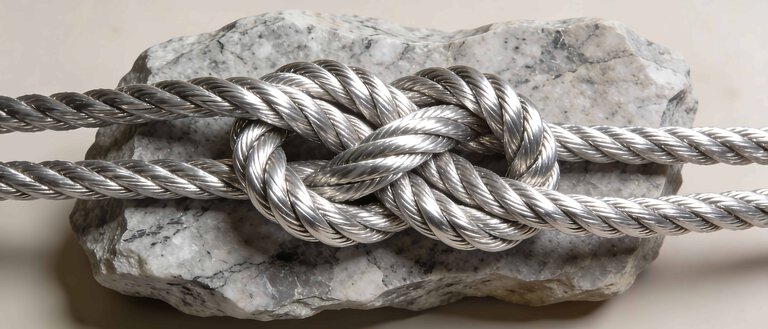
A loop isn’t automatically better than a snug terminal knot. It’s easy to tie one onto a lure that already has a split ring doing the exact same job, and then you’ve got two hinges and a reason for only one of them. The lure or fly has to gain something real from swinging free at the eye, and the leader has to suit the knot. A snap may already be giving you all the movement you need, and a stiff heavy leader can turn a light-tippet loop into a wrestling match. So the first question is what the loop is buying you.
DECISION LESSON · LOOP KNOTS
First prove the lure needs a loop at all.
- Job: give a lure or fly freedom at the eye that a snug knot would restrict.
- Hardware: a split ring, snap or swivel may already provide the hinge, making another loop redundant.
- Leader: ordinary mono/fluoro and heavy shock leader do not favor the same loop structures.
- Loop size: size is a controlled variable; too large can foul, too small can erase the movement you tied the loop to create.
- Failure cost: judge both the lock and the presentation—holding strength is not the only way a loop can be wrong.
Pass: you can choose Kreh/Non-Slip, Rapala, Homer Rhode or Baja from leader weight, lure job and loop control, or decide a snug connection is better.
ORIGINAL HOOK DIAGRAM
How much freedom does the lure actually need?
A loop earns its place when the bait isn’t already hinged at the eye and really does swim better with a pivot. Anything running on a split ring or a snap already has that hinge, and a loop there is a second hinge doing the first one’s job.
The fast decision
| Knot | Best fit | Main tradeoff | Field tieability |
|---|---|---|---|
| Non-Slip / Kreh | Mono/fluoro terminal loop where controlled lure or fly movement matters. | Return path and loop size have to be set right before the final cinch. | Medium |
| Rapala | Lure-action loop in mono/fluoro when the Rapala structure fits the presentation. | Extra finishing steps; an existing split ring may already give the movement, making the loop redundant. | Medium |
| Homer Rhode | Heavier mono leader where a simple terminal loop is useful. | Better on heavy leader than fine tippet; loop size still needs control. | Medium |
| Baja | Heavy-mono leader to hook or lure with an open terminal loop. | Heavy-mono-specific; not a thin-braid or tiny-eye answer. | Medium |
The question I ask first
A lure hanging off a split ring or snap already has a moving connection. Add a loop and you get more motion — but more motion isn’t automatically more fish. I start with the lure hardware and how I want it to swim, then pick the knot to match. The loop is a tool, not a trophy.
Leader stiffness changes the answer
The Kreh and Rapala are the pair I reach for in ordinary mono or fluoro. Homer Rhode and Baja come into their own as the leader gets thicker and stiffer. I don’t pick a heavy-leader loop because its name sounds tougher, and I don’t force a fine-line loop onto material that fights every bend I’m asking it to make. Match the knot to what’s actually spooled up.
Reading the finished loop
- Kreh: loop size is deliberate; the return path is right; wraps seat without crossing.
- Rapala: the loop stays open after the finishing structure seats, and the hardware isn’t trapped wrong.
- Homer Rhode: heavy leader forms a clean loop with no half-seated overhand hiding in there.
- Baja: heavy mono seats smooth and the loop stays open instead of collapsing snug.
Each knot on its own page
Non-Slip Loop / Kreh Loop · Rapala Knot · Homer Rhode Loop Knot · Baja Knot · Fishing Knots hub
Where I check my work
One knot-test percentage doesn’t get to become a universal loop-knot ranking. That’s not how I pick one on the water, either — I go by material, the shape of the knot, how the lure has to swim, and whether I can tie it the same way twice. For motion and material limits I use Orvis’s knot library for the Non-Slip Loop family, Orvis’s Homer Rhode animation, and Rapala/Sufix’s knot guide for the Rapala Loop. Those sources make the differences visible; the decision here still turns on leader material, lure job, loop size and repeatability.