SITUATIONS · VISIBILITY CHANGE
Stained water changes how a fish finds your lure, and not every fish takes it the same way.
Two days after rain a pond can turn the color of milky tea, and the first thing to go usually isn’t the fish — it’s you knowing where your lure is. Turbidity (the stuff hanging in the water) does cut how far a fish can see, but some species hunt by eye a lot more than others. The rest lean harder on the lateral line, that pressure-sensing strip down their sides, plus smell and knowing where the cover is. “Stained” also covers more ground than one word should: water that’s always tea-colored, fresh sediment, an algae bloom and a mud line off an inflow are separate problems. Figure out which one you’ve got and whether it’s safe to be around before you start fixing the presentation.
NAME THE WATER CHANGE
Tea-colored and muddy look a lot alike from the bank.
Normal stain
Some water is just dark — tannins from leaves and roots tint it like tea. If it looks the way it always looks, the fish have lived in that color their whole lives, so don’t treat it like a sudden problem they need to solve.
Suspended sediment
Rain, wind, current, boat wakes or a caving bank can load the water with particles that shorten how far a fish can see. What that does to feeding and movement depends on the species and the water. It isn’t a switch that turns the whole lake off.
Algae or unusual color
A bloom, surface scum, a weird smell, a sudden color change or a posted advisory goes in the water-quality and safety check first. That’s a health question before it’s a lure question.
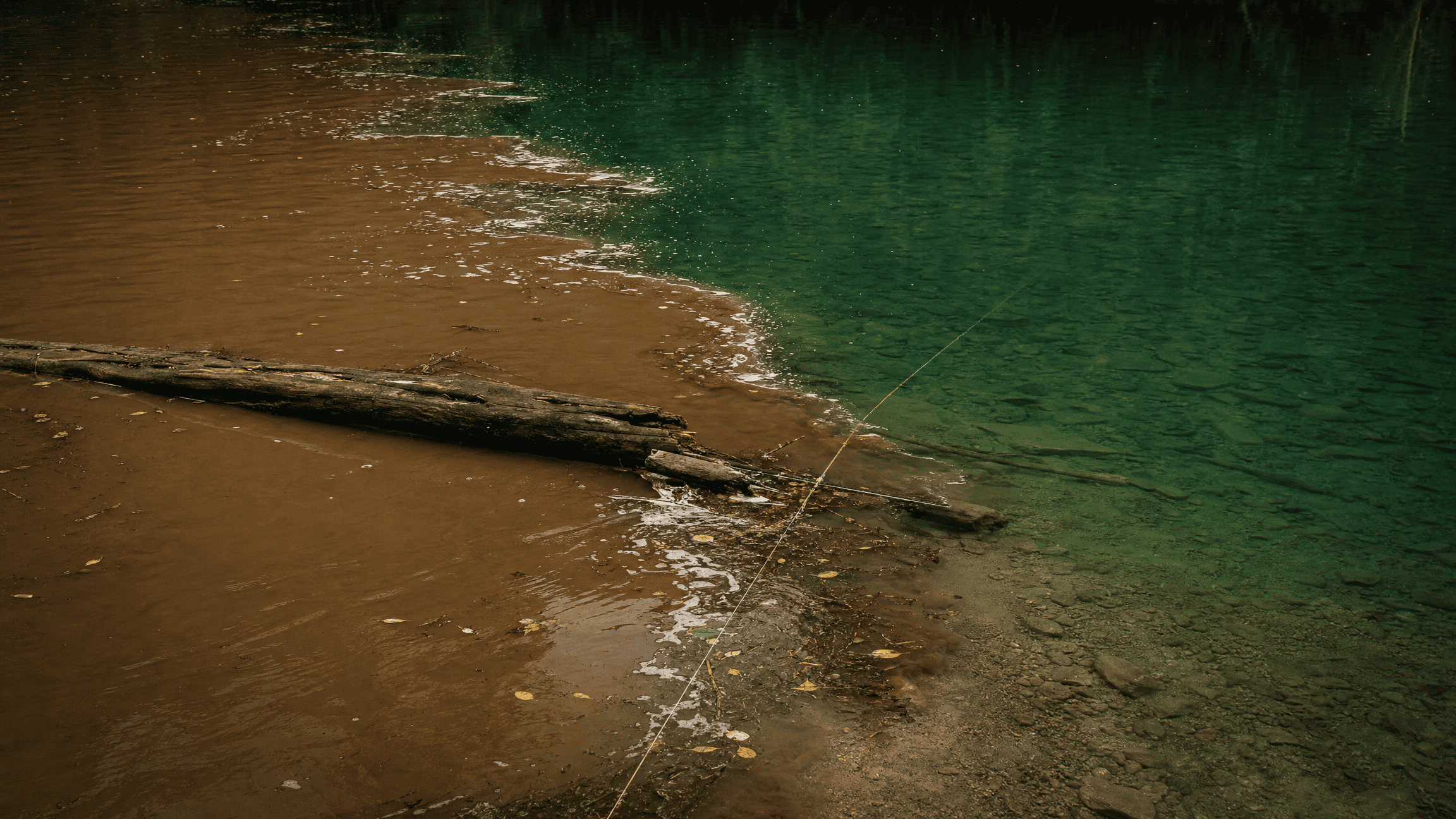
Localized mud line
An inflow, a wind-blown shoreline or a current seam can put clear and dirty water side by side. That edge is worth your time, because fish can pick whichever side suits them without swimming anywhere.
THE FIRST TEST
Make the lure easier to track before you rebuild the tackle box.
Contact
Can you still feel bottom, cover, the lure loading up, or see the float? If you can’t tell where your lure is, fix depth, line angle, weight or position before you decide the fish can’t find it. Right now you might both be guessing.
Distance
Shorter casts or a tighter target keep the lure in the layer that matters and give you more control. That’s usually a cleaner first test than tying on something completely different.
Profile and motion
If visibility really did drop, change one thing a fish could notice at a time: profile, vibration, how much water it pushes, a pause, or contrast. Which one matters depends on the species, what it eats and the water. There’s no magic “dirty-water color.”
Position
Fish may use cover, current, structure or the clear-dirty edge differently when they can’t see as far, but don’t assume they all “slide to the bank.” Go back to what that species does and the kind of spot it usually holds in.
Watch what happens before you change the next thing.
Fish follow but lose the lure: they may be having trouble finding or tracking it. Try a clearer profile, a different speed, a shorter cast, or something you can keep tighter contact with.
You get contact back but still no fish: you fixed your problem, not theirs. Go back to location, holding water and what the species does instead of changing color again.
The clear/dirty edge gets bites: write down the edge and whatever structure sits on it. The murky water might not be the whole reason.
The water looks unsafe or just wrong: quit working on the bite. Check current water-quality, access and closure information.
Try this before the tackle shop.
Before buying a louder, brighter or bigger version of anything, make sure the lure is actually getting down to the right layer and coming back clean. Shorten the cast if control is sloppy, change depth or speed (one of them, not both), and fish something you can feel. If profile or contrast turns out to be the next real test, run it with something already in your box.
Put the stain in your notes, not your conclusion.
“Visibility dropped after rain; I couldn’t hold bottom at the original distance; shorter casts got contact back but fish still didn’t respond.” That’s a note you can use next time. “Dirty water needs chartreuse” is a bumper sticker.
FIELD OBJECT
This one should leave the page.
The article is the long version. These are the pieces worth carrying into the next trip.
The 30-second version
Stained water cuts how far a fish can see your lure, and tea-colored isn’t muddy. Make the lure easier to track first, then test one change at a time.
What to watch
- Stained water changes how a fish finds your lure, and not every fish takes it the same way.
- Tea-colored and muddy look a lot alike from the bank.
- Normal stain
- Suspended sediment
Field card
- Stained water changes how a fish finds your lure, and not every fish takes it the same way.
- Tea-colored and muddy look a lot alike from the bank.
- Normal stain
- Suspended sediment
- Algae or unusual color
RIGHT TOOL, NEXT
Field Sense Navigator
Take the article’s water or access question into a place-specific conditions and route check.