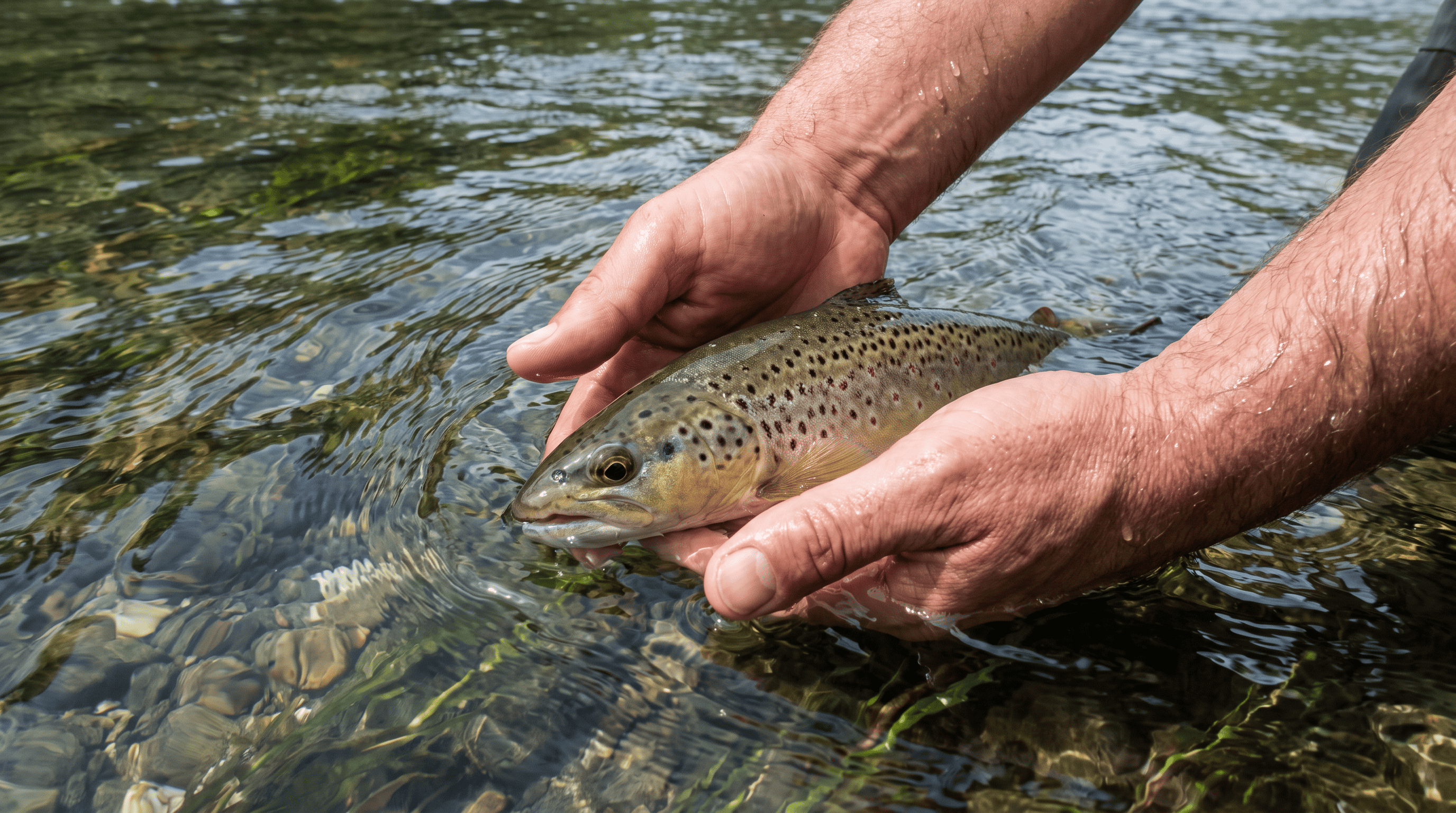
Species on-ramp · cold-water specialists. Lake trout, lake whitefish, cisco, kokanee, brook trout, rainbow trout and steelhead can all be constrained by temperature, oxygen, current and forage—just not in the same way. Calling them “cold-water fish” starts the habitat question; it doesn’t finish it. Start with how the species works and what its season is doing, then ask where usable temperature, oxygen, depth, current and food overlap.
Ice is its own safety question, and nothing written about fish can tell you whether the ice under you will hold. If you don’t know the ice, you don’t go.
Species · cold-water specialists
Temperature decides how much of the river is even available
- usable water
- handle less
- go home
What actually boxes them in
A cold-water fish might use shallow water during a seasonal window, suspend over deep water, hold near bottom, sit in a tributary plume, or live in a current seam. So “go deep” isn’t the rule. What they share is that temperature and oxygen can knock whole parts of the water column off the table, and then food and energy cost decide which of what’s left is worth using.
A thermocline can matter in a stratified lake, but lakes don’t all stratify the same way, and plenty of temperature breaks aren’t a thermocline worth fishing. The real question is where your fish’s temperature and oxygen needs overlap with food and with a presentation you can actually get down to.
Different fish, different cold-water problems
| Fish | First field question | Holding-water clue to test |
|---|---|---|
| Lake trout | Where is cold, oxygenated water intersecting forage and a usable depth? | Seasonal depth, contour, suspended forage, basin edge or a temporary shallow window. Profile → |
| Lake whitefish | Are fish using bottom-oriented food or a seasonal shallow opportunity? | Cold bottom, structure/food relationship, or a documented shallow seasonal window. Profile → |
| Cisco / lake herring | Is open-water depth itself the habitat and forage relationship? | Temperature/oxygen layer, suspended school depth and predator-forage overlap. Profile → |
| Kokanee | Where is the school holding in the usable cold-water band? | Suspended depth, thermal/oxygen habitat and forage rather than the nearest shoreline. Profile → |
| Brook trout | Is the stream or pond still cool enough to fish responsibly? | Shade, spring influence, cold tributary input, undercut cover, current refuge and temperature. Profile → |
| Rainbow / steelhead | Is the fish feeding, holding, or traveling through current? | Seam, tailout, depth transition, current refuge or travel lane with usable temperature. Profile → |
Where to look first
Thermal / oxygen overlap
Narrow the water column before you narrow anything else. A surface reading is a number about the top two inches of the lake and very little else, so use measured depth data or credible local information where you can get it. A thermometer on a string beats a guess every single time.
Forage at the usable depth
Cold water with nothing to eat in it is refuge, not feeding water, and fish will sit in it doing nothing all afternoon while you work it. Open-water bait, bottom food, current-delivered prey or a tributary plume is what turns a suitable layer into a layer worth fishing.
Current refuge
Cold-water fish in a river still have an energy budget, and they are stricter about it than most. A seam, a boulder pocket, an undercut bank, a tailout — each one earns its keep at the moment current starts carrying food past water the fish can hold in cheaply.
Seasonal shallow window
Ice-out, fall cooling, dark, spawning movement, cold inflow. Any of them can make shallow water usable for a while. Treat it as a window tied to conditions, because that is what it is — the fish are not moving in permanently and your plan should not either.
Pick a depth and actually stay in it
Choose one supported depth or current relationship and make a single presentation family live there. If you can’t honestly say whether the lure, fly or bait is in the target layer, that’s the problem to solve, and the color has nothing to do with it. Get the depth right and worry about the rest after.
Example: forage and depth evidence point to a narrow suspended band → first passes run above it with no response → presentation goes deeper while speed and path stay readable → contact. The useful lesson is that depth deserves another test under similar conditions. It isn’t a permanent “fish at X feet” rule.
Ice and warm summer water both get a say
Ice thickness and quality can change over short distances and short stretches of time; current, springs, snow cover, pressure ridges, shorelines and weather can all affect it. Go by official or local ice guidance and your own competence, not by anything a fishing page says. Warm summer water is the other end of the same problem: it can push cold-water species into thermal stress. If current guidance or your thermometer says to leave the fish alone, the right presentation is no presentation.
Cold-water mistakes that are easy to make
- Assuming “cold-water fish” means “deep fish” in every season.
- Using surface temperature as though it describes the water column.
- Calling every temperature change a thermocline.
- Chasing electronics marks without confirming species, depth, forage or usable oxygen.
- Changing spoons, flies or colors when the presentation never got down to the depth you had reason to fish.
- Ignoring thermal stress or ice safety because the fishing looks good.
Which tool, if any
Use Field Sense for named-water access, hazards and current conditions. Use Species & Presentation when the water’s workable but you can’t work out where the fish should be holding or how to present to it. If your electronics are claiming something you can’t back up (a temperature layer, what a sonar mark actually is, a sensor reading), take only that question to Rig Signal.
Cold-water fish punish sloppiness faster than anything else you can target, which is most of the reason they’re worth learning on. A bluegill forgives an afternoon of nearly-right. A lake trout in August doesn’t, and neither does the water you were planning to release it back into.
Great Lakes-style frame · River frame · Response → adjustment · All species on-ramps
FIELD OBJECT
This one should leave the page.
The article is the long version. These are the pieces worth carrying into the next trip.
The 30-second version
For cold-water fish, temperature and oxygen erase whole chunks of a lake or river before you ever pick a spot. Find where cold, oxygen and food overlap, get down to it, and know when to leave them alone.
What to watch
- Temperature decides how much of the river is even available
- What actually boxes them in
- Different fish, different cold-water problems
- Where to look first
Field card
- usable water
- handle less
- go home
- Assuming “cold-water fish” means “deep fish” in every season.
- Using surface temperature as though it describes the water column.
RIGHT TOOL, NEXT
Field Sense Navigator
Take the article’s water or access question into a place-specific conditions and route check.