Everyday
Pond and lake panfish
Bluegill, crappie and perch school up in water you can see into, so you find out fast whether your depth and speed are right.
Species & Behavior
A trout never read the chart that says what it eats. So start with what the fish is up to and why, then where that makes sense in the water in front of you — and what would change the answer.
Starting from zero is fine. First Cast covers the basics, then pond panfish and largemouth give you fish that live close to almost everybody. Alligator gar and sturgeon are in here too. They can wait until you’re not also learning a knot.
The profiles are for understanding the fish. Once you’re at the water deciding where to cast and what to throw, that’s the job of Species & Presentation. Still can’t tell what they’re eating? Hatch Match helps sort that out, and then your plan goes back to Field Ops.
Species & Behavior
Everyday fish
Panfish and largemouth teach you how fish use a pond, and there’s probably a pond within a short drive of you. The specialists are further down whenever you want them.
Everyday
Bluegill, crappie and perch school up in water you can see into, so you find out fast whether your depth and speed are right.
Everyday
There’s no magic stump. There’s a reason one stump holds a bass and the next one doesn’t, and you can work it out in the same pond you started on.
Everyday
How a farm pond or park lake works as one piece of water. Once that clicks, the river fish make a lot more sense.
Two kinds of pages
Profiles cover the whole fish. When one problem needs more room — how current decides where a fish can sit, say — it gets a guide of its own.
Profile
How to identify it, where it lives in the U.S., where it holds and what it eats, how it moves and spawns through the year, the rules that apply, and the clues that still work on water you’ve never seen.
Guide
One problem at a time: oxygen and temperature, changing light, feeding lanes, spawning on floodplains, when fish migrate, telling look-alikes apart. The stuff that would bury a profile if you crammed it in.
From the fish to your next cast
This is the order worth thinking it through in. None of it guarantees a fish. It does tell you where to look, what to try first, and what to change when the first thing doesn’t work.
01 · Behavior
Eating, resting out of the current, staying cool, spawning, traveling, tucking into cover or following food around. Figure that out before you open the fly box.
02 · Holding water
A drop-off, a current seam, a weed edge, a point, the mouth of a creek. You don’t need somebody’s secret spot, just the kind of place that fits what the fish is doing.
03 · Forage
Size, shape, where the food is and how it moves are all fair game when you can actually see them. When you can’t, say so. Guessing the exact bug just to feel finished is how you tie on the wrong fly with total confidence.
04 · Presentation
Pick the depth, speed and angle that keep your fly or lure where you think the fish is feeding or moving. The tackle question comes after you know what the tackle has to do.
05 · Response
Nothing at all, a follow, a short strike, a bump, a hookup, a lost fish, a refusal, a fish that slid somewhere else — each one tells you something different. Write down what happened before you write the story about why.
06 · Adjustment
If two follows turn into a bite after you go deeper, depth gets another try. If nothing changes, that idea gets weaker and the next one gets its turn. Take whatever you learned back to Field Ops.
Species profiles
Each one is built to carry over to water you’ve never fished. None of them hand you a secret spot, mostly because the fish didn’t agree to stay in it.
In one Florida river study, at least 92 percent of tracked largemouth locations sat in almost no current, every season. Skip the push and…
A channel catfish tastes with its whole body and does its best work in water too dark to see in. That’s why the agency…
Walleye eyes are built for dim water, and light moves these fish around more than most lure boxes want to admit. When the bite…
Smallmouth are river fish, but they don’t want the fastest water. They want the soft side of it — behind the boulder, off the…
Oncorhynchus mykiss comes in two versions: the rainbow that stays in freshwater, and the steelhead that goes to sea and comes back bigger, on…

Every monster-gar photo shows you teeth. The part that matters is harder to photograph: a fish that can live past fifty and only builds…
Side by side
Pick two or three profiles and you get habitat, food, spawning, the first thing to figure out, the rules and how solid the sources are, all in one table.
Still moving in
Seven of the river profiles above are still sitting in the blog while they get moved over. They’re full profiles all the same. They just haven’t finished unpacking.
One problem at a time
Each of these digs into one thing that changes where a fish sits or what it’ll eat. Current, oxygen and light come up a lot, because they move fish more than lures do.
Deeper guide
A big lake can look like one sheet of blue until you find where something changes. Then the real question is which part of that edge your lure…
Deeper guide
That family-recipe catfish bait might be great. Most nights it's tied to a rig sitting off the seam where nothing's feeding, and no amount of smell fixes where…
Deeper guide
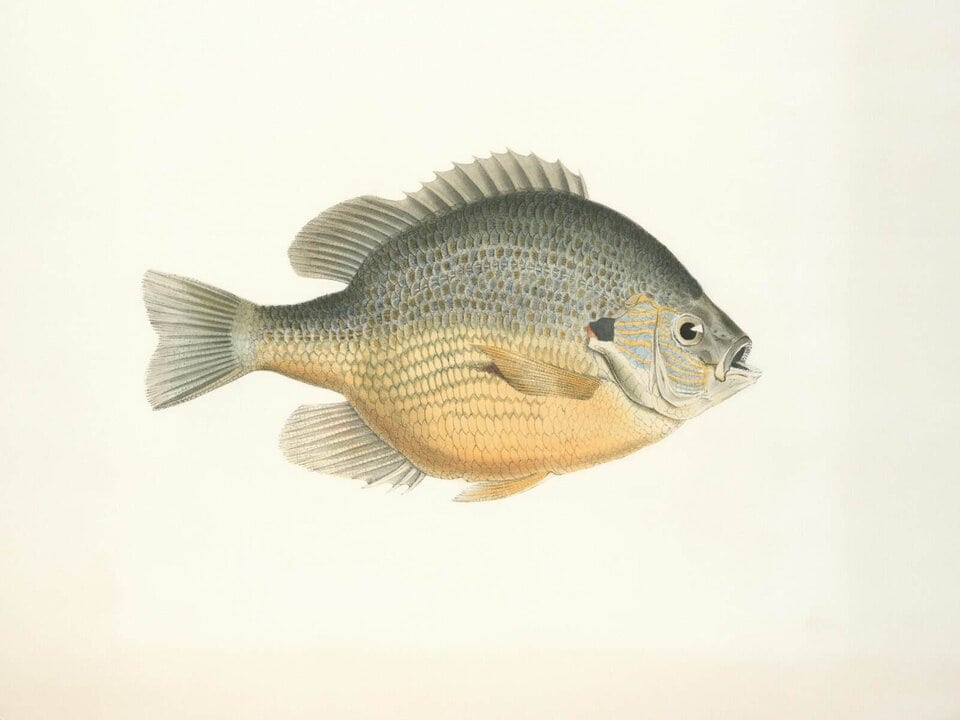
People call panfish easy, which is exactly why they make good teachers. Bluegill, crappie and perch will find every lazy inch in your depth and line tension before…
Deeper guide
“What depth are they at?” is the question everybody wants answered about walleye, and the number alone doesn’t travel. Ten feet is shallow in one lake and most…

Deeper guide
A riffle can look perfect and be nearly empty. Cold water is only part of it — trout need oxygen, food coming past, a cheap place to sit…

Deeper guide
Two stumps a cast apart can fish nothing alike. The wood usually isn’t the difference — the depth, grass edge, shade and travel route sitting around it are.

Deeper guide
A big boulder in current builds five or six places a smallmouth could sit, and the obvious pocket behind it is only one. Smallmouth pick the spot where…
Sources
A pile of sources only helps if you can tell what each one actually shows, what changes from one water to the next, and what you still need to check with whoever makes the rules.
01
Identification, life history, habitat and movement come from state and federal fisheries agencies, Tribal fisheries authorities, USGS, NOAA Fisheries and peer-reviewed fisheries research.
02
A source has to connect to something you can actually see or change, like current, depth, cover, temperature or food. A citation doesn’t explain anything on its own.
03
Seasons, harvest, bait, handling, access, moving fish and protected species all come down to whoever manages that exact water on that date.
04
A single study from a single river is a clue, and clues are allowed to be wrong. Profiles should show where a useful pattern ends and false precision starts.
The one rule here
“Fish this boulder.”
Say what the boulder does to the river: slower water behind it, a seam off the side, a hole scoured out below, some cover, and food drifting right past.
“Use this lure.”
Say why it fits what the fish is eating, how deep and fast it runs, how well the fish can see it, and whether it stays in the lane the food comes down.