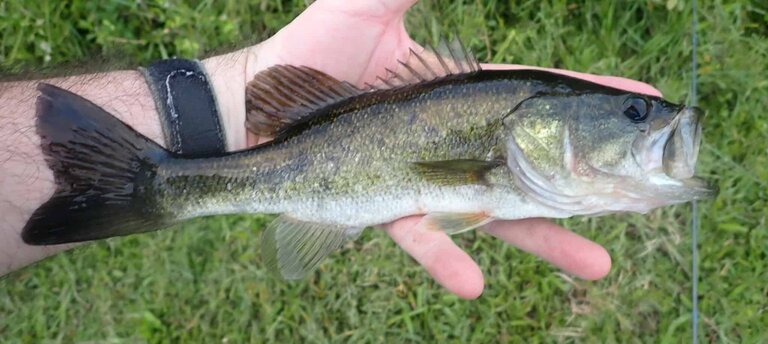
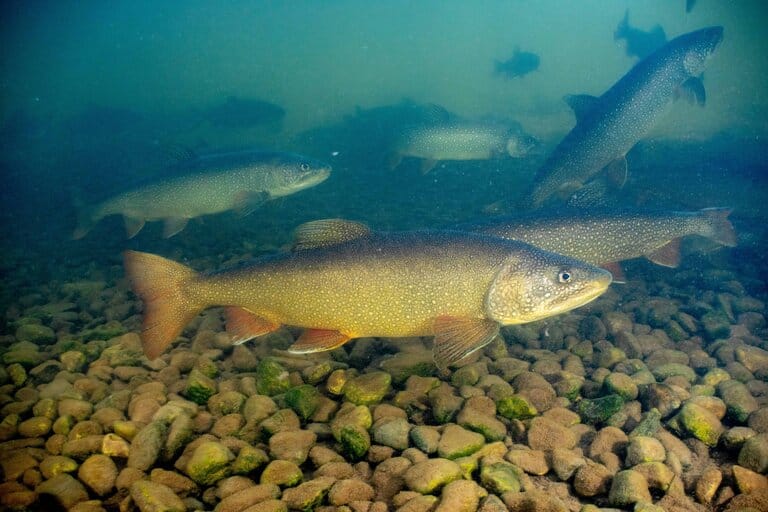
A lake isn’t one kind of water. The same lake can have a shallow weedy bay, a deep cold basin, a rocky drop-off and a muddy backwater, and a fish that does great in one of those can be miserable in the next. These are the species profiles for still and slow-moving water, from panfish and catfish to the deep cold-water fish and the hybrids state agencies stock on purpose.
Panfish and sunfish
They all get lumped together as panfish, which is a little unfair to them. Some hold shallow weed cover, a couple crush snail shells for a living, and warmouth will sit happily in warm swampy water the rest avoid.
- Bluegill
- Pumpkinseed
- Redear Sunfish
- Green Sunfish
- Warmouth
- Black Crappie
- White Crappie
- Yellow Perch
- White Perch
Catfish and bullhead
The three bullheads split mostly on how clear they like the water, from near-zero visibility at one end to clear and weedy at the other, with brown bullhead somewhere in the middle.
Deep coldwater specialists
These are the ones where I’d check the temperature before the map. They spend most of the year at real depth, tracking temperature bands or hanging out in open water instead of near bottom structure, and that open-water part is what trips people up the first time. Cold water is a habitat with edges, too. A lake that holds them within reach in June may not by August.
Everybody wants one lake trout depth. The real answer is a temperature band that slides all season, and it doesn’t slide the same way in any two lakes.
Stocked hybrids and managed species
Somebody put these fish here on purpose, either by crossing two species or by introducing one, and state agencies manage them instead of leaving them to sustain themselves.
A species profile is the start, not the answer
Knowing what lives in a lake only gets you to the parking lot. The useful question is which part of that lake is usable right now. Temperature can push one species deeper while weeds pull another shallow, and a creek arm can run stained while the main basin stays clear. Wind can load one bank with food and leave the other shoreline looking clean enough to be suspicious.
That’s why the profiles keep coming back to habitat instead of a magic depth. Depth is usually the result of something else — temperature, oxygen, food, cover, an inflow, or just getting away from pressure. Find the reason and the number starts making sense.
Pages that aren’t species at all
These deal with the messy part after identification, when the fish is definitely in the lake and the lake still won’t hand you a clean answer.
- Stop Asking for the Walleye Depth — use light, movement and structure to narrow the water before chasing somebody else’s number.
- Stop Looking for the Magic Stump — largemouth habitat works as connected cover and travel water, not one famous object on the bank.
- Summer Crappie: Find the Depth Before You Change the Jig — a lure change cannot fix fishing above or below the layer the school is using.
- Panfish Will Expose Every Lazy Inch of Your Presentation — small fish are very good at proving that six inches of depth and a sloppy drift are not the same thing.
- Florida Bass: Warmwater Species Profile — useful when a generic ‘largemouth’ answer is too broad for the fish and climate in front of you.
The map still has to earn its keep
A contour line isn’t habitat by itself. A twelve-foot break with no food, no cover and the wrong temperature is just twelve feet of water with excellent paperwork. Start with what the species needs, then use the map to find places where those needs actually overlap. That might be a weed edge touching deeper water, the first hard-bottom patch outside a soft bay, a shaded bank beside a drop, or open water where forage is suspended away from shore.
And if the lake doesn’t hold the species, none of the rest matters. Stocking programs change and introductions fail, and nobody stocks every fish on this list into every lake, so check your state’s current stocking report before you rule a species in or out.
Rules are set water by water. This page is navigation, not a distribution map or a regulation checker. Some waters carry special rules that don’t match the statewide default, so verify current state, tribal, federal and water-specific rules before targeting or handling any fish.