White Perch Are Native on the Coast and Trouble in the Wrong Lake
On the Atlantic coast a white perch is a native estuary fish. In the Great Lakes and plenty of inland reservoirs it’s an established nonnative, and that difference decides what you do with one. Plus the anal-fin count that settles white bass.
By HunterUpdated September 19, 2026Read 6 min
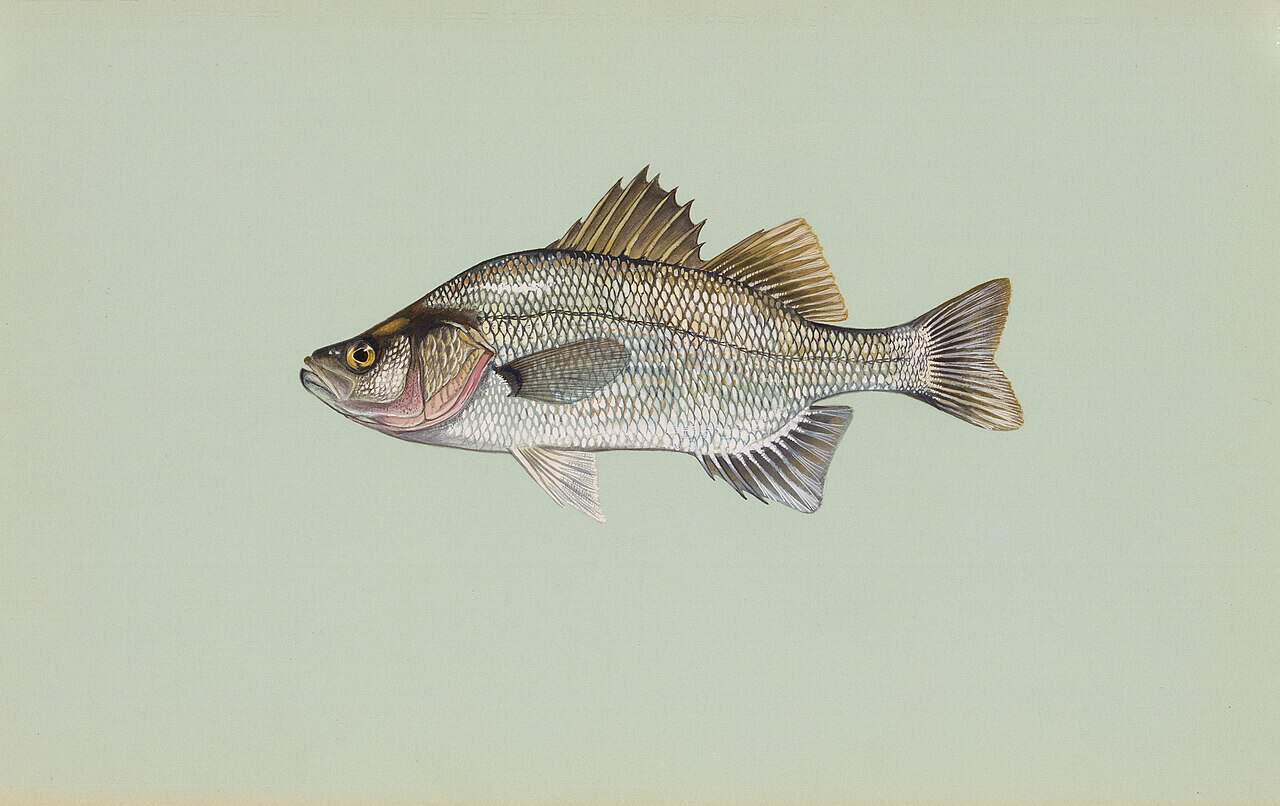
A detailed illustration of a freshwater fish, ideal for fishing enthusiasts and aquatic-themed content.
Same fish, two jobs. On the Atlantic slope a white perch is a native estuary fish, moving between salty bays and fresher rivers the way it always has. In the Great Lakes or an inland reservoir it got there with help, and now it’s a management problem that can compete with native fish and eat their eggs or larvae. I haven’t fished for them, so the fishing rows here come from how the species feeds and schools, not from a day on the water. Figure out which kind of water you’re on first. That answer decides more than any lure does, including whether a live one should ever leave the lake with you.
At a glance · One native estuary fish can become a completely different management problem inland
Scientific name
Morone americana
Field mark
Silvery, high-backed temperate bass without the distinct horizontal stripes of white bass; 9-10 anal rays are a useful hard character.
Native range
Atlantic-slope drainages from the St. Lawrence/Lake Ontario drainage south to the Pee Dee River system.
Water types
Euryhaline: coastal, estuarine, river, and freshwater-lake populations all occur.
Spawn
Spring broadcast spawner; landlocked fish typically shift from deeper to shallow water, releasing adhesive eggs over sandy or other suitable substrate.
Management
Native and valued in Atlantic waters; established nonnative populations occur throughout the Great Lakes and many inland systems.
“No stripes” is useful, but the anal fin makes it harder to get wrong
Identification
White perch
USGS describes a silvery to green-gray fish with a dark highly domed back, pale belly, slightly projecting lower jaw, three anal spines, and a mildly forked tail. The sides lack the distinct longitudinal dark stripes of white bass.
USGS gives a useful meristic split: white perch usually have 9-10 anal-fin rays and their greatest body depth lies in front of the spinous dorsal; white bass have more than 10 anal rays, obvious longitudinal lines, and greatest body depth under the spinous dorsal. That is stronger than guessing from size or overall silver color.
USGS places the native Atlantic range from the St. Lawrence-Lake Ontario drainage south to South Carolina’s Pee Dee River. White perch naturally move between salinity zones in coastal systems and can use fresh, brackish, and coastal waters.
Intentional stockings, accidental hatchery releases, and dispersal moved white perch far beyond that range. USGS now records self-sustaining populations in all five Great Lakes and numerous inland states. The fish in an inland reservoir is therefore not simply an “estuary fish that got lost”; it can complete a freshwater life cycle.
USGS describes adults as often using relatively open water with little cover over muddy, silty, or sandy substrate. “Open basin fish” undersells it, though: they can school offshore, but bottom composition, depth, tributary plumes, and seasonal spawning movement still structure the school.
Estuarine white perch are semi-anadromous, moving from saltier bays and coastal habitat toward fresher rivers and streams to spawn in spring. The salinity gradient itself is therefore part of their seasonal map.
Freshwater populations typically move from deeper water into shallow lake or river spawning habitat in spring. Adhesive eggs are broadcast rather than guarded in a nest.
USGS summarizes maturity at roughly ages 1-4 depending on population and reports fecundity estimates from about 20,000 to 457,000 eggs per female. That range is a reminder that body size and population condition matter enormously; do not treat one number as a normal clutch.
Both versions make a spring move, just on different maps. Coastal fish push up toward fresher water; landlocked fish slide in from deep water toward the shallows. If the offshore school you were counting on is gone in spring, the shallows and tributary mouths are where I’d look before blaming the lake.
What are they following?
Diet & Schooling
Generalist diet
White perch are opportunistic, taking macroinvertebrates, crustaceans, and fish. That flexibility is part of why inland populations can establish so successfully. A school may be feeding on bottom invertebrates in one season and suspended prey in another.
Sonar is useful because the important feature can be the fish’s depth rather than a shoreline object. When one fish is caught, hold the boat position or repeat the exact cast before moving; schooling makes the first bite location data.
Schooling is the whole reason that first bite matters. One fish says the rest are probably at that depth, over that bottom, right now. Motor off looking for a better spot and you’ve traded a layer you know for a guess.
Spring exception
During the spawning move, shallow water and tributary approaches gain value even if the best mid-summer schools spend most of the day offshore. Season can reverse the shoreline rule.
Fishing
Small Bait, Precise Depth
Presentations
Small jigs, minnows, worms, compact spoons, and small crankbaits are all reasonable where legal because the species eats both invertebrates and fish. The first variable to solve is where the school is in the column.
Vertical fishing
When fish are tightly grouped beneath the boat, vertical jigging can hold a presentation in the productive layer longer than repeated long casts. In moving tributaries, use enough weight to cross the migration lane without pinning the bait unnaturally to bottom.
Native and invasive are both correct
Management Context
Introduced impacts
USGS classifies white perch as widespread and self-sustaining in the Great Lakes outside much of its historic range. Introduced populations can compete with native fishes, consume eggs or larvae, and reach high density. The same species remains native in Atlantic estuaries. “Release” or “harvest” therefore cannot be a species-wide conservation instruction.
Live transport between waters can spread established nonnative populations into new basins and may violate bait or invasive-species law. Never use a white perch from one lake as live bait in another unless the current jurisdiction explicitly permits it.
The livewell is where this fish’s two stories actually collide. On the coast you’re holding a native. In a lake where it was introduced, a live white perch carried to the next lake over is how an established population starts a new one, and bait or invasive-species law may already say no.
FEEDING · WHATEVER THE SCHOOL FINDS
It takes bugs off the bottom or bait out of open water, so the school is the target and the shoreline is a guess.
What it eats
An opportunistic diet of macroinvertebrates, crustaceans, and fishes. The prey mix can shift between bottom invertebrates and suspended forage depending on season and waterbody.
How and where it hunts
A schooling generalist that can feed over muddy, silty, or sandy bottom or suspend in open water. In freshwater, school depth, bottom type, tributary influence, and prey concentration are more informative than one shoreline object.
When it feeds
No universal diel feeding window is established in this profile. Season is better supported: spring spawning moves fish from deeper water toward shallows and tributary approaches, while summer schools can spend much of the day offshore or suspended.
What changes as it grows
The sources behind this page don’t cover it.
Only documented feeding biology is summarized here; unsupported bite windows are left out.
The article is the long version. These are the pieces worth carrying into the next trip.
The 30-second version
On the Atlantic coast a white perch is a native estuary fish. In the Great Lakes and plenty of inland reservoirs it’s an established nonnative, and that difference decides what you do with one. Plus the anal-fin count that settles white bass.
What to watch
Identification
Range & Habitat
Life History
Diet & Schooling
Field card
U.S. Geological Survey — White Perch Species Profile
USGS/NOAA GLANSIS — White Perch in the Great Lakes
RIGHT TOOL, NEXT
Species & Presentation
Carry the species behavior and presentation question into a narrower water-to-fish-to-presentation handoff.
We use necessary cookies to operate the site. With your choice, we may also use analytics and advertising cookies. Choose Accept All, Reject, or Preferences.
Contains information related to marketing campaigns of the user. These are shared with Google AdWords / Google Ads when the Google Ads and Google Analytics accounts are linked together.
90 days
__utma
ID used to identify users and sessions
2 years after last activity
__utmt
Used to monitor number of Google Analytics server requests
10 minutes
__utmb
Used to distinguish new sessions and visits. This cookie is set when the GA.js javascript library is loaded and there is no existing __utmb cookie. The cookie is updated every time data is sent to the Google Analytics server.
30 minutes after last activity
__utmc
Used only with old Urchin versions of Google Analytics and not with GA.js. Was used to distinguish between new sessions and visits at the end of a session.
End of session (browser)
__utmz
Contains information about the traffic source or campaign that directed user to the website. The cookie is set when the GA.js javascript is loaded and updated when data is sent to the Google Anaytics server
6 months after last activity
__utmv
Contains custom information set by the web developer via the _setCustomVar method in Google Analytics. This cookie is updated every time new data is sent to the Google Analytics server.
2 years after last activity
__utmx
Used to determine whether a user is included in an A / B or Multivariate test.
18 months
_ga
ID used to identify users
2 years
_gali
Used by Google Analytics to determine which links on a page are being clicked
30 seconds
_ga_
ID used to identify users
2 years
_gid
ID used to identify users for 24 hours after last activity
24 hours
_gat
Used to monitor number of Google Analytics server requests when using Google Tag Manager
1 minute
Jetpack's built-in visitor analytics. It records page views, referring sites, search terms, and outbound link clicks, and also carries the shared visitor-tracking library used by Jetpack Instant Search and WooCommerce Analytics.