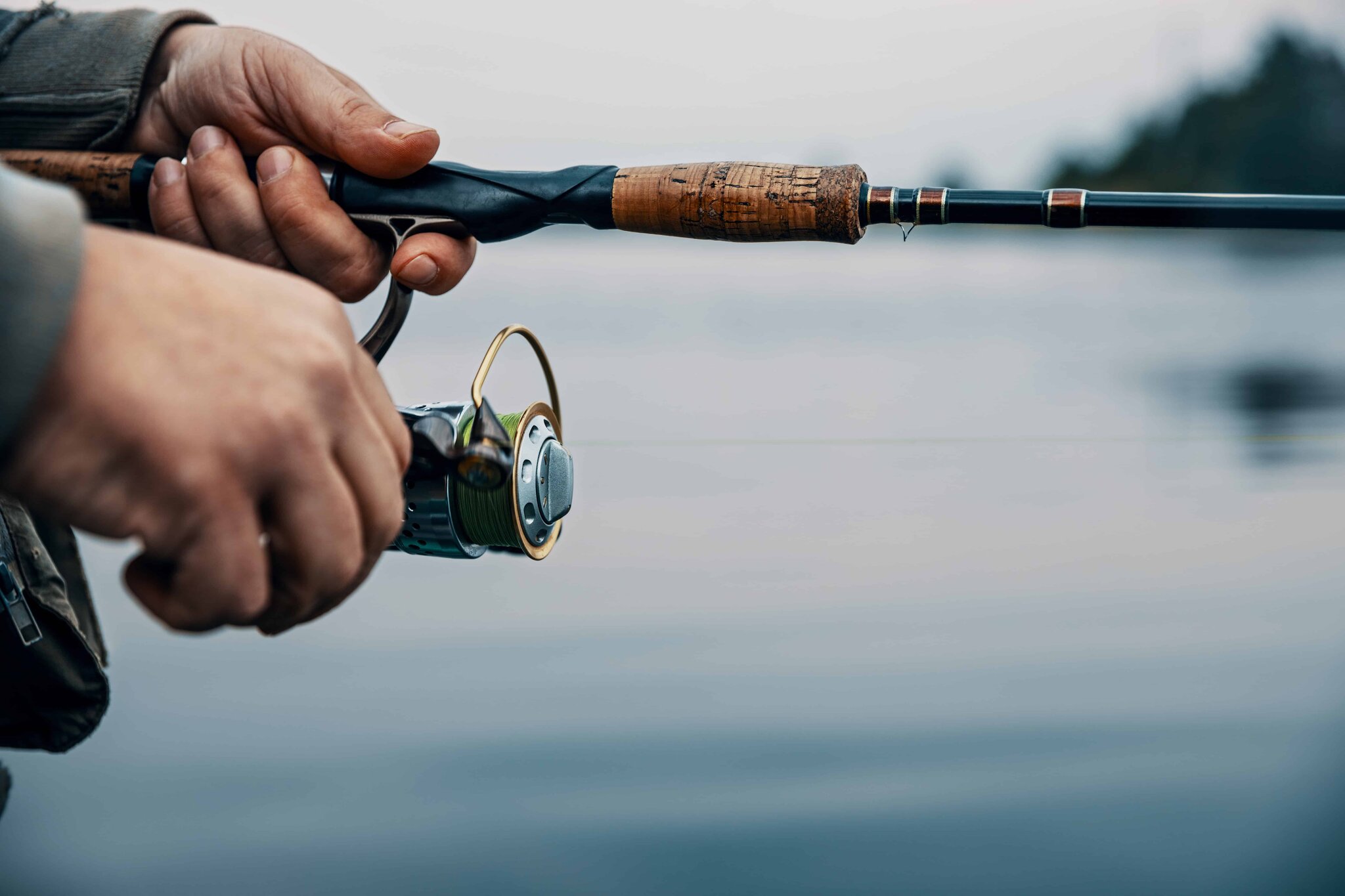
A river loves to look like it’s handing you the answer. There’s the obvious seam and the obvious boulder, practically waving at you. Either one can be wrong for today’s water. Looking fishy doesn’t earn a spot anything.
FIELD PLATE · CURRENT
Read the speed change before the spot.
A feature is worth a cast for what the flow, temperature, season and light are making it do right now, which is a less romantic way to look at a big rock.
Start by deciding what the current is asking fish to pay
Current delivers food, and the turbulence helps keep the water oxygenated. It also charges rent. A fish holding in the hardest flow pays for every minute of it, so the useful spots sit close to fast delivery water without making a fish live in the middle of it.
Seams, eddies, boulder pockets, pool heads and tails, current tongues, soft edges — they all make more sense once you think of them as delivery sitting next to relief. Reading moving water before the first cast walks through each one. Before I pick a lure, I’m hunting for the spot where a fish can grab food without fighting the river all day.
Still water doesn’t have a current doing the delivery, so finding fish in a lake starts from a different place, even though the bigger habit of reading water before picking a spot is the same.
Read the river in sequences, not isolated spots
Riffle, run, pool, tailout, bend, side channel, tributary mouth — they’re connected. A fish might feed in one and rest in another, and the season can change which piece matters most.
A pool isn’t one target. The head takes in food, the sides make seams, the deepest part gives security, and the tail squeezes the flow back together. A riffle might be growing the bugs while the fish sit on its softer margins or just below it. Once you can say what the head, the seam and the tail are each doing, the river stops being one long invitation to cast at everything.
Normal flow is the baseline before “high” or “low” means anything
A river at 900 cubic feet per second can be low, average or high depending on the river and the season. The number is only useful once you know the trend and what normal looks like there. What feeds the river — snowmelt, springs, a dam — decides a lot of that, which is part of why fishing advice changes from one place to the next.
I check official flow or release information where it exists, then compare it to what’s on the bank: wet banks, debris lines, exposed rocks, flooded vegetation, clarity, how wide the seams you know have gotten. Nine hundred cfs by itself is trivia. It turns into information when you can say which seams widened, which margins flooded, which pools got deeper and which lies just got expensive.
When flow rises, useful water often moves toward relief
Higher water can strengthen current, deepen side channels, cover bank structure, add color and open new feeding routes. It can also make the normal mid-river lies too expensive to hold, or impossible to reach.
So look for soft water that wasn’t usable yesterday: inside bends, flooded margins, the downstream side of big structure, side channels, bank eddies, seams that widened with the flow. The rock that produced at low water may not be the target anymore. Fish what the new flow is doing around it, not your memory of the old flow.
When flow falls, the river can compress
Low water wipes out shallow pockets, narrows the current lanes, clears and warms the water, and crowds fish into deeper or better-oxygenated spots.
That makes them easier to find and easier to hurt at the same time. In warm conditions, especially with coldwater species, the responsible move might be a cooler river, a safer window if the regulations and the fish’s condition support it, or just reeling up. That last one never feels great. The fish don’t get a redo, though. Why trout need more than cold-looking water gets into temperature, oxygen, low flow and shelter together.
Temperature can move the best lie within the same pool
A deep pool looks like the obvious answer on a hot day, but depth alone isn’t enough to trust. A shaded side, a spring, a tributary mouth, a riffle-fed head or a deeper current lane can put together better temperature, oxygen and food than the deep hole does.
When it’s cold, slow deep water gets more valuable because holding there costs less. As things warm, feeding lanes can spread out with the bugs and forage. Where fish move as temperature changes follows that trend across lakes and rivers both.
Season changes which river job matters most
Spring: flow and migration can dominate
Runoff, rain, snowmelt, spawning movement and rising temperatures can change a river faster than the date suggests. Tributaries, flooded margins, gravel, side channels and current breaks can matter fast. So can local closures and spawning protections, which is why those get checked before anything else in spring.
Summer: temperature and low-flow refuge gain weight
As flows drop and the water warms, shade, deeper runs, riffles, springs, tributaries and slower refuge water carry more weight. The catch is that the best refuge is also the easiest place for a lot of anglers to lean on the same stressed fish.
Fall: cooling water can reopen routes
Cooling water and changing forage spread fish back out between runs, pools, rock and deeper holding water. A summer refuge can stay good while the feeding route around it widens.
Winter: stability and energy conservation matter
Winter patterns swing a lot with latitude and species, so hold this part loosely. Slower, deeper, steadier water usually deserves the attention. Ice, shelf ice, cold-water exposure, footing and access come first, though, and they get decided before fish position ever enters the conversation.
Light can move fish from the middle of a lane to its edges
Bright sun on clear shallow water makes cover, depth, broken surface and shade matter more. Clouds, canyon shade, trees, a bridge or a lower sun angle can make an exposed lie usable again. A shadow reaching the outside bend at 2 p.m. can matter more than sunrise did, if it changes who can see whom. Windows that come from conditions instead of the clock covers more of that.
Tributary mouths are useful because several things can change at once
A tributary can change temperature, clarity, flow direction, food and depth in a tiny area, which makes the mouth a good place to compare water types side by side.
Everybody casts at the visible mixing line first. Me too. It’s worth also fishing the main-current side, the tributary side, the seam downstream and any nearby depth or cover that gives relief, because the mouth hands you several different questions without walking anywhere.
Outside bends, inside bends, and channel edges change with flow
Outside bends usually carry stronger current and scour deeper. Inside bends tend to be slower and collect sediment. Channel edges split fast delivery water from slower holding water. All of that shifts with flow — a seam you fished at one level can move several feet or disappear entirely at another, so don’t marry it.
Don’t let one stubborn stretch become the whole river
If you can describe the seam, the depth, the angle and the presentation clearly and still get nothing, move to another example of the same kind of water, or test one that’s the opposite. Not letting one stretch of river beat you is the long version. A river gets a lot easier once you stop trying to solve a mile of it as one object.
Bring in the species profile last
Once the current and conditions make sense, species can narrow things down. Smallmouth often sit on food delivery next to current relief. Walleye put current, low light, depth and forage together. Channel catfish use holes, seams, wood and feeding lanes. Trout need usable temperature, oxygen, shelter and food coming to them.
Read the river first and the species second. Flip that around and it’s way too easy to build one perfect spot out of biology that doesn’t exist anywhere on the water you’re standing next to.
From the truck to the first cast
Roughly, it runs like this. Check flow, weather, access and any release or closure information before you leave. From shore, find the main current, the soft edges, the depth changes and the feeding lanes that are easiest to see. Pick one connected piece of water — riffle into run into pool, or bend into seam into pool — and fish the lie you can control best first, so you know your depth and presentation are honest. Change one current or depth thing before you touch the whole rig. If flow, temperature or light shifts, reread the water instead of fishing the morning’s map. And when something eats, write down what the current was doing there, not just which rock or which GPS pin.
The seam at nine isn’t necessarily the seam at two
Walk back through the same run in the afternoon and the soft edge you fished at nine might have shifted, or be gone under a few more inches of water. The river warmed the pool and put a shadow on the bend while you were somewhere else. Getting loyal to a rock is easy. The rock just happened to be where the soft water was that morning.
Sources
River fish don’t all answer discharge, temperature or current the same way. The broad habitat shifts here were checked against USGS river-fish and thermal-refuge research, but check them against the species and the river in front of you too. The research and standards page has the rest of how sources get used.


