A new lake gives you a lot to look at and almost nothing to compare it to.
That’s part of what makes new water fun. Every point looks suspicious, and the map gets stared at like it owes you money.
But there’s another kind of fishing that gets better because the place stops being new.
If I had to choose between fishing twelve lakes once and fishing one good lake twelve different times, I’d learn more from the second. Not because one lake teaches you every lake. It doesn’t. It’s because repetition gives you reference points, and reference points make change visible.
The first trip gives you a baseline, not an answer
On the first visit you’re learning the shape of the place. Which access actually works? Where does the bank drop quickly, and where does the wind hit hardest? Where can you fish without spending more time untangling than casting? The same lake across three seasons shows why that baseline matters once the season starts changing it.
You may catch fish or you may not. Either way, most of what you notice doesn’t connect to anything yet. The water’s high, but high compared with what? The weeds look thick, but is that early, late or normal? Boat traffic feels heavy, but maybe you just happened to show up during the busiest two hours of the week.
The first trip gives you a baseline, even if it’s a rough one.
By the second visit, one difference finally has somewhere to land.
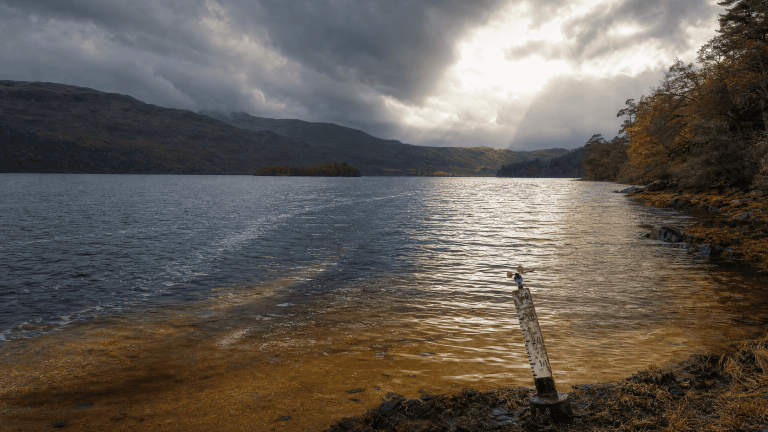
You come back and the water’s lower. The flat that looked featureless on the first trip now has a visible edge, and a line of rock shows that was hidden before. The same dock sits over less water, and the bank path that was wet is usable.
The lake didn’t suddenly get more complicated. You just have a previous version of it to compare against.
Then the same lake starts changing in front of you
By visits three and four, wind stops being one category.
One day the wind runs straight down the main basin. Another day it hits the opposite shore and leaves a familiar corner protected.
Now “windy” isn’t enough. You start noticing which banks make a presentation hard to control, where floating material collects, and which access points get annoying or unsafe. The same wind-speed reading can make a different lake depending on direction, shoreline shape, and how much room that wind has to build.
You aren’t just collecting conditions anymore. You’re seeing what they do to a place you recognize.
By visit five, vegetation has changed the map.
As vegetation comes up, water that was easy to fish earlier can turn into a different problem. A clean bottom becomes a weed edge, and open pockets show up inside a bigger bed. Some presentations that worked fine before now spend more time carrying salad than looking useful.
You also get to watch fishable depth change. A spot that looked shallow and empty in cold water may now have cover, shade and forage, which is a reason to spend more time on it.
By visits six and seven, light and temperature stop being trivia.
One visit starts early and another in full afternoon sun, and the same bank looks different because the shade lines have moved and the surface temperature has changed. Visibility may be different too.
A temperature reading gets more useful when it belongs to a sequence. One surface number by itself is only a snapshot. Compare that same area across visits, next to what the weeds, light and wind were doing, and the number finally has context.
It still doesn’t tell you what the fish have to do. It tells you the lake isn’t the same one you saw last time.
Visits eight and nine: pressure becomes visible
A weekday morning and a holiday afternoon can look like two different lakes even when the water itself barely changes.
Ramps fill up and shoreline spots get taken. Boats keep crossing the same areas, and quiet corners stop being quiet. The useful observation isn’t “pressure ruins fishing.” It’s which parts of your plan get harder to pull off when more people are using the water.
Maybe one bank is still fishable, or an access point you ignored earlier turns out to be useful. Maybe the best decision is changing your time instead of your lure.
Visits ten and eleven: the lake starts giving things back
Later in the season the vegetation thins. Water levels may change again, and forage activity shifts. A bank that was impossible to fish a month earlier opens up, while a shallow area that felt alive may look empty.
This is where repetition gets interesting, because you can stop saying, “That bank always looks like that.”
You know it doesn’t.
You remember where the waterline was and how far the weeds reached. Instead of comparing the lake to an idea of it, you’re comparing it to itself.
Visit twelve: familiarity finally becomes useful
By the twelfth visit, the best part isn’t knowing where the fish are.
You still might not.
The useful part is noticing that something’s different fast enough to react to it. Maybe the waterline is clearly higher than last time and the weed edge has pulled back. Maybe forage is showing somewhere you haven’t seen it before.
Those differences give you better questions to start with.
Twelve visits don’t make you the Oracle of Lake Whatever
Familiarity has a trap. Once a place feels known, it’s easy to stop checking it.
You start assuming one bank is always better, or that a seasonal pattern will repeat exactly. That’s just a different version of fishing by guess.
Twelve visits are useful because they give you comparisons. The next visit can still prove the pattern wrong.
The boring part is also the part that matters: somebody has to keep the comparisons. The field-note habit is the lightweight version. The One Water / Twelve Visits Field Study goes further and gives water level, light, vegetation, pressure, temperature, access, forage and depth the same place to land each trip, so twelve visits don’t dissolve into twelve unrelated memories. If you want to see notes like that in use, start with the field notes.
FIELD OBJECT
This one should leave the page.
The article is the long version. These are the pieces worth carrying into the next trip.
The 30-second version
Fishing the same water over and over gives you something a new lake can't: an older version to compare against. Familiarity doesn't make you an oracle, but it makes change easier to spot.
What to watch
- The first trip gives you a baseline, not an answer
- Then the same lake starts changing in front of you
- Visits eight and nine: pressure becomes visible
- Visits ten and eleven: the lake starts giving things back
Field card
- The first trip gives you a baseline, not an answer
- Then the same lake starts changing in front of you
- Visits eight and nine: pressure becomes visible
- Visits ten and eleven: the lake starts giving things back
- Visit twelve: familiarity finally becomes useful
RIGHT TOOL, NEXT
Field Sense Navigator
Take the article’s water or access question into a place-specific conditions and route check.