The Method · 1 of 6. You don’t need every article on this site. Most of what I’ve picked up since I was a little kid comes down to asking a better question and changing one thing at a time, and the first question has nothing to do with lures.
FIELD PLATE · CONDITIONS
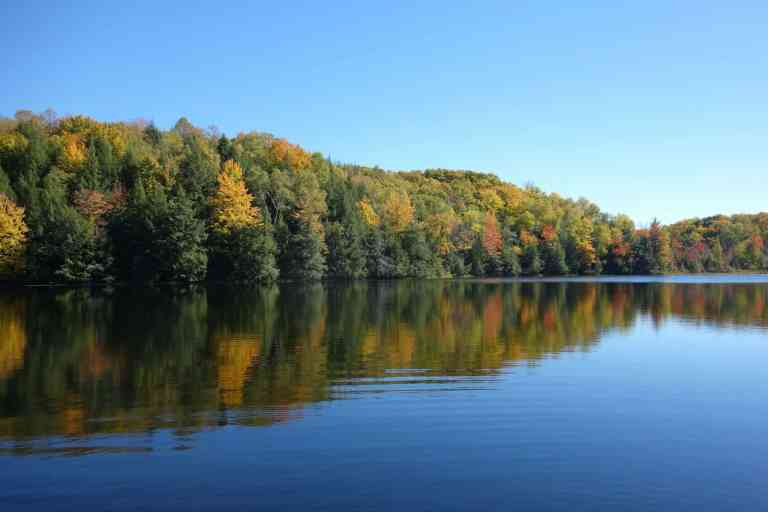
Wind is one of the few things the water hands you before the tackle box opens.
Most of my days get decided before the tackle box opens. The water already has its weather, its color and temperature, a current or a tide, and a way in — or no way in at all. The lure is about the last thing I get a say in.
I start with what I can actually see
I stand still for a minute first. What’s the wind doing to the surface? Is the water clear, stained, or muddy, and is there any current in it? Is the bank, ramp or jetty even open? Any one of those can cancel the plan, and none of them care what I tied on in the truck.
None of this is advanced. It’s the same read on a farm pond, a tailwater, the main basin of a reservoir, or a jetty on a trip out to the coast.
Same questions, different furniture
Still pond or small lake. Wind stacks food, bait and warmer surface water against the downwind edge, and you can watch it happen — foam, bugs and the trash line all pile up on whichever side the wind’s hitting. The upwind bank usually looks prettier and fishes emptier. I start on the ugly side, because pretty photographs better than it fishes.
River or stream. Here the current is the furniture. Soft water beside fast water is often the only place a fish can hold without burning itself out, and stain after rain can push fish to the edge. The seam is usually visible if you look for it. Fish are a lot more likely to be using it than the dramatic whitewater right next door.
Reservoir. A reservoir isn’t one room. Shallow warmed water, a break line and the main basin are different jobs entirely, and wind and points decide a lot about which one matters today. If the wind’s pushing into one shoreline, bait and fish tend to follow the push. How deep they’re sitting is the part I don’t know until I test it.
Coastal / inshore. Out there tide and current usually matter more than lure color. A falling tide pulling bait off a flat, or current wrapping a jetty tip, has to get read before anything gets picked. Moon phase only earns a spot in the thinking where it actually moves that particular water. If the water’s sliding off the flat, the first drop or channel edge is where I’d check next. Whether fish are sitting there today is still a guess.
If you’re newer at this and four kinds of water sounds like a lot to hold in your head, only read the one you’re standing next to. Nobody has to figure out a reservoir and a jetty on the same morning.
Access is a condition too
A closed gate, a dangerous ramp, a lightning cell or a “no fishing” sign isn’t the day failing. It’s the day answering. Whether I can fish the water safely and legally comes first, and everything after that is optional.
What reading conditions won’t do
It won’t put a fish on by itself. What it does is keep me from spending the first hour arguing with weather the water already accepted without me. One windy afternoon on one pond doesn’t get to become a law, and I try hard not to let it.
I keep my notes in separate piles: what I actually saw or checked, what I’m guessing and still have to test, and what I just don’t know. The unknown pile stays labeled instead of getting filled in with whatever sounds good.
Next time, before you tie a knot, write down the wind and the water color, plus how you got in. A notebook works, or you can open Conditions & Access and start there. After that comes piece two: one decision, one test.
Back to The Method · Water-type frames
FIELD OBJECT
This one should leave the page.
The article is the long version. These are the pieces worth carrying into the next trip.
The 30-second version
Before I pick a lure I want to know what the wind and the water color are doing, whether there’s current or tide, and whether I can even get in. That settles more of the day than whatever’s tied on.
What to watch
- I start with what I can actually see
- Same questions, different furniture
- Access is a condition too
- What reading conditions won’t do
Field card
- I start with what I can actually see
- Same questions, different furniture
- Access is a condition too
- What reading conditions won’t do
RIGHT TOOL, NEXT
Field Sense Navigator
Take the article’s water or access question into a place-specific conditions and route check.