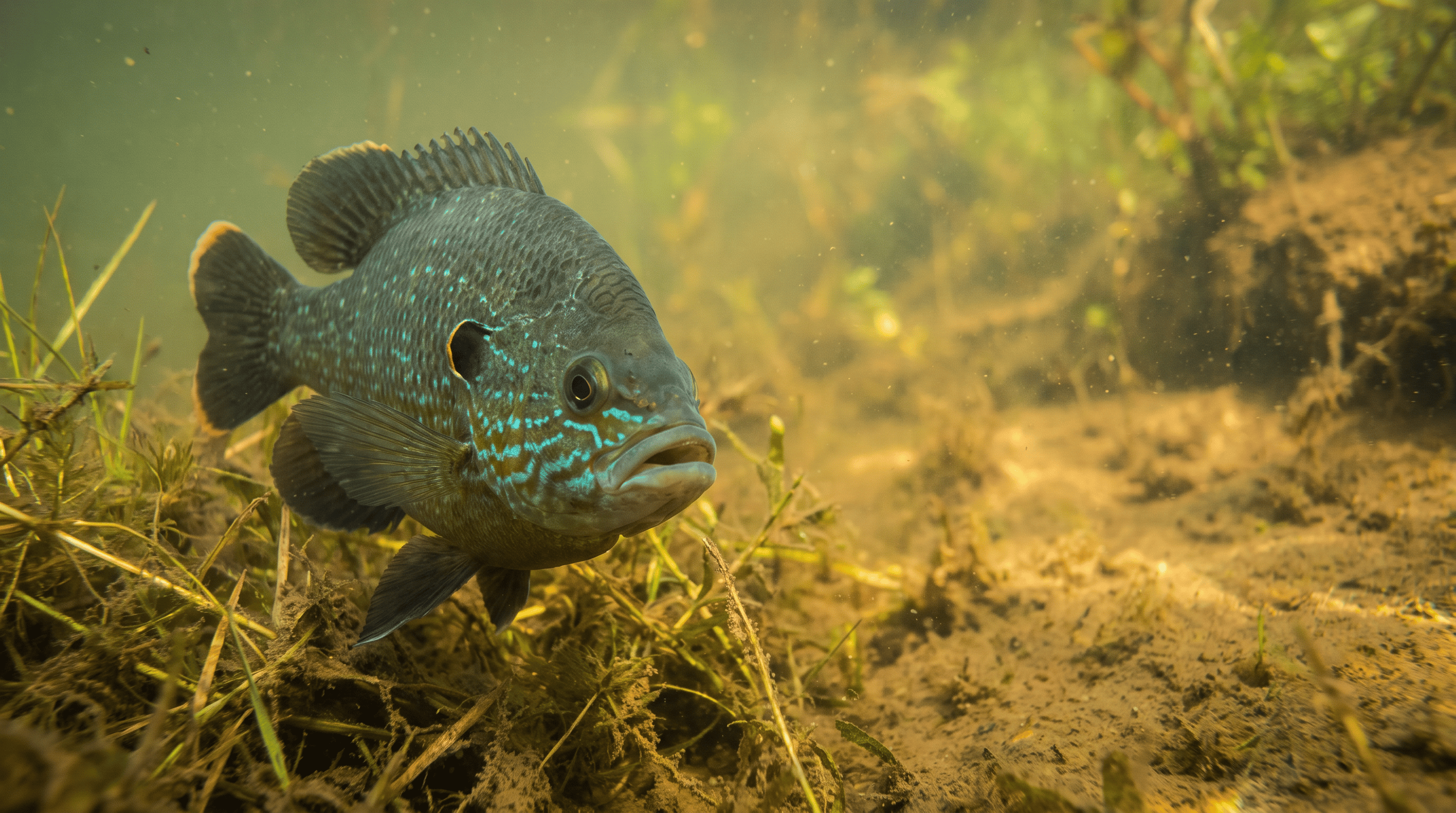
Species on-ramp · pond and lake panfish. Bluegill, pumpkinseed, redear, crappie, yellow perch, green sunfish. This is the water a lot of people actually grew up on, and it isn’t some lesser version of a trout river. Panfish will tell you the truth about depth and speed faster than any bass seminar.
Profiles below are North American patterns. Your pond hasn’t read them. Check local rules for size, bait, and closures.
Species · pond and lake panfish
The bobber’s real job is holding a depth
- the band they are using
- above it
- below it
Why panfish make such good teachers
Panfish sit in water you can see, they school up, and they’ll ignore a lure that’s riding two inches too high. That makes them a better teacher than a fish you only meet once a year. You can run one variable on a city pond after work and learn something real.
The habitat sequence they actually use
| Fish | Typical sit | Eat path | Seasonal tell |
|---|---|---|---|
| Bluegill / sunfish | Weed edge, dock shade, a lane you can keep a small bait in | Bugs and tiny bait along the edge, not the middle of the pad mat | Beds in warming shallows; summer they slide to the first shade or deeper weed |
| Black crappie | Clearer water, brush, the shady side of a dock | Small fish at a specific depth. The school can leave the wood. | Spring wood; summer they often suspend. Find depth before you change the jig. |
| White crappie | Stained reservoirs, creek channels, cover that meets the right depth | Same idea: depth first | They will use a channel swing when the bank wood is empty |
| Yellow perch | Bottom transitions, the first break, schools that keep moving | Small bait and bugs on the bottom change | The depth that worked at 9 a.m. can be wrong at 1 |
The test to start with: keep the same tiny bait and the same color, and fish it at a few different depths along one edge. Most they-turned-off days are a depth miss wearing a mood.
Mistakes that have nothing to do with skill
Throwing a bass lure in panfish water is a classic. So is a retrieve that never gets into the lane, or fishing the postcard side of the pond while the wind stacked every bug on the ugly bank. The easiest one to shrug off is handling a bluegill you’re about to release like it doesn’t count. Small fish still need wet hands and water, not a dry towel and a trophy pose.
Fuller profiles: Bluegill · Black crappie · White crappie · Yellow perch · Panfish as a precision lesson · Green sunfish · Pumpkinseed · Redear · Rock bass · Warmouth
Crappie in July push the depth idea about as far as it goes. They’re still findable; the answer is just a depth instead of a bait. Summer Crappie works through brush, thermocline and the order to settle those questions in.
FIELD OBJECT
This one should leave the page.
The article is the long version. These are the pieces worth carrying into the next trip.
The 30-second version
Panfish hold in a narrow band and won’t travel far to eat, which makes them the best depth teacher in the pond. Move the bobber before you blame the bait.
What to watch
- The bobber's real job is holding a depth
- Why panfish make such good teachers
- The habitat sequence they actually use
- Mistakes that have nothing to do with skill
Field card
- the band they are using
- above it
- below it
RIGHT TOOL, NEXT
Field Sense Navigator
Take the article’s water or access question into a place-specific conditions and route check.