YELLOW PERCH · SPECIES PROFILE
Find the school first. Fuss over the lure later.
Yellow perch can make simple fishing feel complicated because the fish itself moves the target. A weed edge works until the school slides off it. A basin bite works until the fish suspends five feet higher. The useful question usually isn’t “what color?” It’s “where did the school go?”
Profile basis: Wisconsin DNR · Michigan DNR · New York DEC
IDENTIFICATION
The bars do most of the work.
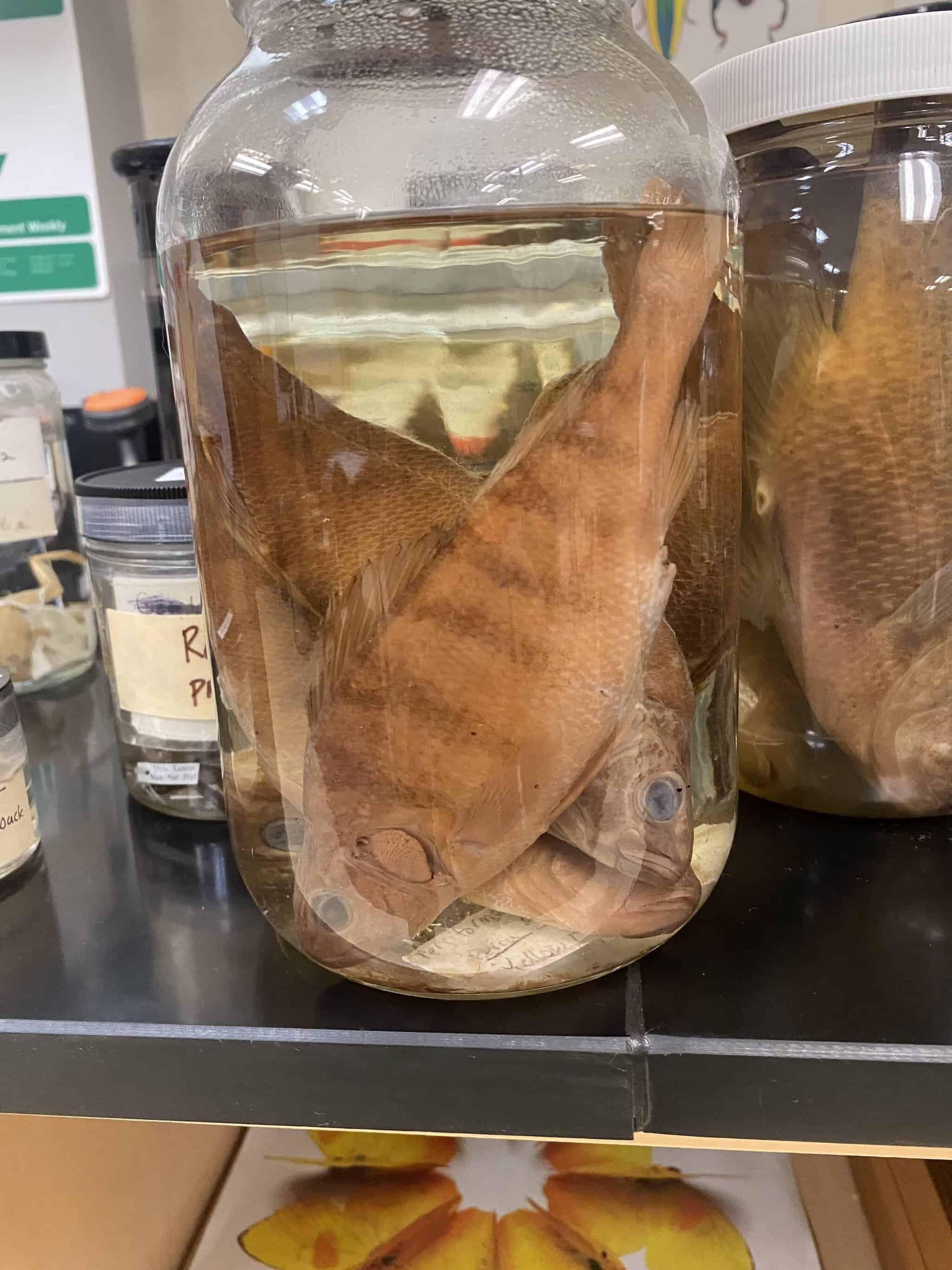
Yellow perch are one of the easier common freshwater fish to recognize: yellow to brass-colored sides, dark vertical bars, orange or reddish pelvic and anal fins and two separate dorsal fins.
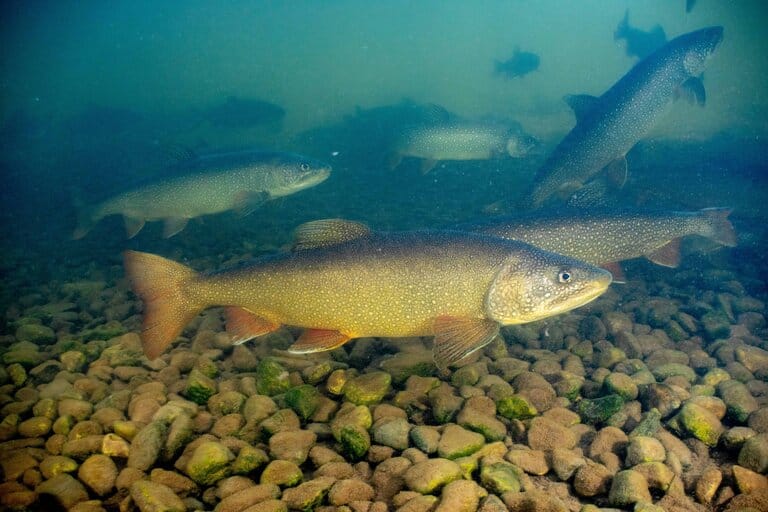
Juvenile walleye and sauger share the perch family and can look vaguely related, but the shape and markings separate them quickly. Walleye are more elongated, have large reflective eyes and carry different tail/dorsal markings. Sauger show dark saddle blotches and spotted first dorsal fins rather than the clean perch barring.
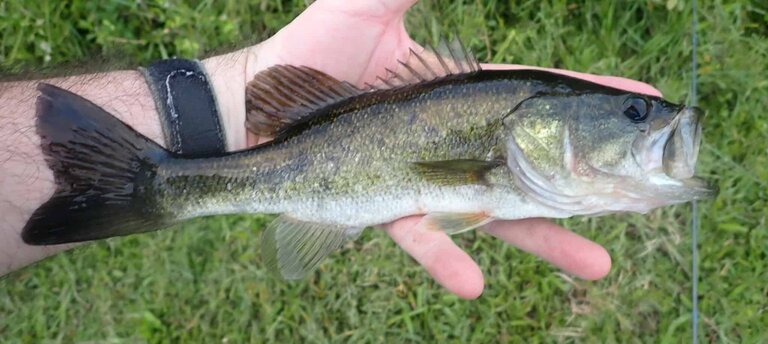
White perch aren’t close relatives, whatever the name says. They lack the yellow-perch bars and orange lower fins and belong to the temperate-bass family.
SCHOOLS ARE THE STRUCTURE
A good piece of bottom without fish over it is still empty.
Yellow perch school through much of the year. That means habitat tells you where to search, but the school itself decides whether the cast matters.
Vegetation edges, hard-to-soft bottom transitions, flats beside deeper water, basin edges and drop-offs all repeatedly hold perch because they concentrate invertebrates, small fish or both. On large lakes, perch can also suspend away from obvious structure when forage moves into open water.
That’s how you can drag one favorite weed line for two hours and get nothing even when the habitat is textbook. If the school moved ten feet deeper or a hundred yards offshore, the weed line didn’t turn into bad habitat. Nobody’s home, that’s all.
Electronics help, but you don’t need them to do this. Repeated bites at one depth, birds or bait activity, other fish in the area and bottom transitions visible on a map all help shrink the search.
DEPTH BEFORE COLOR
Perch can be above your bait and still feel completely absent.
Perch often feed near bottom, which is why bottom-oriented jigging is so reliable. They aren’t tied to it, though. Schools can suspend over deep basins or rise off bottom to follow prey.
That creates the classic perch mistake: the angler keeps tapping bottom because “perch are bottom fish” while the fish are five feet above the jig.
Once you catch one, note the depth of the bite—not just the total water depth. Put the next presentation at the same level. If the school moves, move with it vertically before rebuilding the whole rig.
A small vertical jig or spoon is useful because it lets you search the water column quickly. Live bait can help with scent and movement, but it still has to be where the fish are.
WEEDS, THEN EDGES, THEN BASINS
The seasonal move is usually a habitat move, not a lure move.
Spring and early summer can keep perch around shallow vegetation, warming flats and spawning areas. As the water warms and weeds mature, fish often use outside vegetation edges and nearby depth transitions.
Later summer and autumn frequently shift larger schools toward deeper structure and basin water, particularly where prey also moves deeper. Clear large lakes can put fish surprisingly far from shore.
That progression isn’t a calendar law. A shallow fertile lake and a deep clear lake won’t move perch on the same schedule. The useful question is what happened to the vegetation, temperature and forage.
FOOD
The menu gets bigger as the perch does.
Young yellow perch start with zooplankton and small aquatic insects. As they grow, benthic insects, amphipods, crayfish, fish eggs and small fish become increasingly important.
Large perch are capable predators and can eat young-of-year fish, including smaller perch. That is why a minnow-sized presentation can make sense for larger fish even though tiny jigs and insect-like baits also catch them.
The prey shift also explains some seasonal movement. If insect larvae and amphipods concentrate on one bottom type while young fish suspend elsewhere, perch can change location and there’s nothing mysterious about it. They went where the food paid better.
PRESENTATION
Small, repeatable, and easy to move vertically.
Small jigs tipped with worms, maggots or legal minnows, tiny spoons, ice jigs and small plastics all fit perch because they can be kept at a precise depth without turning the setup into a project.
When one fish bites, make the next few drops as similar as possible. A school can turn one good observation into several fish in a hurry, as long as you don’t go changing the answer right away.
ICE
The school is still moving even though you’re standing still.
Yellow perch are one of the most important ice-fishing species across the northern United States. Under ice they continue schooling and feeding, often around basin transitions, weed lines and deep flats.
The presentation becomes easy to control vertically and harder to move horizontally. That is why mobility matters. If repeated drops through a good depth range produce nothing, moving holes can be more useful than cycling through six colors in the same empty column of water.
Light penetration, snow cover, oxygen and prey can all change where fish sit through the winter. A productive early-ice weed edge may not be the same midwinter location.
SPAWNING
The eggs come out in a ribbon nobody guards.
Yellow perch spawn in early spring, often soon after ice-out, in shallow water around vegetation, brush, woody debris or other structure.
The female releases a long gelatinous strand containing thousands of eggs. Males fertilize the ribbon, and neither parent builds a nest or guards it afterward.
That egg ribbon is one of the species’ most distinctive reproductive traits and explains why flooded vegetation and nearshore structure matter even before summer fishing begins.
KEEPING PERCH
The small fillet is why people keep catching one more.
Yellow perch are widely prized as table fish, especially around the Great Lakes and northern lake country. Their popularity can create heavy harvest pressure when schools concentrate and anglers can catch fish quickly.
DEEP REFERENCE · THE PARTS THAT DON’T NEED TO LEAD
Perch biology gets complicated fastest at population scale.
Why perch size varies so much among lakes
Growth depends heavily on food supply, density, growing season and predator community. A crowded lake can produce huge numbers of small perch; a lower-density system with abundant forage can produce fewer, much larger fish.
Great Lakes food-web change
Invasive mussels, round gobies and other food-web changes have altered where energy moves through the Great Lakes. Perch growth, recruitment and diet therefore differ by lake and era. A Great Lakes diet should not be copied automatically onto a small inland lake.
Do perch always stay near bottom?
No. Bottom habitat is important, but schools can suspend with forage. The useful rule is to know the fish depth, not to treat bottom contact as a species requirement.
What nobody’s shown well enough to claim
No universal perch response to barometric pressure, one wind direction, one color or one exact best time of day is established strongly enough to replace school location, depth and forage.
FEEDING ECOLOGY · STANDARDIZED
How this fish gets fed.
Only documented feeding biology is summarized here; unsupported bite windows are left out.
SOURCES
The source shelf.
Profile reviewed 2026-09-02.