START HERE · NEVER FISHED BEFORE
First Cast.
This gets you from never having fished to an actual first trip: a license, a public water you can name, one fish and one simple way to catch it, the first twenty minutes, and permission to go home. You’re not competing with anybody out there. A fish is great if one shows up. It isn’t the grade.
Start with a license → Start an active trip → I already know a little →
01 · LEGAL FIRST
Get your license from the real source.
I’m not going to guess at your local rules. Youth rules, one-day licenses, habitat stamps and seasons all change, so pull up the official page the morning you go.
Colorado (worked example)
Colorado Parks & Wildlife lays it all out clearly, which makes it a good example. If you’re fishing Colorado, use it. Anywhere else, go to that state’s wildlife agency, not whatever license-reseller ad shows up first.
CPW fishing overview →
Licenses and dates →
Buy a license (CPW Shop) →
Any U.S. state
Start at the state wildlife agency. Take Me Fishing links out to official sources.
Before you leave, make sure you know which state you’re fishing, you’ve actually opened the official license page, and you can show the license on your phone or on paper.
02 · NAMED PUBLIC WATER
Pick water you can actually use.
Pick a pond, park lake or state-park reservoir you can call by name. Field Sense is where you check whether it’s ready for you — access, regulations, hazards, anything that needs a same-week check, and what nobody knows yet. If it comes back Stop, that’s a real answer, not a failed search.
In Colorado, Cherry Creek State Park Reservoir, Chatfield State Park Reservoir and Barr Lake State Park are all examples, but check each one on the CPW pages before you go. A city park pond with a name is plenty. Private land isn’t a gray area, though, no matter how good the pond behind the fence looks.
03 · FISH, THEN PRESENTATION
Know what you’re trying to catch before you worry about gear.
For a first trip, pick something common and legal on that water — on a park lake that’s usually panfish or bass. Species & Presentation takes the fish, the water, the season and the conditions and points you at a simple way to fish for it. It won’t tell you when they’ll bite. It just keeps you from buying tackle for a job you haven’t picked yet.
You can skip the what-are-they-eating question on trip one. If you do clearly see bugs, little baitfish or some other food and can’t tell what it is, Hatch Match can help narrow it down. If not, don’t go looking for homework.
Open Species & Presentation → Read the beginner panfish guide →
04 · ONE SYSTEM
A simple spinning combo. That’s it.
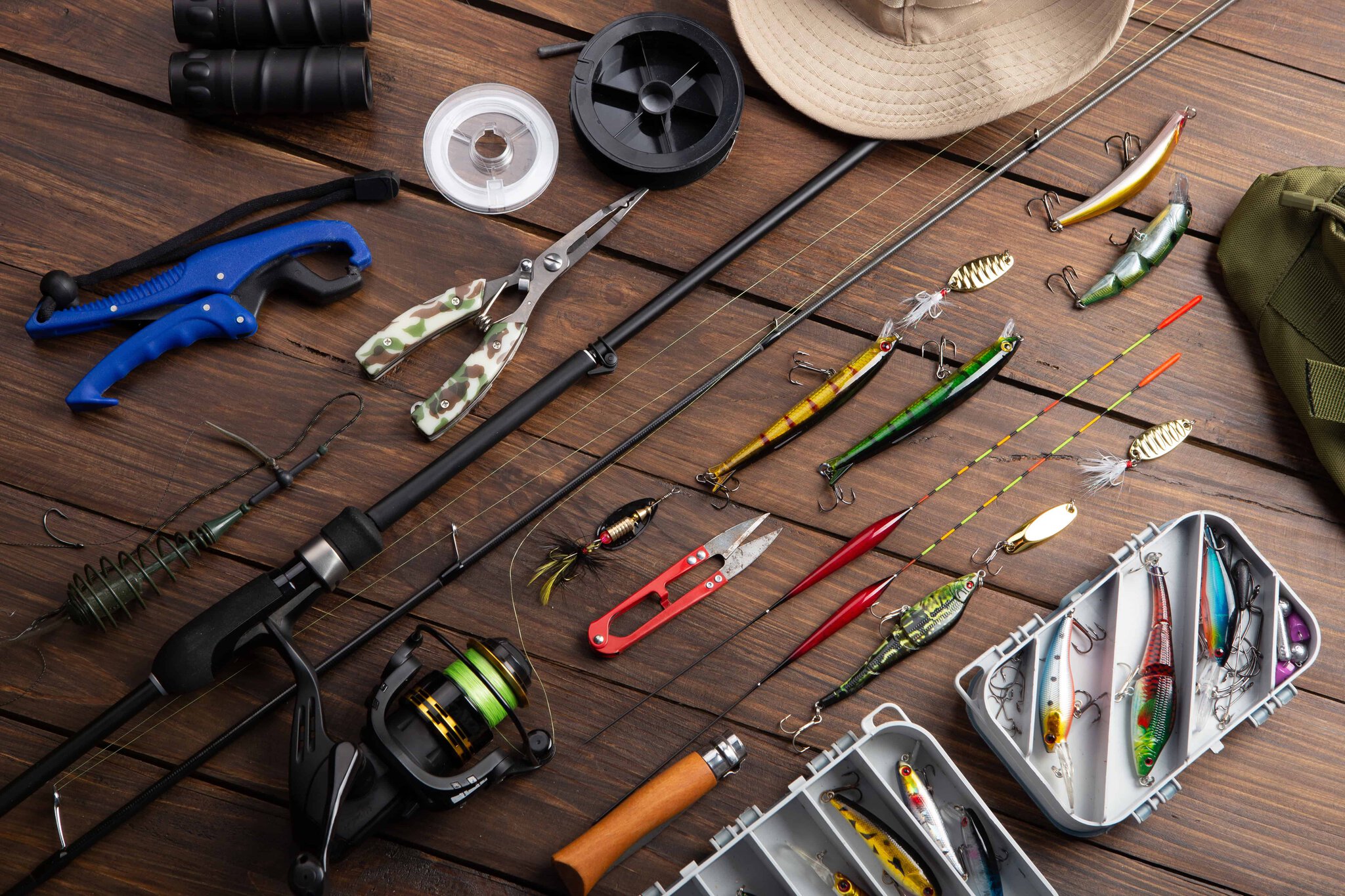
A medium spinning rod around 6’6″–7′, a small spinning reel, 8–10 lb monofilament, basic hooks, split shot, a bobber, and worms or a small soft plastic will cover the first job. Borrow what you can — plenty of garages have a spinning rod in the corner that hasn’t seen water in years and wouldn’t mind the trip. The shopping list isn’t really the point. What matters is whether the rig can fish the way you already picked.
Presentation job → rod → reel → line → leader if needed → terminal connection. Every piece has to fit the one next to it. If you’re not sure your pieces go together, Tackle Link checks that. If the knot is the only thing you’re unsure of, that’s Knot Analyst.
A Palomar or an Improved Clinch is enough for trip one. Tie it a bunch of times at the kitchen table first, where your hands are warm and a dropped hook doesn’t vanish into the grass. If leader and presentation still just sound like words people say, Plain Words explains them →
Check the first spinning system in Tackle Link → Open Knot Analyst if the knot’s the question →
05 · THE FIRST TWENTY MINUTES
Don’t change three things at once.
When you walk in, look at the wind on the open water, the water color, where you can reach the bank and where the useful stuff like weeds, rocks or a drop-off starts. Fish one way honestly for a while, and write down one thing you noticed before you change anything.
01 Read the day
Wind, temperature, sky, access — before you unload the car.
02 Read the water
What’s there and what you can reach decide how good it can get. If the water’s different from what you planned for, let the plan go.
03 Read the fish
Where your fish likes to hold and how it tends to behave give you a place to start.
04 Test one presentation
Keep the depth, speed and path the same long enough that whatever happens actually means something.
06 · GO / ADJUST / STOP
Sometimes the answer is go home.
Go
The info’s current, the water’s fishable and you know how you’re getting back. Fish one way, and change one thing only after you’ve given it a fair shot.
Adjust
Wind on the wrong bank, stained water, a crowded ramp — change the plan, not the whole box.
Stop
A posted sign, lightning, unsafe water, stressed fish, or access you can’t confirm. Leaving for any of those is a good decision, not a wasted drive.
If you catch one, wet your hands first, support its body, and keep it in the water when you can. Before you head out, clean, drain and dry your gear, and take your line scraps home with you instead of leaving them on the bank.
07 · BRING ONE LESSON HOME
The trip should make the next trip easier.
Field Ops is where the trip and the debrief live. Write down what you saw, what you changed and what happened after, plus one thing you want to try next time. A day with no fish is a letdown, sure, and there’s still something worth writing down from it.
PRINT THIS
Glovebox checklist
- License from the official agency page, on phone or paper
- Named public water checked in Field Sense
- One likely target species and one simple presentation
- One compatible spinning system and one clean terminal knot
- One observation written down before changing anything
- One next test recorded after the trip
- I accept that going home can be the correct call
One more thing, and it does not fit on a checklist. The first trip is not a test you can fail. You will bird’s-nest the reel at some point, and somebody parked forty feet away will have better gear and worse manners. Neither of those is the day. The day is whether you noticed one thing about that water you could not have known from the parking lot. You will. A fish turning up to confirm it is a bonus.
Then level up: First 10 Trips · Common situations · The Method · Start Here · Field Library · 90-second tool first run.