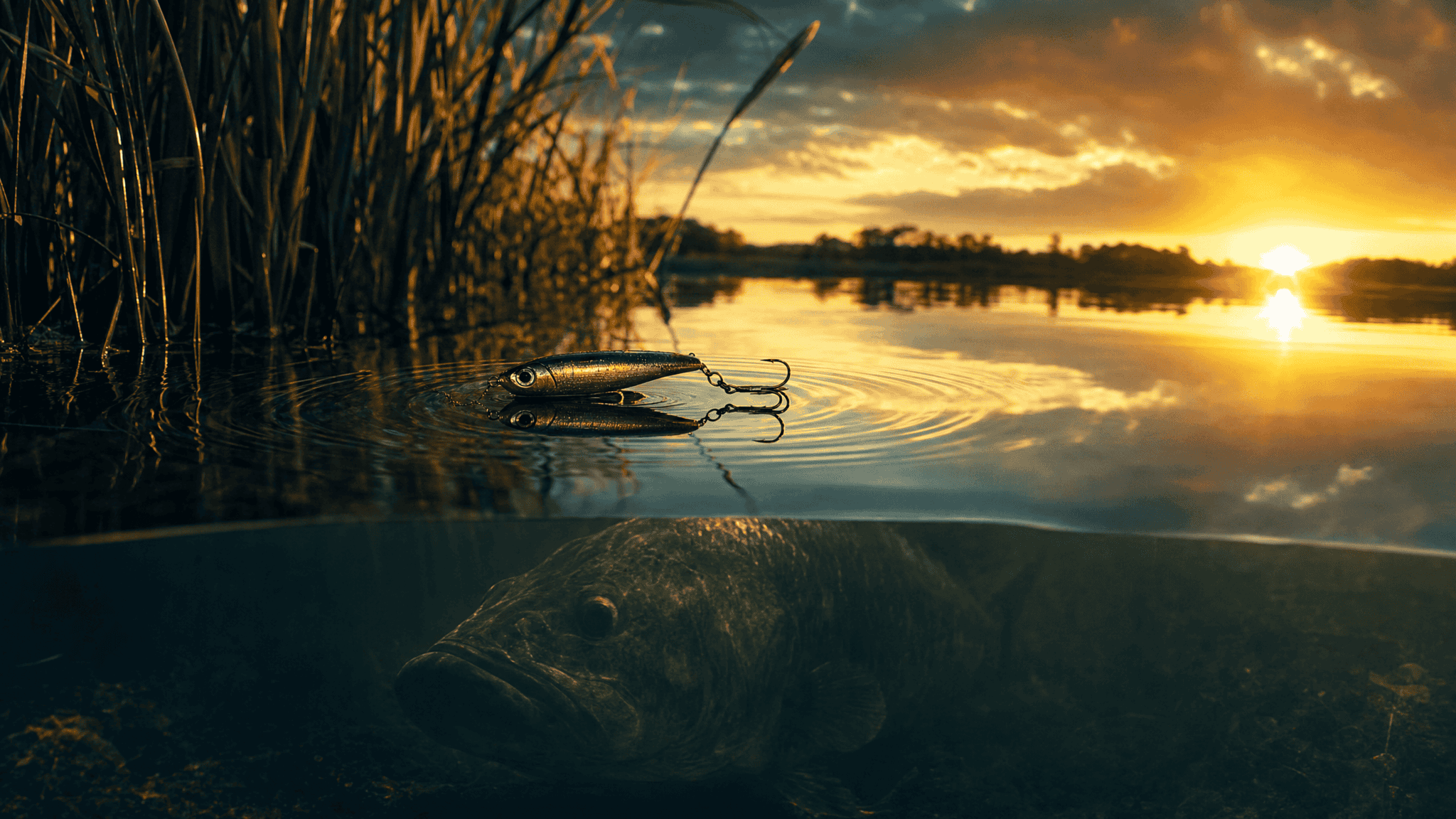
Species on-ramp · warm-water stillwater. Largemouth bass, spotted bass, bowfin, bullheads, carp and other warm-water fish can share one pond or reservoir and use it in completely different ways. Stained ponds, weedy lakes and warm reservoir coves all start here, but lumping those fish into one “pond pattern” is how you end up running a bass plan on carp. Start with the species, then ask which part of the water solves the problem that fish has right now.
Nobody’s secret pond gets named here, only public water.
Species · warm-water stillwater
No current, so the edges do all the work
- wind
- vegetation
- depth
What the fish are actually negotiating
Warm stillwater can make cover, temperature, oxygen, food and depth compete with each other. Weeds can give cover and oxygen for part of the day, but thick or rotting weeds can make the water worse. Shade can cut light and heat without automatically holding fish. A deeper basin can be steadier, but only if the temperature and oxygen down there still work for your fish. So skip “where do warm-water fish go?” and ask which kind of water fixes this fish’s problem right now.
Where to look first
Cover beside another usable depth
The outer edge of the weeds, the deep end of a laydown, the shaded side of a dock, flooded brush. What makes any of them worth a cast is what sits next to them — a lane out, a drop, an open pocket, a route to food. A stump with nothing on either side of it is a stump. Fish the relationship before you decide the object is magic.
Transition water
First breaks, the line where weed becomes open water, hard bottom turning soft under the rod tip, a creek-channel swing, a point. These connect feeding water to refuge or travel water, and which of them matters this week depends on the fish and the season rather than on which one is easiest to see from the bank.
Low-light opportunity
Dawn, dusk, shade and heavy cloud change how far a fish will move and how exposed a feeding lane feels. That is not the same as the bank switching on at sunset, which is a thing people say because it happened to them once. Check the species, then check what actually responded.
Open-water or basin fish
Carp, suspended predators and forage-oriented fish can use water with little visible shoreline cover. Depth, bottom, forage, temperature, oxygen and movement may matter more than the nearest dock or weed bed.
“Warm-water” is one label stretched over a lot of fish
| Fish / group | Useful first question | Holding-water clue to test |
|---|---|---|
| Largemouth bass | Is the fish using cover, a transition, or open-water forage? | Cover edge beside depth, vegetation outside edge, channel/flat transition, or another class supported by the season. Profile → |
| Spotted bass / reservoir predators | Is the useful water tied to current, channel structure, suspended forage or a depth transition? | Creek/channel intersections, points, suspended forage depth or other repeatable reservoir relationships. Profile → |
| Bowfin / low-oxygen tolerant fish | Is dense shallow habitat still physically usable and food-rich? | Vegetation, backwater, woody cover and shallow structure—but a fish that can handle low oxygen doesn’t make every stagnant pocket good water. Profile → |
| Carp | Are fish feeding, traveling, cruising surface layers or using bottom food? | Shallow feeding flats, travel lanes, inflows, soft-bottom food or visible fish behavior. Profile → |
| Bullheads / bottom-oriented species | Where is bottom food accessible with cover or low-light security? | Soft-bottom edges, cover, deeper pockets, inflow areas or night movement depending on the water. Profile → |
A pond or lake test that actually teaches you something
Pick one believable relationship, say the outside edge of the weeds next to the first depth change. Use a presentation family you can control, and make repeat passes through the layer you meant to fish before changing anything. Then let what the fish did pick the next thing you change.
Example: two follows on the weed face → change depth while keeping profile and speed about the same → contact. That makes depth worth testing again. It doesn’t prove every fish moved deeper, or that every outside weed edge is turned on.
What wind and stained water actually change
Wind can change surface drift, wave exposure, boat control and, in some waters, mixing. It can pile food up along a line, like the wind line in the drawing up top, and that’s a good reason to compare a bank taking wind against one that isn’t. It still doesn’t make that bank the place fish automatically “stack.” Stained water can shorten how far a fish sees, but species handle that differently. Make sure you can still control the presentation, then test distance, profile, motion, contrast or position one at a time.
When the current idea has stopped earning casts
- The species no longer has a plausible reason to use that holding-water class.
- You cannot keep the presentation in the intended depth or path.
- You made controlled changes and the response stayed null.
- Temperature, oxygen, access, bloom conditions or weather make the water unsafe or biologically questionable.
- You are rotating products without being able to say which fishing variable changed.
What question comes next?
If the named water is still unresolved, use Field Sense. If the water is workable but the fish/holding-water logic is not, use Species & Presentation. If the presentation is settled and your existing system may not execute it, then move to Tackle Link. Do not jump from “warm pond” straight to a tackle answer.
One profile sits underneath a lot of what happens in warm stillwater: Florida Bass, the strain behind a great many trophy largemouth claims, and the reason a fish in a Florida-stocked reservoir does not always behave like the northern-strain largemouth you learned on.
Related: Stillwater frame · Reservoir frame · Response → adjustment · All species on-ramps