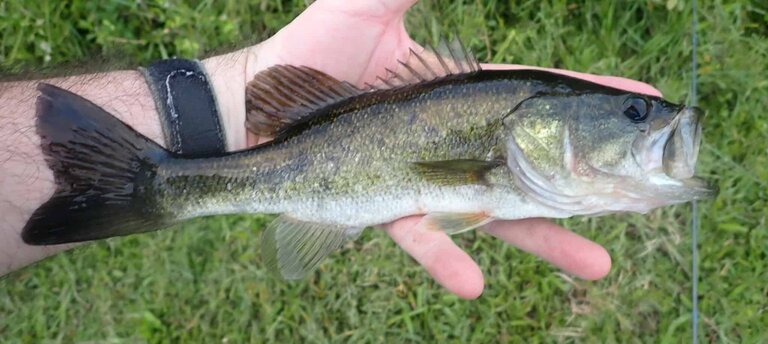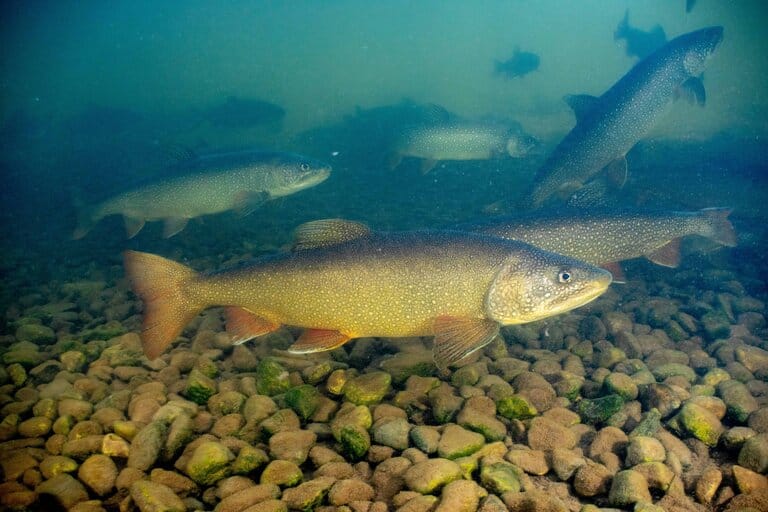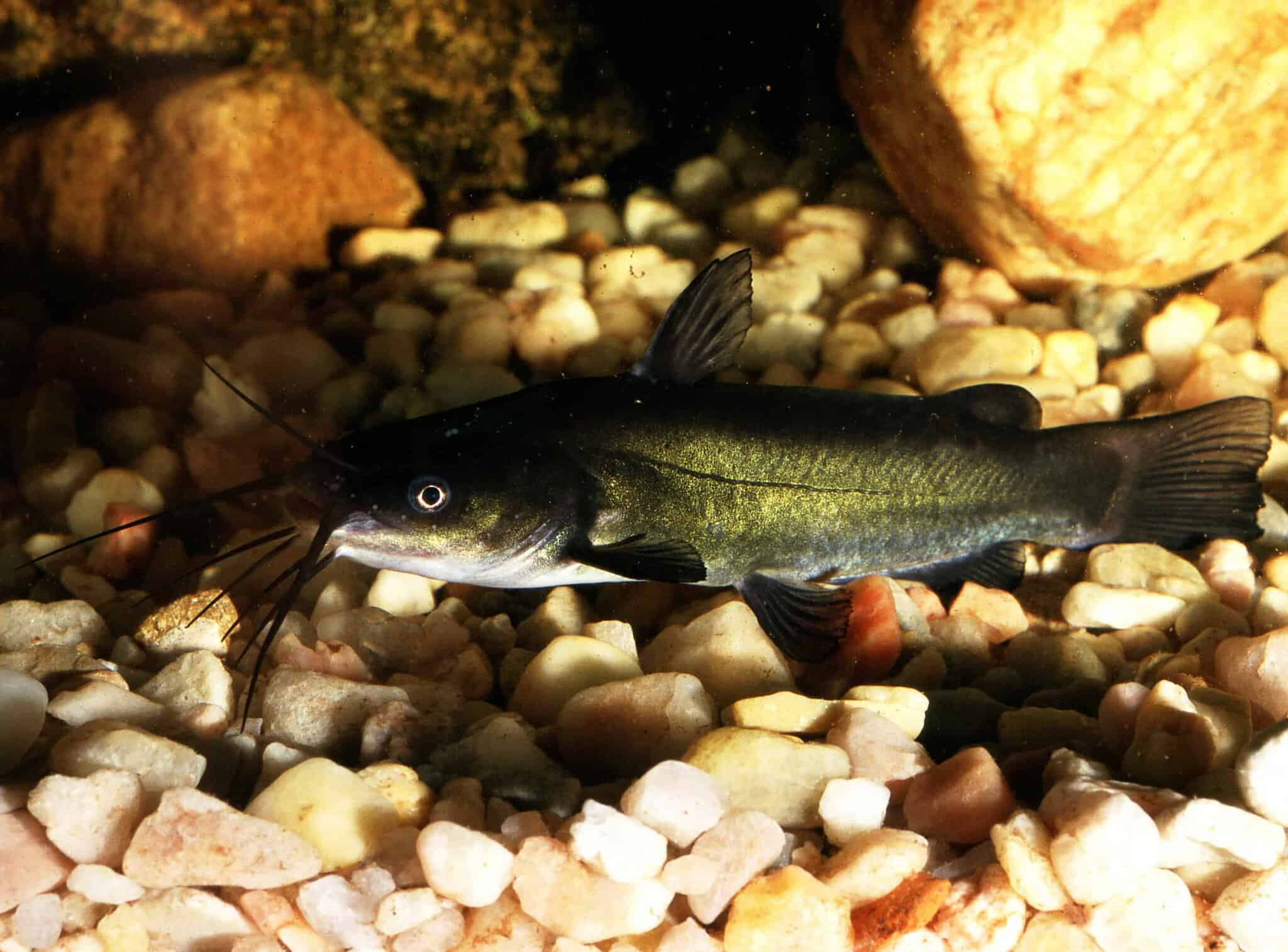
Black bullheads live where eyesight quit being much use, and it’s tempting to decide location quit mattering too. It didn’t. A wind-blown bank, an inflow or a pond drain still piles up food, and the fish still follow routes across soft bottom after dark. Finding dinner by smell isn’t the same thing as wandering around.
Black bullheads can find food in water that looks like it has turned the lights off. Turbidity, warm temperatures, soft bottom, and low visibility make scent and bottom contact important—but the fish still use routes. Windblown banks, inflows, pond drains, old creek channels, and the edge of shallow flats give a bullhead a place to search efficiently.
Species: Black bullhead, Ameiurus melas. It has been introduced widely outside parts of its native range and may be regulated as nongame, panfish, baitfish, or invasive depending on jurisdiction.
Start with water movement
- Wind: a steady wind can push food toward one bank and mix oxygen into shallow water.
- Inflow: culverts, small creeks, and storm runoff deliver insects and odor—but can also create unsafe water.
- Outflow: pond drains and spillways concentrate routes when water is moving.
- Old channel: a subtle depth line gives fish a travel corridor across featureless mud.
- Flat-to-hole transition: fish can rest deep, then feed shallow after dark.
Identification: dark barbels and a square tail
Black bullheads are dark olive, brown, or nearly black above with a pale belly. The chin barbels are dark, the tail is square or only slightly rounded, and the body is usually not strongly mottled. Channel catfish have a deeply forked tail. Brown bullheads are more mottled and differ in fin-ray details.
The pectoral and dorsal spines can cause a painful puncture. Control the fish behind the pectoral spines or with an appropriate landing tool. Don’t grab blind in the dark, and don’t blame the barbels — they’re soft. The spines did it.
Where they live when oxygen is uneven
Black bullheads tolerate warm, turbid, slow, and seasonally low-oxygen water. They use ponds, reservoirs, marshes, backwaters, sluggish streams, and river margins. Tolerance is not preference. The best fish may still be near better oxygen: a windblown bank, green vegetation, inflow, spring influence, aerator, or open-water mixing zone.
During algae die-offs or vegetation decay, avoid the foulest pocket. Fish gasping at the surface, strong sulfur odor, or dead organisms indicate a water-quality event, not a feeding opportunity. End the session or move to safer water.
In a featureless pond, a one-foot depression, submerged fence line, or transition from firm mud to silt can be the only structure needed.
Daylight position and the night route
By day, bullheads may hold in deeper water, beneath cover, or along shaded banks. As light falls, they move onto flats, along shorelines, and through openings in vegetation. Set up between the resting area and feeding water rather than casting randomly into the middle.
After sunset, minimize lights over the water, bank noise, and repeated recasting. Use enough light for safe handling and navigation, directed away from other anglers and the surface. Mark rods and tackle so no one steps on a hook.
Cold weather slows movement. Fish deeper stable water with smaller baits and longer—but still purposeful—soaks. Under ice where legal, safety procedures come before species strategy.
A rig that separates signal from mud
A sliding sinker, short leader, and exposed hook make a useful starting rig. Use just enough weight to hold. A sinker buried in soft mud can mask a pickup and pull the bait into debris. A small float or buoyant component can lift bait slightly above bottom if legal and compatible with the rig.
In current, cast slightly upstream and allow the rig to settle at the seam. In still water, fan-cast several distances until a route produces. Keep each test long enough for scent to disperse but short enough to cover water. Fifteen purposeful minutes in four lanes teaches more than an hour in one dead patch.
A buried sinker feels exactly like a soft take until you check.
Bait without the secret-recipe performance
Worms, cut bait, insects, crayfish, shrimp, prepared baits, and other legal offerings can catch black bullheads. The most important variables are freshness, size, attachment, and whether the bait reaches fish. Strong odor is useful in low visibility; decomposition is not a requirement.
Cut bait should be sized to the fish, with skin or tough tissue holding it on. Dough or prepared bait needs a hook or holder that preserves the gap. Check bait after missed bites, turtle activity, or long soaks. A bare hook has no scent advantage.
Artificial and active options
A small jig tipped with bait, scented soft plastic, or compact vibrating lure can find active fish along an edge. Hop it slowly enough to maintain bottom contact without plowing. Pauses let the fish locate the offering.
Artificial fishing is especially useful when small fish, turtles, or crayfish destroy passive bait. It also reveals exact strike location. If all bites come while the jig drops off the flat, the depth change—not the scent brand—is the pattern.
Tackle, hooks, and multiple rods
Medium-light spinning gear with six- to twelve-pound line covers most situations. Use stronger line near wood. Rod holders should secure the rod against a sudden pull and keep line clear of people. Follow local limits on rods and hooks.
Circle hooks can reduce deep hooking when the fish moves away steadily; reel into pressure rather than jerking. J-hooks demand closer attention. Carry long pliers, a light, and a small towel or wet glove for safe control.
Next-move decisions
- No bites on a calm bank: test windblown shoreline, inflow, or the channel edge.
- Bait disappears without movement: downsize, toughen, or check more often for small scavengers.
- Only bites at one distance: place multiple legal rods along that contour, not across random depths.
- Sinker buries in mud: lighten, broaden, or suspend the bait slightly.
- Activity starts at dark: reduce recasting and keep the route quiet.
- Water quality deteriorates: stop; survival stress matters more than a night bite.
Handling, food safety, and introduced populations
Use deliberate hand placement around the spines. For release, wet hands and minimize air exposure. For food, dispatch and ice immediately. Check state or tribal consumption advisories, particularly in small impoundments, agricultural waters, and urban ponds.
Never transfer bullheads or use them as live bait without clear legal authority. Their tolerance and reproductive success make unauthorized introductions difficult to reverse.
FEEDING ECOLOGY · STANDARDIZED
How this fish gets fed.
Only documented feeding biology is summarized here; unsupported bait folklore is left out.
Field notes and sources
Record wind direction, inflow, clarity, oxygen clues, bottom type, depth, time after sunset, bait condition, soak duration, and exact bite distance. This turns “stink bait at night” into a map of the travel route.
Muddy water doesn’t get you out of figuring out where the fish go. The wind is still pushing food toward one bank, and you can usually tell which one from the parking lot before it gets dark.
Species and nonnative distribution: USGS Black Bullhead profile. Identification and biology: National Park Service Black Bullhead reference. Follow live local regulations and consumption advisories.