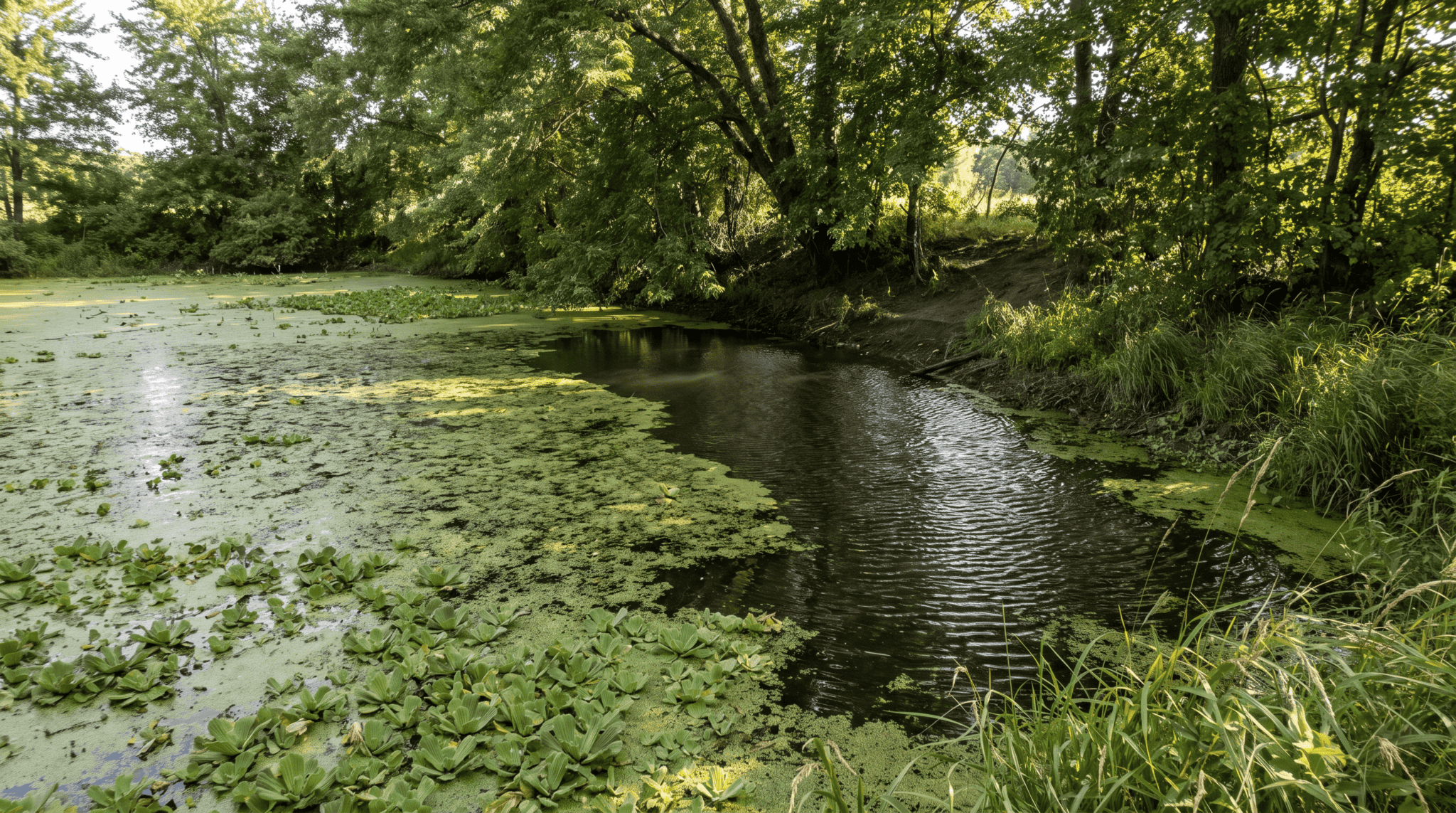
Water-type frame · stillwater pond and lake. A pond looks simple because nothing in it is visibly moving. Give it an hour and it stops looking simple. It’s split into rooms a fish can use and rooms it can’t: cover edges, depth changes, shade, inflows, open-water layers, bottom type, weeds, and the depths where temperature or oxygen make the water better or worse for whatever you’re after.
No spot list. The goal is picking which kind of water deserves your first test, and after that the species and the fish get a vote.
Where to look first
Edges that change more than one thing
A weed edge can change cover, shade, depth and access to food all at once. A laydown can put overhead cover right next to deeper water. The first break off a flat can link feeding water to a depth that’s easier to live in. That kind of relationship moves from lake to lake a lot better than “the third dock on the east bank” does.
Depth that fits this fish in this water
Don’t hand every lake the same shallow, middle and deep bands. A six-foot farm pond and a sixty-foot natural lake aren’t even the same problem. Ask where your fish can get the temperature, oxygen, cover and food it needs in this water, now. A surface temperature reading can’t tell you that on its own.
Wind changes the bank before it changes the fish
Wind changes wave exposure, casting, boat control and surface drift, and depending on lake size, depth, stratification and fetch, it can change how the water mixes too. The bank the wind is blowing into can get more interesting. It can also get unfishable, muddy, too warm, too rough, or just not matter to the species you came for. Figure out what physically changed over there before you decide the fish followed it.
Clarity
Clear, tannic, algae-stained and muddy water can all get called “off-color” from the bank, and they’re four different situations. If visibility drops, first make sure you can still control and follow your presentation. Then test whether profile, vibration, contrast, distance or position needs to change for that species.
Behavior → holding water
Fish using cover
Look for an edge that also gives the fish a route to another depth or a feeding lane. The outer weed line, a shade line, the end of a laydown or the spot where a dock drops off will usually tell you more than the object itself.
Fish using open water
Now the “structure” might be a depth layer, a thermocline, a basin contour or a school of baitfish, and you can’t see any of those from shore. Make sure your species can actually live in that layer before you start chasing marks.
Fish using a transition
First break, hard bottom going soft, weeds opening into open water, a channel edge, a point, an inflow seam. A transition earns a cast when it connects two things the fish needs to do. A map line that looks dramatic doesn’t count by itself.
Fish using a refuge
Shade, cooler water, better oxygen, less current or something overhead can matter under the right conditions. Treat a refuge as a guess about this species on this day. Fish don’t sign a lease on it for the summer.
Your first test
Pick one holding-water relationship that fits the species, say an outer weed edge next to a depth change the fish can use. Stick with one presentation family you can control. Make enough repeat passes to know you’re really fishing the layer you meant to. Then change one thing, usually depth, angle or speed, because the first response gave you a reason to.
How that can play out: nothing on top of the weeds → same edge, presentation dropped down the outside face → a follow. That doesn’t prove the fish “wanted deeper.” It does mean the outside face at that depth has earned another careful look.
Where stillwater days go sideways
- Fishing the prettiest bank instead of the one with a believable reason for fish to be on it.
- Assuming the bank the wind is blowing into is automatically the feeding bank.
- Changing colors every few casts while the lure never gets down to the depth you meant.
- Treating one surface-temperature reading like it’s the temperature of the whole lake.
- Calling every green or dark lake “stained” without deciding whether it’s natural color, algae or mud.
- Buying a new lure before you’ve shown the one you’re already throwing can’t do the job. The tackle aisle is counting on this one.
Where to go from here
If you still don’t know which fish or which part of its season makes that water believable, go to Species or Species & Presentation. If it’s the named public water itself that’s still up in the air (access, safety, current conditions or rules), use Field Sense. And if you know what the presentation has to do but you’re not sure your rod, line and terminal setup can pull it off, that’s when Tackle Link comes in. Not a cast sooner.
All Water-Type Frames · Finding fish in a lake · Wind & fetch · Response → adjustment