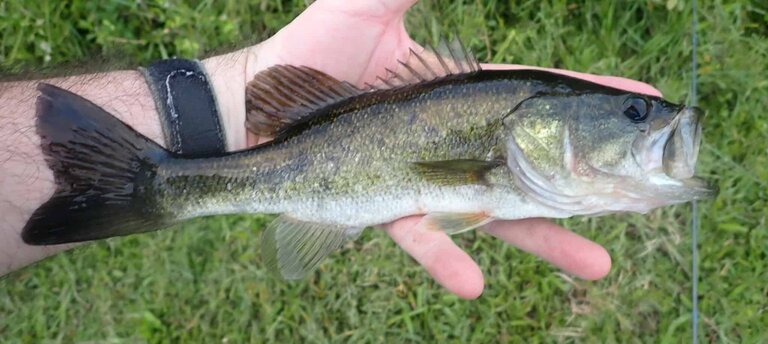
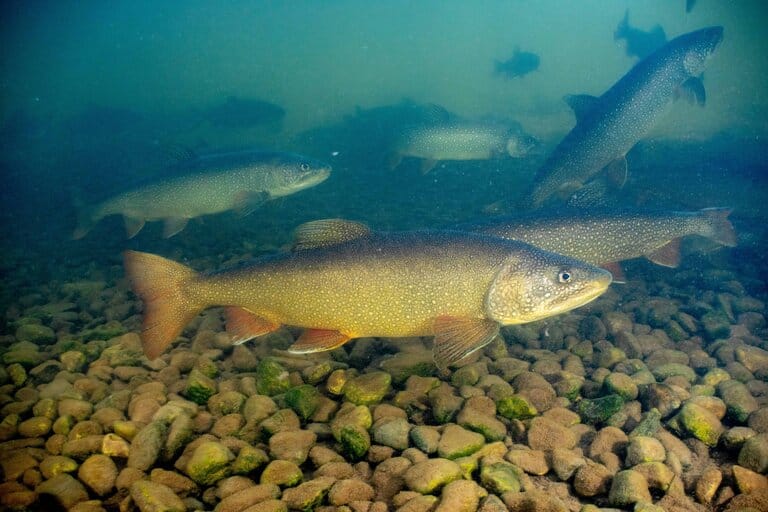
The bank pockets that were full of crappie in May can go completely dead by July, and the easy conclusion is that the fish left the lake. Usually they didn’t. They went down and out, into brush and timber and the water near the top of the thermocline, and anybody still casting at the spring banks is fishing a spot that already moved on.
FIELD PLATE · DEPTH
Depth, path, and speed are one presentation.
So once the shallow spawn is over, the useful question isn’t what color they want. It’s where they went in the water column, and what structure down there still gives them food, shade, and oxygen they can use.
Start with depth, not color
Missouri Department of Conservation guidance describes summer crappie commonly using deeper brush, standing timber, creek-channel structure, bridge piers, and water near the thermocline. The exact depths change with the lake, weather, water clarity, dissolved oxygen, and season. Missouri’s reservoirs aren’t your lake, so the structure types travel a lot better than the numbers do.
Instead of memorizing one depth, run a search. Find the likely structure, figure out where its top and bottom are, look for where bait or fish are suspended, and get the bait to that depth before you change anything about the presentation.
Brush is useful because it creates a reference point
Crappie often relate to woody cover, but “fish the brush pile” leaves out most of the useful part. A pile can sit in 24 feet of water with its highest branches at 14, and the fish can be suspended at 10, above all of it. They might be over it, beside it, inside it, or nowhere near it, and a pile that looks perfect can still be empty.
Come at it from different angles. With electronics, note the depth of the top branches and any suspended targets. From shore, sink time, repeated casts, and what you feel on the bottom build a rough map.
You’re trying to learn where the bait needs to spend its time relative to the cover. Finding the cover is only the start of that.
Standing timber can be a vertical highway
In reservoirs with flooded timber, a single tree can offer cover from near the surface all the way to the bottom, which makes it about as good a depth-testing tool as a lake will hand you.
Start high and work lower in measured steps. If the first fish comes at 12 feet beside a trunk in 25 feet of water, try 12 feet on similar trees before you change lure type.
Crappie can school tightly, and missing the right depth by five feet can make a productive tree look completely empty.
Bridge piers deserve a vertical search
Big bridge piers make shade, current changes, hard edges, and easy access to deep water. Missouri’s crappie guidance specifically calls out bridge piers as a productive summer option on large reservoirs.
Fish a pier like the three-dimensional thing it is: the shaded side, the current edge, the corners, the depth changes. Lower a jig or minnow right beside the structure and work down through the water column.
If several controlled passes get nothing, move. A bridge can look perfect and still be empty water.
Understand the thermocline before fishing beneath it
Many stratified lakes develop a thermocline in summer, a layer where the temperature changes fast with depth. Below it, dissolved oxygen can run short in some waters.
That can squeeze fish into the usable water above or near the thermocline. Sonar may show a steady horizontal band, but not every band is the thermocline, so compare a couple of areas and use current lake data where it’s available.
Bait and fish stopping at the same depth all over the lake is a much stronger clue than one isolated screen. For the bigger condition picture, Conditions and Access keeps one temperature reading from turning into the whole fishing plan.
Vertical jigging is about control
When crappie are tight to brush or timber, jigging straight down keeps the bait in a narrow zone and cuts down how much line is crossing branches.
Use the lightest jig that still lets you feel and control depth in the wind, current and boat movement you’ve actually got. Too light and it drifts off the target. Too heavy and it falls through the zone too fast or snags more.
Count the fall
No electronics? A counted fall is one of the best free depth tools there is.
Drop the jig somewhere you can watch it and count how long it takes to sink a known distance. It isn’t laboratory precision — line, lure shape, wind and moving water all mess with it — but it gives you a starting point you can repeat.
When a bite comes on an eight-count, do another eight-count before you experiment with anything else.
Let a slip bobber hold the depth
When fish are suspended, a slip bobber parks a minnow or small jig at a specific depth and still lets you cast normally.
Set the stop so the bait rides just above the fish or cover. Crappie commonly feed upward, and a bait buried below the school is harder for them to see and more likely to snag.
Night fishing turns summer into a different problem
Missouri’s conservation guidance recommends night fishing during hot July and August stretches, including around artificial lights that pull in insects and baitfish. I haven’t done much light fishing myself, so this part leans on that guidance more than on anything I’ve watched happen. The logic still makes sense: a light doesn’t guarantee fish by itself. Give the food chain time to build, and watch for insects, small bait, surface dimples, and marks along the edge of the light instead of dropping the bait into the brightest water out of habit.
Night also adds navigation and hook-handling risk. The safety and access planning is where the route, lighting, weather and return plan get sorted, and that happens before the first cast, not after dark.
Jig, minnow, or both?
Small jigs and minnows both catch crappie. The real difference is which one you can present cleanly at the target depth.
A jig gives you precise control over weight, profile, fall rate and movement. A live minnow adds natural movement and scent but can be harder to keep exactly where you want it around heavy cover.
Ten boring casts aren’t a reason to switch. A presentation failing at a specific job is.
Color matters after visibility
Water clarity, depth, light and background all change what fish can see. In stained water, or with fish holding deep, contrast and silhouette matter more than whatever color name is printed on the package.
Before cycling through six colors, make sure the bait is at the depth where the fish are actually holding.
Use electronics without turning crappie into icons
With sonar, look at how fish-like returns line up with brush, timber, bait and depth. A mark on the screen isn’t automatically a crappie. Catching several crappie at that depth on that structure makes the idea stronger, and the research and evidence standard gets into why the claim should stay smaller than the evidence.
Check regulations before keeping a limit
Crappie limits, minimum lengths, special-water rules and permitted methods vary by state and by waterbody. Check the current rules for the exact water and date before you fish it, and don’t borrow a daily limit from another state, another lake, or last year’s screenshot.
A simple summer search plan
- Find a creek channel, deep brush pile, standing timber field, dock, or bridge structure.
- Figure out the top of the cover and the likely thermocline depth.
- Start just above the structure.
- Work down in controlled steps.
- Repeat the first productive depth on similar structure.
- Only then change bait, color, or retrieve.
If you catch yourself tying on a third color, that’s a pretty good sign to go back and check the depth again.