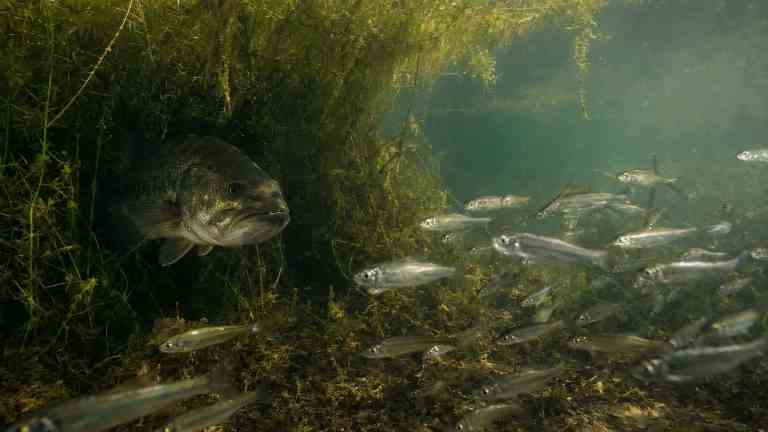
Matching the hatch correctly gets you a flavor of frustration that isn’t available any other way.
The bugs on the water are size 16 olives. Your fly is a size 16 olive. The fish are rising steadily within reach in good light, and they’re ignoring you with what starts to feel like intent. You change to a different size 16 olive. Same result.
The problem usually isn’t the fly. It’s that you’re imitating the wrong five seconds of the insect’s life.
What actually happens at the surface
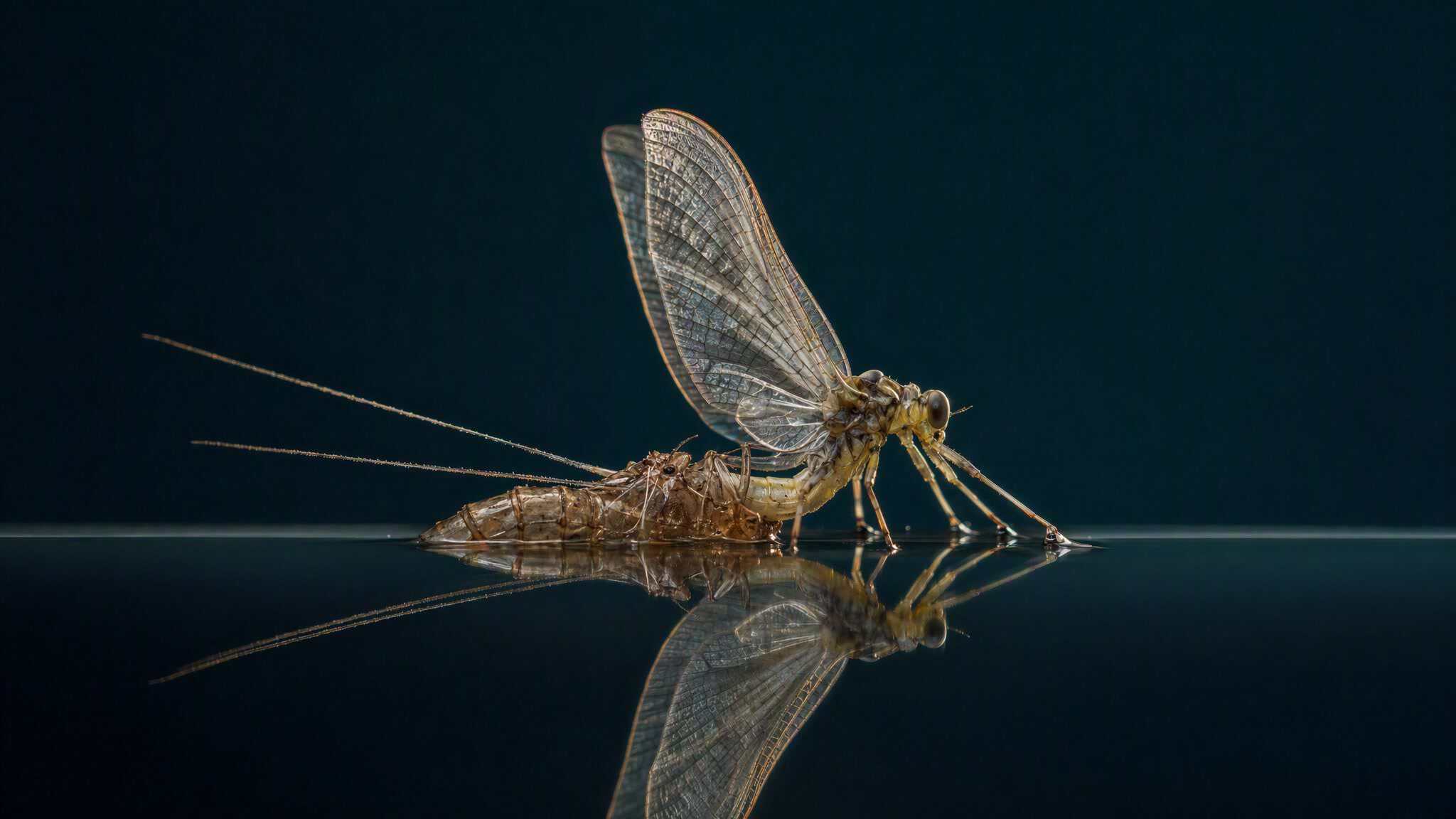
A mayfly nymph rises through the water column, reaches the underside of the film, and then has to get out through it. Surface tension is a real physical barrier to something that small. The insect works its way through, splits its shuck, and pulls itself free.
That takes time. During it, the insect is half in and half out, unable to fly or swim, essentially nailed in place at the one point where it can’t escape in any direction.
A fully emerged dun, by contrast, can leave. It’s on the surface, drying its wings, and a certain percentage get airborne before anything eats them.
If you were a trout choosing between those two, you’d make the same choice they do.
The rises are telling you
This is the readable part.
A fish taking duns off the top usually shows something — a nose or a mouth breaking the surface, sometimes an audible take. You can see the fly disappear.
A fish taking emergers often shows a hump or a swirl, maybe a dorsal fin or a tail, but no nose at all. The fish is eating an inch or two under the film and never has to break it. That’s the classic “rising fish that isn’t rising” and it’s the single most useful thing to notice during a hatch.
Bulges and porpoising rolls are emerger tells. So is a fish that rises repeatedly without you ever seeing its mouth. It’s one of the reasons a rise doesn’t automatically mean dry fly.
Three ways to fish it
The dry with an emerger dropper. Easiest and it answers the question for you. A visible dry fly as the indicator with a soft-hackle or emerger pattern six to eighteen inches below on light tippet. If everything comes on the trailer, you’ve learned what they want. Dry-dropper logic applies directly.
The emerger fished in the film. A pattern designed to sit low — a trailing-shuck emerger, a Klinkhamer-style fly with the body hanging below, a CDC comparadun. The trick is dressing it so the body sinks and the wing or post floats, which means treating part of the fly and not the rest. Most people gum the whole thing with floatant and end up with a dry fly again.
The soft hackle on the swing. The oldest answer and still one of the best. A wet fly swung slowly through the run at the end of a drift rises toward the surface on its own, which is exactly what an emerging insect does. The take is unmistakable and it removes the entire problem of seeing your fly.
The soft-hackle swing is worth learning specifically because it’s forgiving. It works when the light’s bad or the fish are too far away to read, and it’ll occasionally outfish careful dry-fly work by a substantial margin during a heavy hatch. It’s also not glamorous, which is probably why it’s underused.
Depth is measured in inches here
Everything about emerger fishing happens in the top foot of water, and mostly in the top two inches.
That’s a hard depth to control, and it’s the reason this feels fussy. Too much floatant and the fly rides on top. A hair too much weight and it drops below the window the fish are working. Light tippet helps enormously, because heavy tippet holds a small fly up.
Fine tippet is genuinely part of the presentation and not just a stealth measure. Going from 4X to 6X on a size 18 emerger changes how the fly sits, not only how visible the line is.
The other thing that’s happening
Trout in a heavy hatch often lock onto one stage and one lane. They’re in a feeding rhythm, holding position, taking whatever comes down a narrow strip of current at a set interval.
Which means presentation errors get punished more during good hatches than during bad ones. Your fly needs to be in the lane, at the right depth, drag-free, and arriving at roughly the rhythm the fish has settled into. A fly that lands two feet off the lane during a blanket hatch might as well be in the parking lot.
Watch one fish for a minute before casting to it, long enough to figure out its rhythm and its lane, then make one good cast instead of six mediocre ones. That single habit converts more hatch-day frustration than any fly change.
The forty minutes the magazines skip
Hatch fishing has more moving parts than anything else in the sport, and the version in the magazines skips the forty minutes of not catching anything.
The shortest path in: put on a dry you can see with a soft-hackle eighteen inches behind it and fish that during every hatch this season. You’ll catch fish, and more usefully, the ratio between the two flies will teach you what’s going on without you having to diagnose anything.
Reading rise forms with any confidence comes from a couple of hundred hatches where you mostly guessed. The guessing is the training.
FIELD OBJECT
This one should leave the page.
The article is the long version. These are the pieces worth carrying into the next trip.
The 30-second version
Fish are rising to a hatch and ignoring your perfectly matched dry. They're usually eating the insect during the seconds it's stuck in the film and can't get away.
What to watch
- What actually happens at the surface
- The rises are telling you
- Three ways to fish it
- Depth is measured in inches here
Field card
- What actually happens at the surface
- The rises are telling you
- Three ways to fish it
- Depth is measured in inches here
- The other thing that's happening
RIGHT TOOL, NEXT
Hatch Match
Turn the observed food, stage, size, silhouette, and behavior into the next presentation decision.