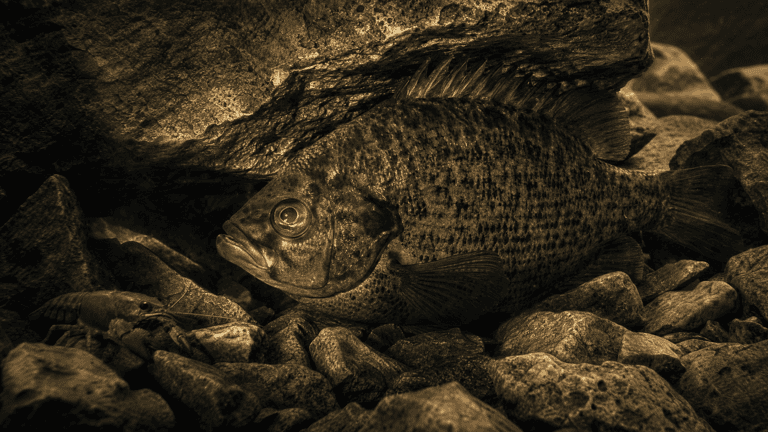
Something small flashes along a weed edge, ducks under, and dimples the surface again just far enough out that any name you put on it is a guess. The instinct is to want that name before doing anything else. Sometimes the name matters. Most of the time the better first move is just noticing what the food is doing.
FIELD PLATE · FORAGE
Silhouette and movement beat a confident guess.
Rough size, shape, movement, depth and habitat are already enough to pick a sensible presentation, and that’s usually more useful than confidently naming the wrong species. Fish don’t award bonus points for taxonomy, which is rude after all the time people spend learning it.
Start with what the fish can probably notice
Before color, brand, or the tiny detail on a lure that looked extremely important under store lighting, I start with size and silhouette. Short and deep-bodied, or long and narrow? Winged, clawed, wormlike? A dark shape against bright water, or a pale flash over a darker bottom? Broad traits like that survive distance, glare, stain, current, and the very short look most forage gives you.
Keep the size estimate honest. Something you saw for half a second isn’t going to cooperate with a ruler, so compare it to something nearby — a hook shank, a leaf, a finger width. “Small and slender” can guide a choice. A suspiciously exact measurement mostly proves that guessing can wear a tie.
Watch which size is common, too. The biggest baitfish in a school may be the easiest one to see and the least typical. What you’re matching is the profile that keeps showing up, not the one specimen that wandered close enough to become famous.
Movement is the job description
A food item that darts and stops asks for a different presentation than something drifting with current, crawling over rock, or hanging under the surface. You don’t need to copy every twitch. You’re trying to stay in the same neighborhood.
If the forage is drifting and the lure is sprinting across the lane, the shade of olive probably isn’t the problem. Shape can fool you during one quick glimpse. A rhythm you’ve watched a few times is harder to get wrong: does it move steadily, pause between bursts, tumble, or hold until current pushes it loose? That gives you a starting pace. Not a guaranteed retrieve, because predator behavior, visibility, water speed and the way your rig actually moves all get a vote. A fair first test, though.
Find the layer before debating the finish
Surface, film, just under, midwater, cover edge, bottom — the layer decides which fish can reach the food and what the presentation has to do to stay near it. A beautiful baitfish imitation fished several feet above the baitfish is mostly decoration with hooks.
So watch where the food keeps turning up. Riding a foam line? Hanging over a drop, flickering just outside vegetation, falling from shoreline cover? “What is it?” matters, but “where can a fish get it?” is the question that turns into a presentation decision.
This is where a rough observation can beat a precise but incomplete ID. Knowing an insect’s group won’t help much if the fish are feeding below the surface and your imitation stays on top. Knowing a narrow band of small food keeps moving through the shallow layer gives you a depth to test right now.
Let habitat narrow the possibilities, not finish the argument
Rock, weeds, wood, mud, open water, shade and current all change what can live, drift, hide or fall there. A small shape clinging under a rock in current means something different from a silver school suspended over open water, and a dark insect dropping from overhanging grass isn’t the same clue as an aquatic insect working through the film. Habitat narrows it down. It doesn’t close the case, because food sources overlap and the same broad forage type can use different water at different stages.
Here’s a comparison I run a lot: small, narrow flashes beside a weed edge. Maybe small fish are using the vegetation for cover. Maybe glare is making drifting junk look alive. Repeated direction, coordinated movement and fish reacting would strengthen the first idea, and random motion that just follows the wind or current would weaken it. Either way, I don’t need a species name to decide whether a small moving profile by that edge deserves a test.
Give it a few minutes before rebuilding the tackle box
A single splash, bird, minnow, shed insect skin or crayfish shell can point you somewhere. It can’t carry the whole case. Bait pushing along the same edge again and again, fish rising in one lane, mud puffs along a bottom transition, birds working the same strip of water — repetition like that starts to show where food is available and where predators might be cutting it off.
It also protects you from the classic trap: seeing one obvious thing and deciding the whole lake has agreed to eat it. The most visible food is visible to you because it’s near the surface, near the bank, or unusually big. The fish may be busy with something less dramatic somewhere else in the water column. Several clean looks at the same lane or edge are worth more than one exciting flash, and it helps to resist turning the first clue into a documentary.
What the fish do about it
Repeated follows in one area can mean the size, layer and speed are close without finishing the job. Strikes that only come when the lure enters one layer or crosses one edge suggest position matters more than color. Refusals are useful too. They just don’t point at the exact mistake, which could be size, speed, depth, posture, line, angle, a noisy approach, or something you never saw.
So the honest conclusion is usually small: this drew attention here, under these conditions, and one thing is worth changing next. No response counts as evidence too, just weak evidence. The fish might not be there, might not see it, or might not care about that food right now. One quiet pass doesn’t prove the forage idea wrong. Several careful passes through the likely lane start to mean something.
Get the job right before the paint
A sensible first choice reaches the same general layer and shows a similar size and broad shape. It also has to move at roughly the same pace and get through the same cover or current without constantly fouling. Once that’s lined up, color, flash, vibration, sound and material are worth refining.
That order keeps lure changes honest. If the presentation can’t reach the forage layer, swapping from silver to slightly different silver isn’t much of an experiment. Flies work the same way: broad size, posture, stage and movement before tiny cosmetic differences.
Small food drifting with current wants something that can enter that lane and stay there without racing away. Something crawling along bottom wants bottom contact or close bottom control, without pretending every bump tells you exactly which creature you’re imitating.
When the evidence is mixed, change one big thing
Mixed evidence is normal, and the answer isn’t changing six things at once. If the layer looks wrong, fix the layer. If the profile is obviously oversized, go smaller. Then give the new idea several clean presentations before deciding it failed.
Change depth, speed, size, color, lure family, angle and location in one panicked move and you might eventually catch a fish. You won’t know why. Your tackle box will feel very involved, though.
A good adjustment answers a question you can say plainly. “Will a smaller profile get the same follows?” is useful. “What if I replace everything?” is an emotional event, and fishing has enough of those without lure selection adding more.
Keep the identification honest
Sometimes you really can identify the forage. Use the name when the evidence supports it and when the name changes what you’d do. When it doesn’t, a broad label is enough: small slender baitfish, dark terrestrial insect, pale drifting insect, bottom-crawling crustacean, unidentified surface prey. That’s not less useful. It’s more accurate.
Not knowing what something is called doesn’t put you behind anybody. “Small dark thing near the bank” picks a first fly just fine, and the name can come later.
A confident ID can take a closer view, a reliable photograph, local knowledge, or a source that separates similar species and life stages. If the name could affect legal bait use, harvest, protected-species handling or another regulated decision, don’t guess. Check the current rules and authoritative identification guidance for that exact water and jurisdiction.
A short field note keeps what matters without exposing a place: rough size, layer, movement, habitat, repeated activity, and what the fish appeared to do around it. A photo helps when taking it is safe and legal, the animal can be documented without harm, and neither the image nor its metadata reveals a sensitive location.
Use the name when it helps; don’t wait for it when it doesn’t
If size, silhouette, movement, layer, habitat and the way predators are behaving all point the same direction, that’s a strong first presentation. Fish it and let the water argue back. Hatch Match is built to organize those clues without pretending one observation proves more than it does.
When the evidence changes, let the idea change with it — that isn’t failing, it’s the whole advantage of watching before declaring. A rough but honest description can put you at the right depth moving the right way. A perfect name attached to the wrong layer can’t.