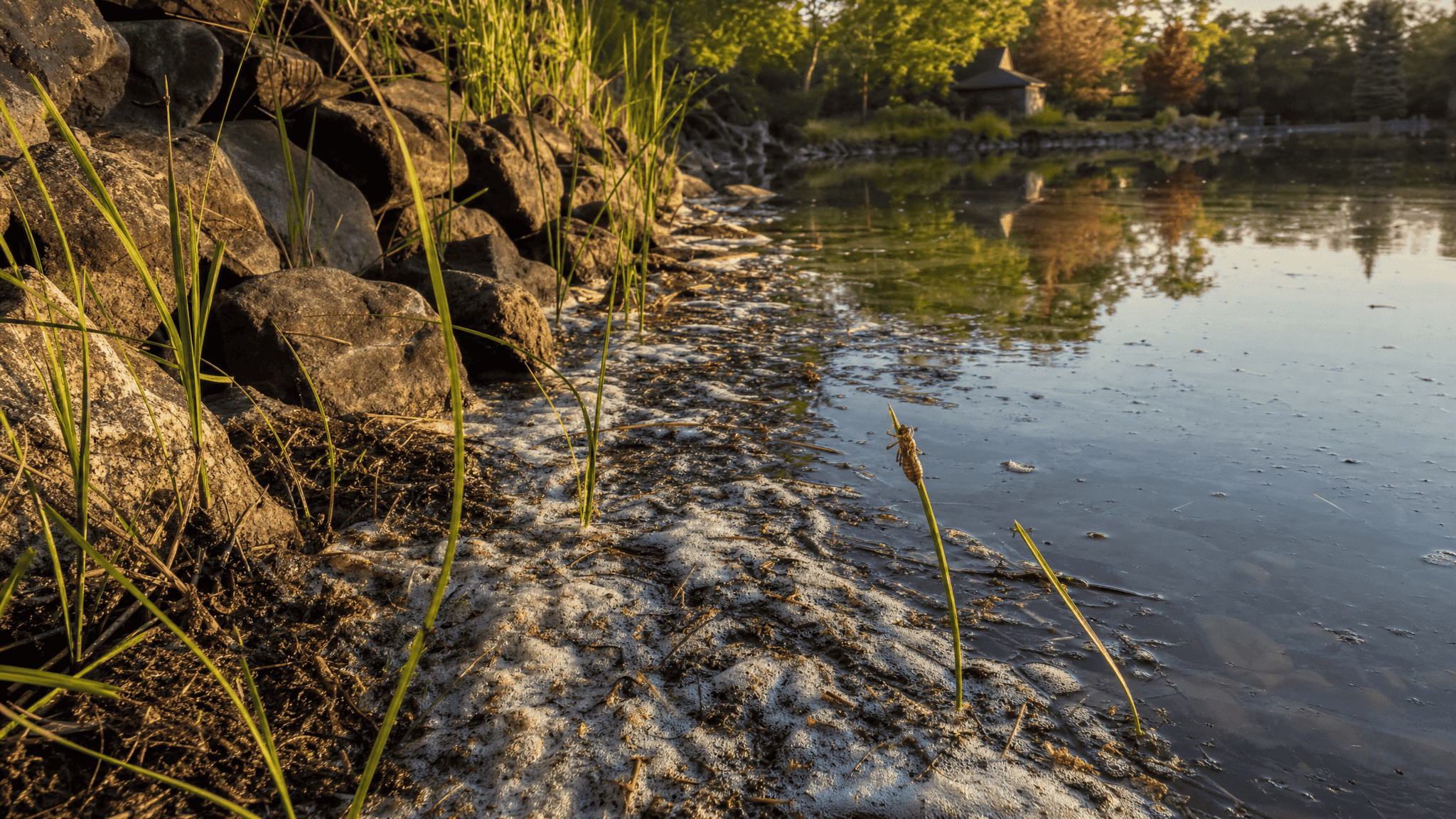
Field note. Give the wind most of a day leaning one direction on a pond big enough to get real fetch — that’s the stretch of open water the wind gets to push across before it runs into a bank — and one shore starts building waves. Foam and debris line up along it. The far shore goes calm and looks a lot nicer to stand on.
FIELD PLATE · WIND
Wind redraws the fishable map.
The nicer bank isn’t the useful one
The first thing worth changing is which bank you start on, and only that. Same lure, same retrieve — you want the comparison to actually mean something instead of changing three things at once and guessing which one mattered.
Downwind stacked edge first, then a short stretch on the calm bank so you’ve got something to hold it up against.
The wind already sorted the shoreline
The downwind edge has the food line: bugs, film, the small stuff wind actually pushes around. It also has worse wading and junk on your hook every third cast. The calm bank is easier to fish and a lot quieter to stand on. Easier isn’t the same thing as more fish, which is a surprisingly hard thing to remember while you’re picking debris off a treble hook.
If nothing happens on the stacked edge, that’s still a result. Maybe they sat deeper than you were working, or the wind was just doing too much. Or the lure never really got into the shade under all that surface mess. Changing color before you’ve even fished the edge properly is skipping the test, not failing it.
What this doesn’t prove
It doesn’t prove wind-blown banks always win, and it definitely doesn’t make calm water dead water or starting upwind a mistake. What it does show is that picking a bank is worth testing on purpose, and that pretty isn’t a hypothesis.
I read fetch before I open the lure box. If you want the longer version of that, Wind redraws the map walks through it.
Seen vs. guessed: the wind direction, the foam line and how bad the wading gets are things you can see for yourself before you make a cast. That wind stacks food on the downwind bank is the usual stillwater read, and it still has to hold up on your pond, not just in theory. This is how that setup tends to play out, not a log of one particular day.


