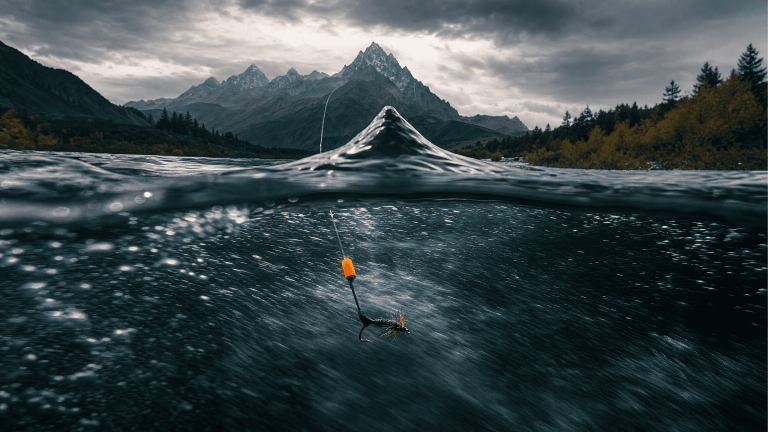
The whole trick of a drop shot is that the weight and the bait quit sharing a job. The sinker sits on the bottom and tells you where the bottom is. The bait hangs above it, out of the muck, at whatever height you tied it.
FIELD PLATE · DROP SHOT
The weight finds bottom so the bait can hold a line you chose.
That’s handy around deep structure, rock, weeds, bridge pilings, and fish sitting a little way off the bottom. It stops being handy the moment one tag length and a nonstop shake get treated like the only way anybody’s allowed to fish it.
Build the rig around the layer you need to fish
The hook goes on the line with a tag end hanging below it, and the sinker goes on that tag. The weight gives you a bottom or structure reference while the bait rides above it.
Hook, tag length, sinker weight, line and bait all follow depth, cover, current, where the fish are, and your casting angle. Take Me Fishing describes the same bait-above-the-weight setup, and once that relationship makes sense you don’t need anybody’s inherited recipe.
Tie and inspect the hook cleanly
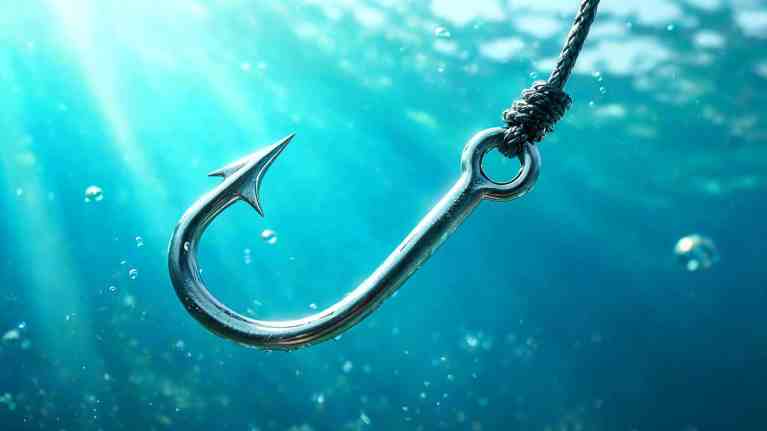
A Palomar Knot with a long tag end is one straightforward way to build it. Passing the tag back through the hook eye after the knot’s seated can help the hook sit the right way.
Then actually look at what you tied. The hook should face the direction you meant, the line shouldn’t be kinked or nicked, and the tag needs enough length for the separation you’re really after.
Hook-to-weight distance isn’t a fixed number
Fish tight to the bottom might want a short tag. Fish suspended over grass, rock, brush, or a thermocline usually need more room between hook and sinker.
A long cast changes the geometry, too. A bait tied eighteen inches above the sinker isn’t necessarily eighteen inches above the bottom once the line’s running diagonally back to your rod.
Weight is a reference, not an anchor
Use enough sinker to know where the rig is in the depth, wind, current and line angle you’ve actually got.
Too light and the rig wanders around with no clear position. Too heavy and it wedges into rock, buries in soft bottom, or makes every little movement clunkier than it has to be.
Let cover and geometry decide how the rig travels
Repeated snags should change the angle
A lot of drop-shot weights use clips that let the sinker pull free when it hangs. That’s insurance. It isn’t permission to drag the rig through every crack down there.
If the sinker keeps catching in the same lane, change your casting angle, go lighter, lift earlier, or reposition when it’s safe and legal to. Snags that keep repeating are telling you something about the bottom and the path you picked.
Exposed point or protected point
Nose-hooking a soft plastic leaves the point out and lets the bait move freely, which works well in fairly open water. Around brush or vegetation, a protected or weed-resistant hook spends more time fishing and less time hung up.
What you give up is hookup mechanics. A buried point needs more force to clear the plastic, while a small exposed hook generally needs less. Match hook, plastic, rod and line to the cover.
Vertical fishing gives the cleanest geometry
Straight down under a boat or dock, the tag length is close to how high the bait really sits off the bottom. That’s why fishing a drop shot vertically makes sense around deep brush, pilings, timber and rock, when boat position and local rules allow it.
If wind, current, boat traffic, pressure, or plain safety make hovering over a spot a bad idea, don’t hover.
Casting changes how high the bait really sits
On a long cast, the line angle pulls the bait closer to the bottom than the tag length suggests. Slopes make it more obvious: a rig dragged uphill behaves differently than one moved downhill across a break.
When the angles start getting confusing, Fishing Presentation: Depth, Speed, Angle and Control walks through the whole path the bait takes, not just the lure and the weight.
Do less with the rod until the fish give you a reason to do more
A drop-shot bait keeps moving while the sinker barely does. Current, a little slack, a buoyant plastic and small changes in tension all move it without you vibrating the rod tip nonstop.
Hold the sinker in place and gently tighten and relax the line. Stop completely. Drag the weight a short way and stop again.
If fish are eating it on the pause, there’s no reason to keep shaking the thing just to look busy. Nobody down there is grading effort.
Use suspended marks as a depth test, not a species claim
The rig can fish above bottom
If electronics or your own eyes show fish above the bottom, lengthen the tag or fish straight down at that layer when it’s practical. The Missouri Department of Conservation has listed drop-shot rigs among summer presentations on Table Rock Lake, with the useful depth shifting with the season and the thermocline.
The rig can hold a small bait in one layer while the sinker keeps you honest about where the bottom is. You still have to find that layer on the water you’re fishing.
A mark on the screen isn’t a species
A sonar mark at 22 feet over 35 feet of water tells you there’s something at 22 feet worth testing. It doesn’t tell you what it is. Catches, habitat, season, and seeing the same thing again are all better evidence.
The first job’s simpler anyway: can you put the bait through that layer and keep control of it?
Protect the hook and test one variable at a time
Line and drag have to protect the hook
The same line holds the hook and carries the bite back to you, so diameter, stretch, abrasion resistance, knot strength and drag all matter. Heavy, stiff line can smother subtle movement. Very light line gets vulnerable around sharp structure.
Set the drag so the weakest part of the setup has some protection. A small exposed hook usually doesn’t need a violent hookset — reel into tension and use a controlled lift or sweep.
The first few drops on a new spot
Decide what depth or piece of structure you actually want to fish, set the tag for that layer, and use the lightest sinker that still gives you a reliable reference. Make several presentations with barely any rod movement. Pause length and bait profile are worth playing with only after the depth and the lane are under control, and if the same snag keeps eating rigs, change the angle or the weight before it eats another one.
If the Palomar still feels shaky in your fingers, fix that at the kitchen table before you try to fix anything on the water. The fishing knots section and the five knots worth learning first are a good place to get the reps in.
After that, a lot of drop-shot fishing comes down to leaving the rod alone long enough to see whether the bait can handle the job by itself.
Sources checked
- Take Me Fishing: Drop-Shot Knot
- Take Me Fishing: Bottom Fishing Rigs
- Missouri Department of Conservation: Table Rock Lake Fishing Prospect
FIELD OBJECT
This one should leave the page.
The article is the long version. These are the pieces worth carrying into the next trip.
The 30-second version
On a drop shot the sinker finds the bottom and the bait hangs above it at whatever height you tied. Tag length, sinker weight and how much you shake the rod all follow from that.
What to watch
- Build the rig around the layer you need to fish
- Tie and inspect the hook cleanly
- Hook-to-weight distance isn’t a fixed number
- Weight is a reference, not an anchor
Field card
- Take Me Fishing: Drop-Shot Knot
- Take Me Fishing: Bottom Fishing Rigs
- Missouri Department of Conservation: Table Rock Lake Fishing Prospect
RIGHT TOOL, NEXT
Species & Presentation
Carry the species behavior and presentation question into a narrower water-to-fish-to-presentation handoff.