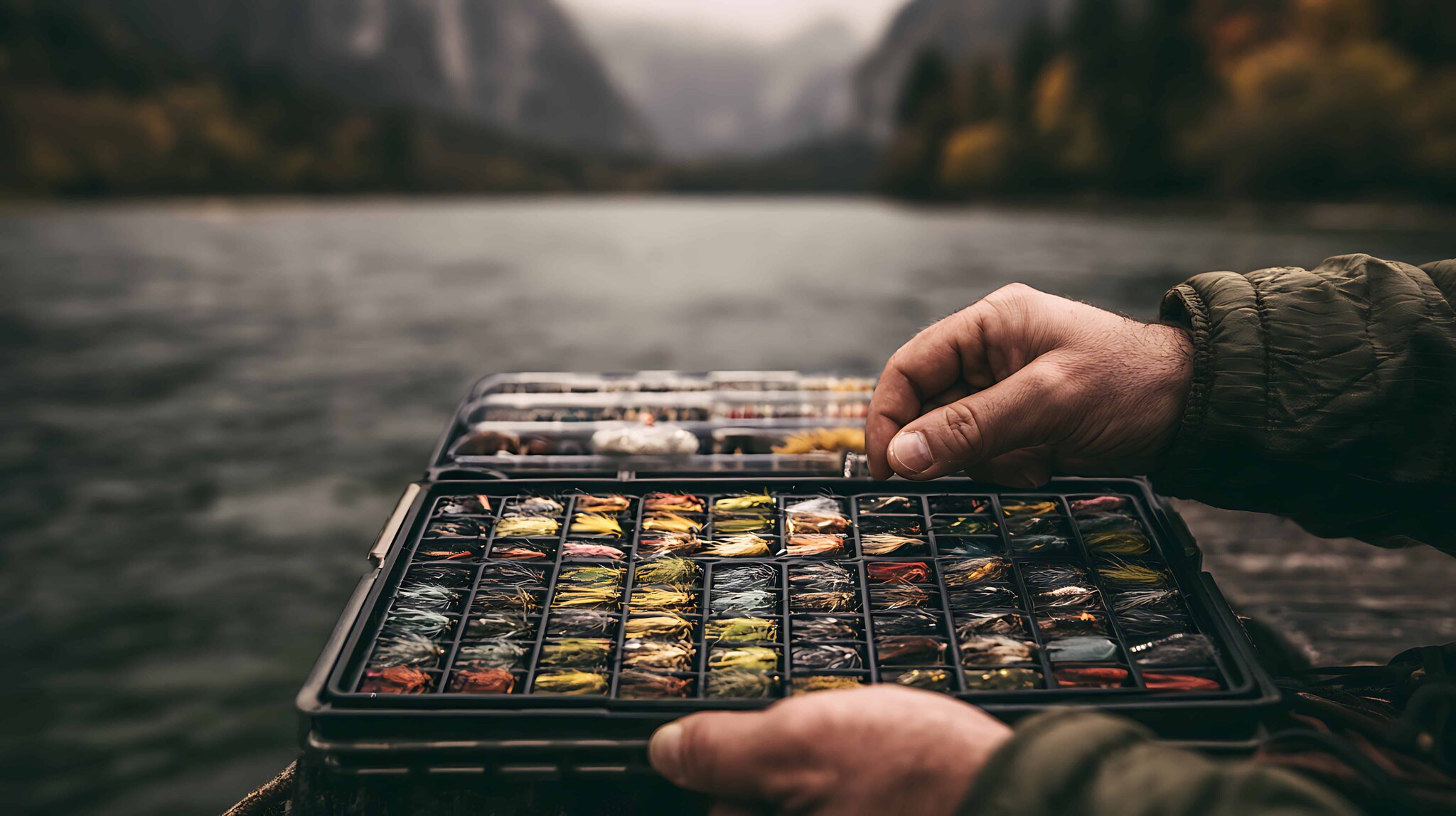
The spiral usually goes like this. Nothing’s working, so on goes a different lure, then a different color of it, then a size up, a little more weight, a faster crank. Five minutes later you’re fishing something unrelated to what you started with, and if a fish does eat it, you’ve got no idea why.
The changes aren’t the problem. Making all of them at once is.
Name what the lure is doing first
Not what it’s called. What it’s doing — roughly how deep and how fast it’s running, and the path it takes past whatever you’re aiming at.
That’s your baseline. It’s boring, and it’s the only thing that makes the next twenty minutes mean anything.
Depth first
Depth beats color, and it isn’t close. A crankbait running four feet over a fish sitting on the bottom isn’t getting refused. It never got introduced. Backwards works the same way: dragging bottom while fish slash bait on top is a lot of effort aimed at empty water.
Speed is more than the handle
Speed is more than how fast you’re cranking. Fall rate is speed, and so are drift speed, pause length, and how quickly the lure swings past a fish that’s already made up half its mind. Pick one, change it on purpose, and leave the rest alone.
Slower isn’t automatically better, either. That one gets repeated until it sounds like physics. You want a speed the fish can catch up to and one you can hold steady, and some days those two fight each other.
Sometimes it’s where you’re standing
Come at a grass edge or a laydown from a different angle and the lure can stay in the good water twice as long, or the current finally moves it like something alive instead of something towed. Walking twenty feet down the bank fixes a slow stretch more often than a new crankbait does.
So before rebuilding the tackle, try solving the geometry.
Weight isn’t a casting decision
A sixteenth of an ounce either way changes fall rate, bottom contact, how often you hang up and how far the current shoves the lure off line. Change weight because you want one of those effects, not because you want the cast to go farther, and expect a couple of the others to move with it.
Followers
Fish that come look and won’t commit, or track it all the way in and turn off at your boots, are when profile earns a test. Size and silhouette change how visible the lure is, how it sinks, and where the hooks end up in a mouth.
I try not to assume smaller means subtler or bigger means bolder. Both get said constantly, and the water settles it one way or the other.
When the movement is the problem
Some days want a hard wobble and a lot of flash. Other days everything shoving that much water gets ignored, and a quieter, steadier lure gets eaten. If depth and speed are already under control and the answer is still no, action is fair game.
Keep it running the same lane while you compare, or you’ve changed two things and learned one.
Color goes late, because it’s the easiest thing to change
Color, flash, rattles and scent (where scent is legal) all affect whether a fish finds what you’re doing. They matter after the lure is in the right part of the water column, moving like something worth eating.
When I get there, I make a broad call — lighter or darker, natural or loud — instead of working down the nine near-identical shades the tackle wall is very much hoping I’ll take home. And if a color change looks like it worked, freeze everything else long enough to see it happen twice.
A change only counts if it got clean casts
A few accurate presentations through water that’s actually worth fishing. That’s the bar. A fouled hook or a drift that never came near the target is execution, not evidence. A lure that looks right beside you can still be fishing wrong fifty feet out, too, so check that before you give it credit or blame.
A first hour that’s mostly casts landing somewhere you didn’t mean them to says nothing about the jig. That’s just the first hour on water you don’t know yet. It gets shorter the more you go, even if nobody can promise how fast.
Conditions won’t hold still while you test, either. A lure change made the moment the sun drops behind the ridge hasn’t isolated anything, so note what shifted. When things are changing fast, bounce between the baseline and the test instead of committing to either one.
Catches aren’t the only evidence. Follows, short strikes and visible refusals tell you whether you moved toward something or away from it. Two ambiguous taps aren’t proof, though. That’s how a whole afternoon disappears into a theory.
Know when the baseline is what’s wrong
Testing one change at a time only works while the starting presentation is still plausible. If the fish are clearly in different water, or the technique can’t physically reach them, quit defending the baseline and build a new one.
If the water turns unsafe, that isn’t a testing decision. Get off it.
The order, roughly
Where the fish are comes first, and depth and speed come right behind it. Color and the rest of the cosmetic stuff come last. Techniques bend that order, but whatever changes how the lure fishes still beats whatever changes how it looks.
Write down what changed, not what won
“Chartreuse was better” is worth nothing to me a month later. “Same jig two feet deeper, slower fall, bites started on the outside grass edge, color never changed” is worth a lot, because I can go run it again. If it doesn’t repeat, that’s worth knowing too.