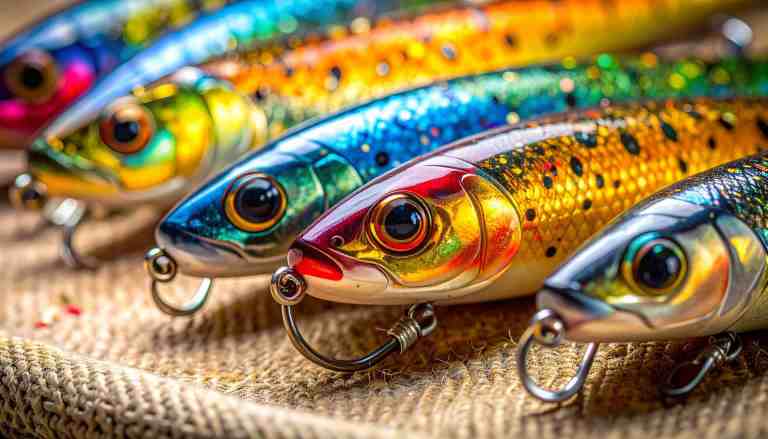
The fly box is organized by color. So is the lure aisle, and so is basically every display anybody has ever built to sell you something.
That’s a merchandising decision and it has quietly become a diagnostic method. A fish refuses, you open the box, and the box presents you with a spectrum. Of course you pick a different color. It’s the variable the packaging made most visible.
It’s also usually the wrong one to move first.
What a refusal actually is
Worth being precise, because “they wouldn’t eat it” covers several different problems.
A fish that never came is a location or depth problem. Nobody’s judging the fly, because nobody’s seeing it.
A fish that came up, looked the fly over and left has said no. That’s a presentation problem, and it’s the only situation where the fly itself is actually a suspect.
A fish that came and turned away before getting close usually rejected the silhouette or the movement from distance, which is a different rejection than one made from six inches.
Most of us treat all three the same way. The first two in particular need completely different responses, and a new color is rarely the fix for either one.
The order
Size first. It’s the variable fish respond to most consistently and the one people change least willingly, because a smaller fly feels like giving up. Going down a size or two fixes more refusals than any other single change, particularly in clear water, low flows, cold water, and pressured water — which is to say, most of the hard days.
Then silhouette. Not color: shape and profile against the light. A slim fly and a bulky one of the same size and color are different objects to a fish looking up at them. Bushy versus sparse, long versus stubby. On subsurface flies, whether it’s got a tail and how much it sticks out.
Then depth and position. Two inches under the film versus on top of it. On the bottom versus a foot above it. This is less a fly change than a rig change, and it’s frequently the actual answer — see emergers for the extreme case.
Then behavior. Speed, pause, drift quality, whether the thing is drifting or swimming or falling. A fly that’s right in every other respect and dragging is going to be refused indefinitely.
Then color. And when you get there, think in terms of light and dark before you think in terms of hue. Whether a fly reads as a dark silhouette or a bright one matters far more than whether it’s olive or brown.
Why color is overrated and not worthless
It does something. In stained water, high-visibility colors get found and dull ones don’t. In very clear water, unnatural brightness can get refused. Chartreuse in muddy water has a real physical argument behind it.
What color rarely does is rescue a fly that’s the wrong size, moving wrong, or in the wrong part of the water column. It’s a fine-tuning variable being used as a primary one.
The tell is that color arguments are the ones anglers have most confidently and least reproducibly. Everybody has the story about the day only the purple one worked. Almost nobody has run that as a fair comparison. If you want to, actually testing whether lure color matters is worth the twenty minutes.
One change at a time, which is the part that’s hard
None of this order matters if you change three things at once.
Changing size, color and depth together and then catching a fish teaches you nothing, because you now have three candidate explanations and no way to separate them. Do that for a season and you end up with a box full of confidence and no knowledge.
The discipline is: change one thing, give it a fair trial, and note what happened. That’s slower. It’s also how anybody who’s actually good at this got there. The one-variable field test and changing one presentation variable at a time both come at this from slightly different angles.
The exception is when you have almost no time, like a moving school or a rise that’s about to end. Then change aggressively, catch what you can, and accept that you’re fishing rather than learning. Both are legitimate. Just know which one you’re doing.
How this shows up in a full box
The pattern is recognizable. Somebody has forty flies in one pattern across twelve colors and three sizes, weighted toward color.
The more useful box has fewer patterns in more sizes. Three good nymph shapes in five sizes each will outfish fifteen shapes in two sizes, and it’ll be easier to think with, because it puts the variable you should be moving first in front of you.
Same for lures. Three profiles in a real size range beats a wall of the same bait in colors that differ by an amount the fish probably can’t even resolve.
If you take one thing
Next time a fish refuses, go down a size before you do anything else. Not down a color, not to a different pattern — the same fly, smaller.
It’ll feel like an unsatisfying move, because the smaller fly is harder to see and less fun to look at. Do it anyway for a season and count what happens.
Nobody starts out knowing this. The box teaches color because the box was built by somebody selling colors, and it takes a while to notice you’ve been taking fishing advice from a display case.
FIELD OBJECT
This one should leave the page.
The article is the long version. These are the pieces worth carrying into the next trip.
The 30-second version
The fly box invites you to solve every refusal with a different color. Most refusals aren't about color, and trying changes in the wrong order is why the box keeps growing.
What to watch
- What a refusal actually is
- The order
- Why color is overrated and not worthless
- One change at a time, which is the part that's hard
Field card
- What a refusal actually is
- The order
- Why color is overrated and not worthless
- One change at a time, which is the part that's hard
- How this shows up in a full box
RIGHT TOOL, NEXT
Hatch Match
Turn the observed food, stage, size, silhouette, and behavior into the next presentation decision.