Somebody times it once and it changes how they fish forever.
The usual discovery goes like this: a cold, slow day, a jerkbait, twitch-twitch-pause, nothing for an hour. Then a boat goes by or your phone buzzes, and the bait sits there motionless for eight or ten seconds while you’re not paying attention. And that’s when it gets hit.
You were pausing for a second and a half and calling it a pause.
What the bait is designed to do
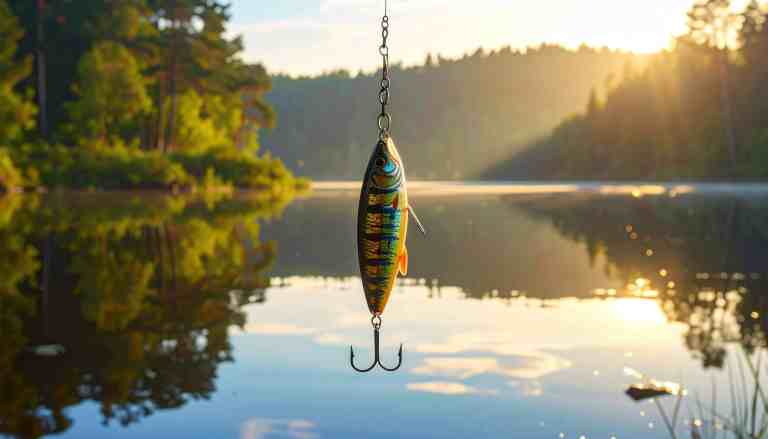
A jerkbait is a long, slim, minnow-shaped hardbait with a bill that makes it dart sideways when you pull it. Jerk the rod and it kicks left or right, turning hard, showing its flank.
Then it stops, and a true suspending model hangs there — neither rising nor sinking — at whatever depth it reached.
Those two states are the whole lure. The dart is a fleeing baitfish. The suspend is a baitfish that’s stopped, disoriented, hanging in open water and doing nothing to protect itself. Predatory fish have a very hard time ignoring the second one.
Cadence, and how cold water changes it
The cadence is the sequence of jerks and pauses, and it’s the thing you actually adjust.
In warm water with active fish, it can be fast: jerk-jerk-jerk-pause, short pauses, covering ground. Fish will run it down.
In cold water everything stretches. Two jerks and then a pause measured in real seconds — five, ten, fifteen. There are people who have caught good fish on a thirty-second pause, and the reason it works is that a cold fish isn’t making a quick decision. It comes up under the bait and looks. If the bait moves away during that evaluation, the fish goes back down.
The discipline is counting. Not estimating — counting, out loud or in your head, because a five-second pause feels like twenty when you’re standing there doing nothing.
Start at a count you think is too long. Shorten it if fish are hitting on the jerks. Lengthen it if you’re getting follows and no commitment.
Suspension is a lie at your water temperature
Here’s the detail that separates people who catch fish on jerkbaits from people who own jerkbaits.
A bait is tuned to suspend at some specific combination of water temperature, salinity and line. Change any of those and it doesn’t suspend anymore — it slowly rises or slowly sinks. Cold water is denser, so a bait that suspends at seventy degrees will often rise slowly at forty-five, which means your long pause is spent watching the bait drift up and out of the zone.
The fix is small stick-on weights, usually lead or tungsten strips, added to the bill or the belly until the bait sits still. Check it in the water beside you: jerk it down, stop, and watch. If it climbs, add weight. If it sinks, you’ve gone too far.
It takes five minutes at the start of a trip and it converts the pause from a hope into a presentation.
Line affects it too. Fluorocarbon sinks and helps a bait stay down or even makes it sink slowly. Monofilament floats and will pull a bait up. Braid’s buoyancy and lack of stretch make it a poor main line for this, though braid to a fluoro leader works fine.
Reading a follow
Jerkbait fishing gives you unusually good feedback, because in clear water you frequently see the fish.
A fish that follows and turns away at the boat was interested and something disqualified the bait at close range — usually that it kept moving. Longer pause next cast.
A fish that comes up, sits under it, and drifts back down got a full look and declined. That’s a size or a depth problem, or the bait rose during the pause.
A fish that slashes at it and misses is aggressive and you should speed up, not slow down.
Nothing at all means location, not cadence. No amount of pause length fixes an empty stretch of bank.
That’s a much richer set of signals than most presentations give you, and it’s worth fishing a jerkbait occasionally just for the information.
Where and when
Clear to moderately stained water, because this is a visual bait. In muddy water the flash and the profile don’t get found and something with more vibration is a better call — a blade bait or a lipless.
Cold water generally: late fall, winter where it doesn’t freeze, and pre-spawn spring, which is the classic window. Fish staging on points and channel swings ahead of the spawn will eat a suspended jerkbait when almost nothing else moves them.
Around hard cover and transitions: rock, rip-rap, bluff ends, points, the edge of a flat that drops. Fish sitting on those will come up several feet to a bait suspended above them, which is one of the useful things about this presentation — you don’t have to be at their depth, just above it.
Wind helps. A little chop breaks up the light and gives the bait some natural motion during those long pauses.
The rod matters more than usual
A rod that’s too long or too stiff makes the cadence work — you’re fighting the rod on every jerk and your arm is done in an hour.
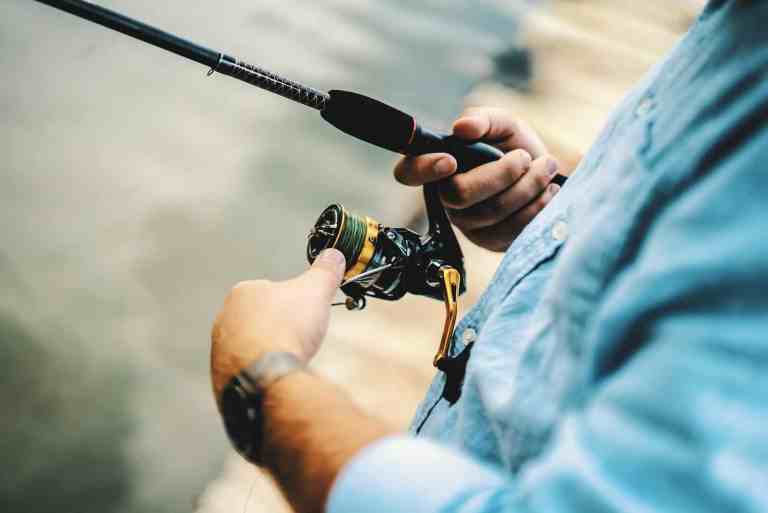
Shorter and softer than your crankbait rod, fished with the tip down toward the water so the jerks pull the bait sideways rather than up. Slack in the line between jerks is what lets the bait dart properly; a tight line makes it swim rather than kick.
That’s counterintuitive after everything about keeping tension elsewhere. Here the slack is functional.
The part to actually practice
Pick one bank, one bait, and fish it for an hour changing only the pause length.
Make three casts at a three-count, three at a ten-count and three at a twenty-count, then adjust based on what happened rather than on what anybody told you about your lake.
That’s a one-variable test applied to the variable people are least willing to sit still for. And sitting still is the entire technique, which is probably why it stays underused.
FIELD OBJECT
This one should leave the page.
The article is the long version. These are the pieces worth carrying into the next trip.
The 30-second version
Twitching a jerkbait gets a fish's attention, but the bite usually comes while it's sitting still. Most people just don't leave it still long enough for a cold fish to finish thinking.
What to watch
- What the bait is designed to do
- Cadence, and how cold water changes it
- Suspension is a lie at your water temperature
- Reading a follow
Field card
- What the bait is designed to do
- Cadence, and how cold water changes it
- Suspension is a lie at your water temperature
- Reading a follow
- Where and when
RIGHT TOOL, NEXT
Species & Presentation
Carry the species behavior and presentation question into a narrower water-to-fish-to-presentation handoff.