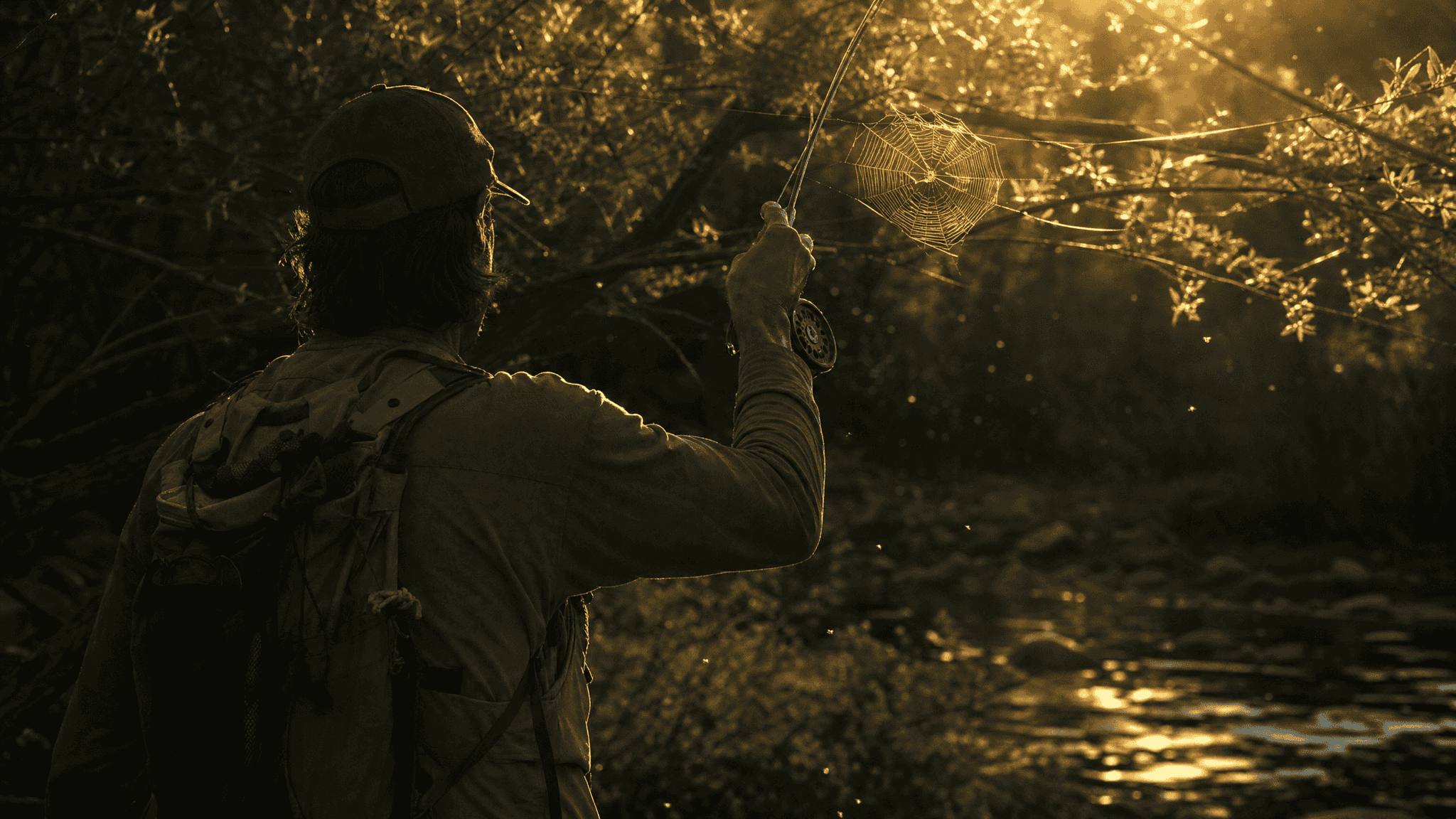
Every cast has a half you never watch. Aim, timing and follow-through all happen in the direction you’re facing, and the backcast — the part that finds branches, jackets, truck tires, dogs and the person fishing next to you — happens behind your head. That’s why it catches people who know better. Lock onto a rising fish across the pond and it’s easy to forget there’s a whole cast happening back there first.
Actually turn around
At a new spot, before the rod loads, turn your body and look. Over the shoulder isn’t enough, because the stuff that gets hooked sits at head height and off to the side, which is right where peripheral vision is worst. Do it again when somebody walks up, when you move, and when you’ve been casting one direction long enough to stop thinking about it.
I’m checking roughly a rod length and a half behind and beside me, above waist height, and I care most about whatever moves. A branch stays where it was. A kid walking the bank with a dog doesn’t.
When the room isn’t there
Tight backcast room is a normal condition, not a reason to send it and hope. Roughly in the order I reach for them: shorten the cast; drop to sidearm so the backcast travels low and off to the side, under branches or out over the water instead of straight back into the bank; or roll cast or water haul so the line never goes behind you at all. Walking twenty feet is usually cheaper than any of the clever options.
Power lines
This isn’t a be-careful situation. It’s a don’t-fish-here situation. Graphite rods conduct, wet line can conduct, and electricity doesn’t need contact — it can arc across a gap to something that gets close enough. If there’s a line over the water, fish somewhere else, and don’t make an exception for a low cast or a short rod.
Wind eats the margin
A crosswind shoves the backcast sideways into space you already checked, which is how a clear lane at nine o’clock turns into a hook in somebody’s jacket at eleven. On a windy day give yourself more room than the calm version needs, and get the wind on your non-casting side so the line blows away from you instead of into you. Practice the Windy Casts You Actually Need is the place to build that before a real day asks for it.
If a hook does end up in a person past the barb, that’s a medical problem, not a field problem. Cut the line and go. Don’t push it through and don’t improvise. Barbless or pinched-barb hooks make that day a lot shorter, which is a reason to fish them on top of what they do for the fish.