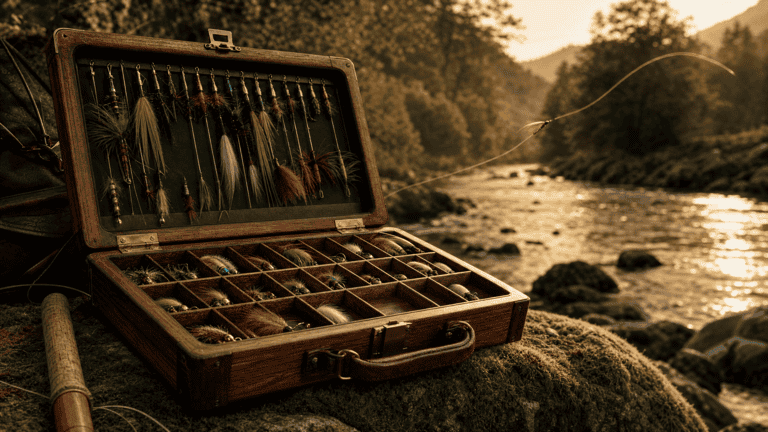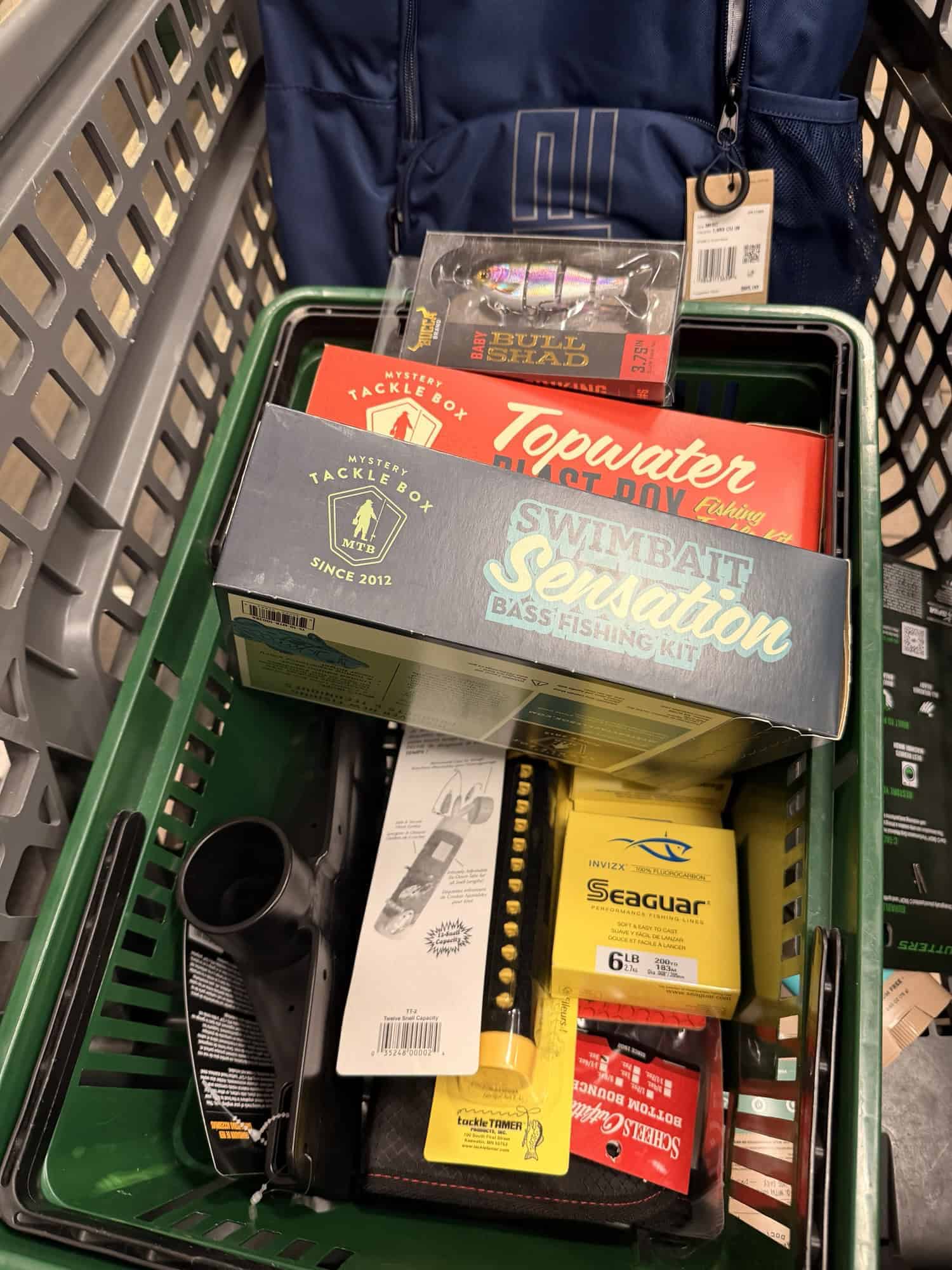
A tackle shop is a dangerous place to walk into with free time and a working debit card.
Not because everything in it is necessary. Mostly because almost everything in it is interesting.
There are rods built for techniques you don’t fish, reels with drag systems designed for fish you’ve never seen, lures shaped like animals that appear to have been invented during a power outage, and at least one wall of terminal tackle capable of making a normal hook look underqualified.
I can spend a long time in there. That doesn’t mean I need to leave with a bag.
Looking is part of learning
If you build rods, tie flies, or just pay attention to equipment, a tackle shop stops being rows of products and turns into rows of decisions.
Why is this blank longer? Why is that reel spool deeper?
Why does one crankbait have a square bill and another a narrow one? Why is one hook heavy wire and another thin enough to make you nervous?
And why does this lure have enough hardware on it to qualify as infrastructure?
Those are good questions even when the answer isn’t “buy it.”
The best part of looking at gear isn’t collecting product names. It’s seeing the job each thing was built for.
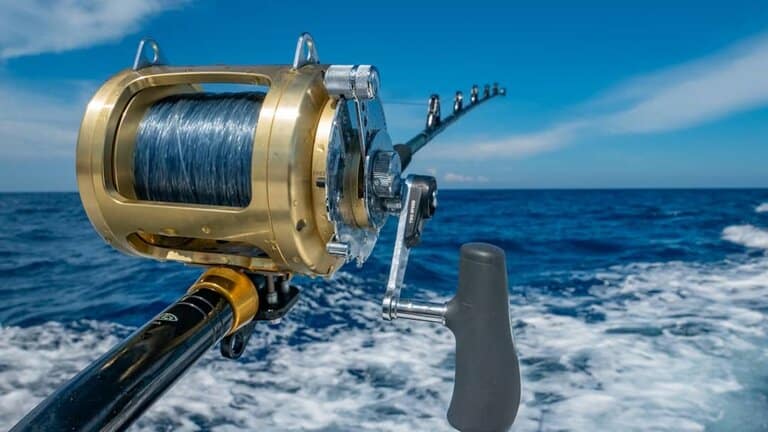
A heavy-wire hook exists because something about how it gets used demands strength. A shallow spool changes line capacity and sometimes weight. A short rod can be easier in tight cover, while a long one can change casting distance, line control, or leverage. A giant saltwater reel isn’t a bigger version of your pond reel because somebody got carried away. It’s built around a different problem.
Once you see the problem, the product makes a lot more sense. So does most gear talk.
Marketing is louder than mechanics
The trouble is that fishing gear rarely sits quietly on the shelf and explains itself. It shows up with words.
Advanced. Tournament. Pro. Elite. Maximum. Extreme. Performance. Precision.
If fishing companies could legally put “this lure knows where the fish are” on the package, somebody would have already tested the font.
Some of the gear behind those labels is excellent. The label still isn’t the reason.
If a rod feels lighter, ask why. If a reel costs twice as much, look at materials, drag, sealing, machining, weight, serviceability and the job it’s meant to do. A lure that claims a new action can prove it in the water when you get the chance.
The package tells you what to notice. Whether it mattered is something you find out fishing.
The weird aisle is usually the good aisle
The obvious stuff is easy. Everybody understands the wall of spinning reels.
The interesting shelves are where the strange things live: specialty floats, replacement skirts, wire leaders, tiny swivels, split-ring pliers, fly-tying materials, bobber stops, odd sinker shapes, hook files, leader wallets, line treatments, things that look like medical devices but apparently belong near a boat.
That’s where you start seeing how many small problems fishing creates.
One tool exists because somebody got tired of fighting split rings with fingernails. Another exists because a fish has teeth, and half the shelf exists because saltwater destroys things with the enthusiasm of a chemistry experiment.
The weird object usually has a story, and I like figuring out the story.
You do not need to own the answer to understand it
This matters most if you’re newer.
You’re allowed to look at expensive gear without feeling like your setup just went obsolete. You can hold a rod that costs more than yours, notice it feels better, and still put it back.
That isn’t losing. It’s a completed thought.
Fishing gets expensive when curiosity and buying turn into the same action. They don’t have to. Sometimes picking something up and asking one good question teaches you enough.
Then you leave with the same rod you came in with. Cheap gear can still earn its place, and the fish are unlikely to file a complaint.
The employee may know something useful. Ask the useful question.
Tackle-shop conversations can be great if the question is specific.
“What should I buy?” is huge.
“I keep throwing a quarter-ounce jig on this rod and it feels dead. What would change if I went lighter in power or faster in action?” gives somebody something real to work with.
“What’s the best line?” starts a small civil war.
“I need line for a spinning reel around rock, and I keep getting twist. What would you change first?” is a problem somebody can actually solve.
A good question keeps you from buying a solution to something you didn’t have, and it lets a good shop employee help without guessing. It’s the same reason to figure out what’s actually failing before you buy.
There is nothing wrong with wanting the cool thing
Here’s the part people sometimes pretend away: fishing gear is fun.
Some reels are beautiful. Some lures are clever enough that you want to see them work before you know whether they’re any use where you fish.
You don’t have to turn every purchase into a spreadsheet of measurable advantage to justify liking it. If you can afford it and you want it, fine.
Just keep the sentence honest.
“I bought this because it solves a line-management problem” is one sentence. “I bought this because I thought it was cool” is another.
Both are legal. The trouble starts when the second one gets dressed up as the first.
Leave with a question sometimes
One of the best things to bring home from a tackle shop is a question you didn’t have before.
Why do hooks with the same size printed on the box look like they belong to different species?
Why does this reel cost more, and would any of those differences survive the kind of fishing I actually do?
Questions like that make you better at picking gear later. They also make the shop more interesting than a place where money disappears.
Although, to be fair, it’s still extremely good at that.