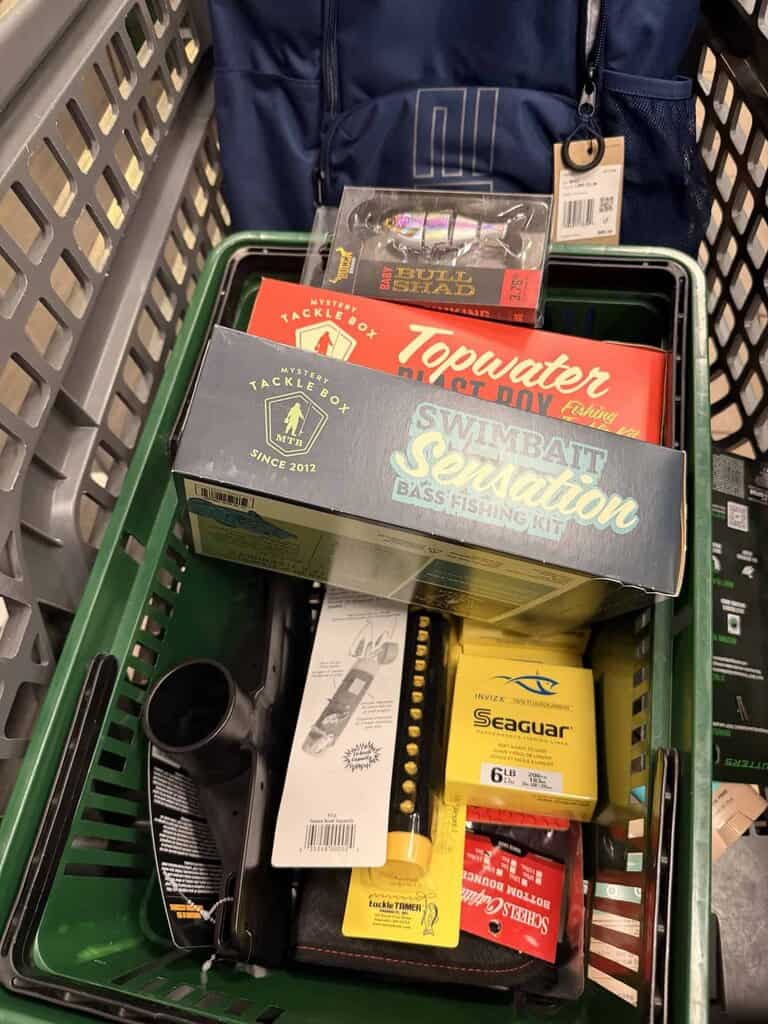
The tackle bag feels fine in the driveway.
Then you walk half a mile around a reservoir with it bouncing off your hip, pick up somebody else’s line off the bank, strap on a hoodie you stopped wanting an hour ago, and find out that seven pounds of backup lures have turned into a personal disagreement.
Shore fishing doesn’t reward the biggest tackle collection. It rewards whatever you’re willing to carry far enough to keep looking.
Start with jobs, not lure families
A small shore kit has to answer different questions, not the same question in twelve colors. Something should cover water, something should get down, and something should come over weeds without collecting half the lake. You also want an option small enough for fish that aren’t chasing, plus enough terminal tackle to fix the rig you’re actually using.
For a general freshwater day I’d rather carry a handful of baits that behave differently than a box of colors that all do the same thing. A small spinner or compact moving bait can search, and a jig or weighted soft plastic tells you whether the fish are deeper. An unweighted or lightly weighted plastic crawls over grass. If panfish or stocked trout are the best thing going on that bank, a small float setup slows everything way down.
The brand on the package matters a lot less than the job. It’s the same thinking behind picking line by behavior instead of loyalty — gear makes more sense once it has to explain what it’s doing in the bag.
The duplicate test is mean and useful
Dump everything you want to carry on the floor.
Pick up two lures that run at about the same depth, speed, and size. If the main difference is paint, one of them probably stays home. Then do it again, and keep going after it stops being fun.
This gets uncomfortable fast if you like tackle, which I do. Expensive gear can be excellent, and weird little lures are a good time. A box full of stuff you want to try isn’t a moral failure.
It’s just heavy.
If the day is really a field test, bring the test bait and its control; there’s a whole write-up on testing one variable without wrecking the rest of the day. If the day is about walking and covering bank, the bag has a different job.
Terminal tackle gets one tiny box
The boring little pieces earn their space, because they’re what keeps the useful lure in the water after a snag.
Hooks that fit what you’re throwing, a small spread of weights, spare leader material, and a couple of floats if the plan might use them. Snaps, swivels, and split rings go in only if your rig or your lures actually call for them. That covers a lot of days. You don’t need a hardware store clipped to your belt.
Keep it sorted by job so you can tell what you’re running low on. A box with eight sizes of unlabeled sinkers turns into archaeology by October.
Pliers beat three more crankbaits
The non-lure part of the bag is where the useful weight hides.
Pliers or hemostats that can actually get a hook out come first, with line cutters that still cut. After that it’s water, sunscreen, a basic first-aid item or two, and some way to keep your phone dry. Add a small measuring tool if local rules mean you’ll be making length decisions, and a zip bag or trash bag for clipped line and whatever garbage somebody else left behind.
Keeping fish changes that list. Wading changes it again, and if the weather can turn cold, a real layer matters more than an eighth lure category.
Nobody sells a perfect bank bag, because the day keeps rewriting what belongs in it.
One rod shouldn’t need six backup systems
Most walk-the-bank days get easier when the rod and reel can handle a useful middle range.
That doesn’t make one setup magically good at everything — more rod power can make the whole setup worse, for one. It just means the rod should cover what you realistically expect on that water without making you haul a second tackle store to make up for it.
Thick vegetation still wants the vegetation setup, and a trout stream still wants the stream rod. The middle setup earns its keep on a city pond where bass, bluegill, and stocked trout are all possible and you’ve got no idea which one’s going to cooperate.
If you only own one rod right now and you’ve been wondering whether that’s holding you back, on water like that it isn’t. It’s the right tool.
Leave an empty pocket
This sounds dumb until you need it.
An empty pocket takes the lure you just cut off, the wet leader package, the wad of line you found by the dock, or the phone that suddenly needs somewhere dry to be.
A bag packed to the zipper in the garage has no room left for the actual day.
The bag should make moving easier
The real test shows up about an hour in.
You’ve fished the first point and nothing’s happening. The next piece of public bank is a few hundred yards away. Do you move, or does picking all your stuff back up make staying put sound better?
If the tackle bag is deciding where you fish, it’s too much tackle.
Cut it down until moving is cheap. If the water proves you really were missing something, add that one thing next trip. That beats hauling around answers to questions the lake never asked.