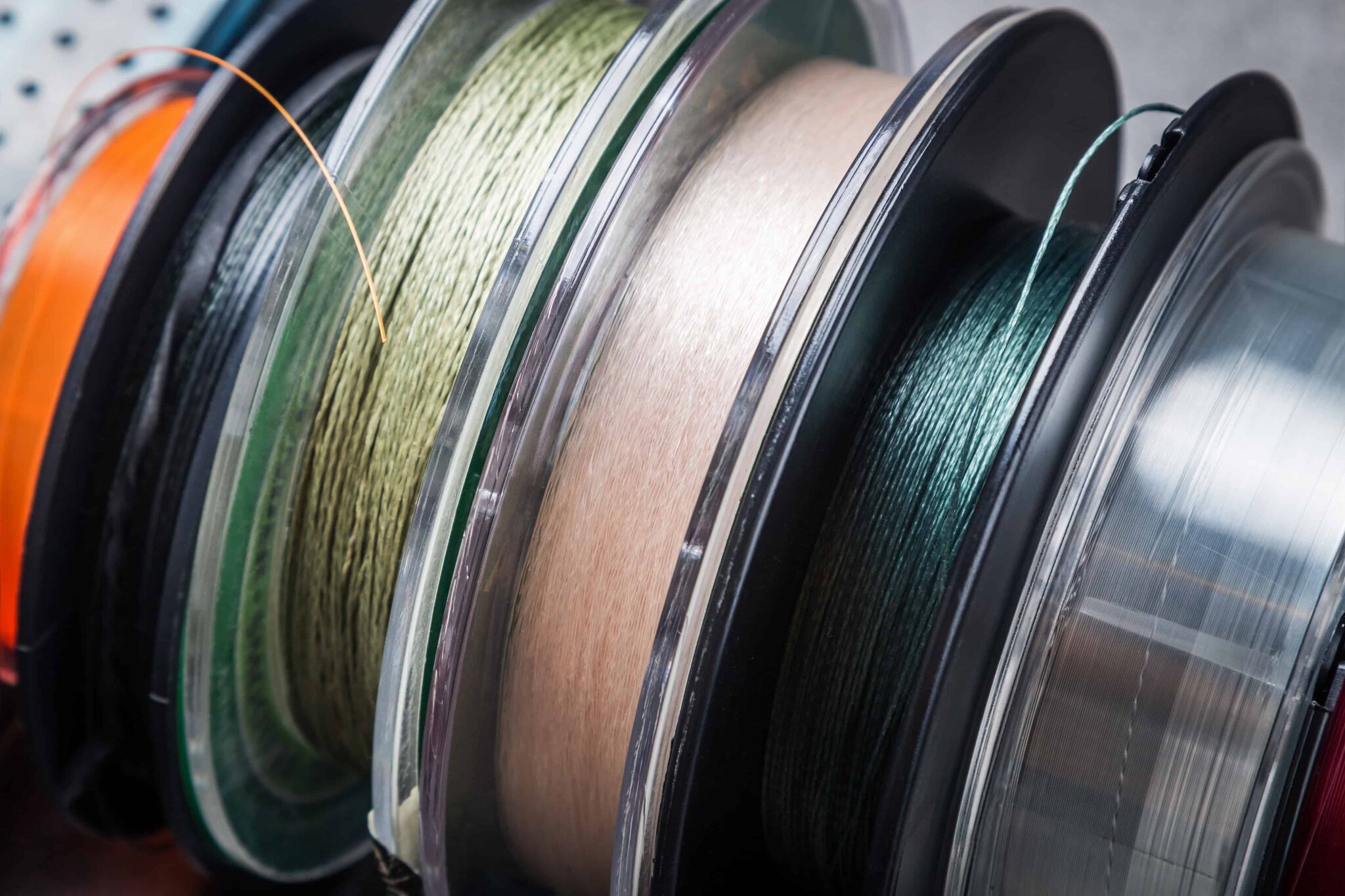
Somebody in every tackle aisle will tell you braid is the sensitive one and fluoro is invisible, and somebody else will swear mono is the only line with any forgiveness in it. Say that stuff enough times and it hardens into rules, and then the only question left is which line wins — which is a weird thing to ask about what’s basically a mechanical part.
SYSTEM PLATE · TACKLE
A setup only works as well as the weakest supported link.
Because that’s what line is. How thick it is, how much it stretches, whether it sinks, how stiff it is and how it takes a beating all change what the rest of the setup does. On a spinning outfit, the line has to support the job the whole thing was built for. Being loyal to one material doesn’t help with that, and no fish has ever asked what you’re spooled with.
Start with what the line has to do
Does it need to float, sink, telegraph bottom, survive weeds or rock, cast a really light bait, soak up shock, or carry a leader knot through the guides a few hundred times without complaining? Answer that and the choice narrows a lot faster than a brand argument ever will.
Diameter is the sneaky one
Diameter affects how the line casts, how hard water and current grab it, how much fits on the spool, how deep a lure runs and how big the knots get. Two lines with the same pound test on the label can be noticeably different thicknesses, and the pound test won’t tell you.
Compare actual diameter when the package lists it. Thin line helps a small lure cast and sink, but the setup still needs enough strength and abrasion tolerance for the water you’re standing in front of.
What each one gives you, and what it charges back
Braid
Very low stretch and a skinny diameter for its strength buy you contact with the lure, fast line pickup, quick hooksets and a lot of line on the spool. That’s the pitch, and it’s accurate as far as it goes.
The bill comes due in forgiveness. Shock goes straight through to the knots, leader, hooks, rod and drag with almost nothing soaked up on the way. Braid is also easy to see, slices through weeds well, and handles rock, wood and sharp edges differently depending on how it’s made. Spool it carefully or it can slip on the arbor and dig into itself.
Monofilament
Nylon mono stretches more than braid and rides higher in the water than fluorocarbon. That stretch is a cushion — handy with treble hooks, with a fish thrashing close, and with presentations where a little give keeps the hook pinned. The same stretch gets mushy at a distance, so a hookset at the end of a long cast has more to take up. That’s the trade.
Mono’s cheap and simple. Memory gets worse as it gets thicker and older, and sun, heat and ordinary use all wear it down, so it’s worth checking often.
Fluorocarbon
Fluorocarbon is denser than nylon and usually gets picked for abrasion resistance, for being harder to see underwater, and for the way it sinks. That makes it a good leader and a reasonable main line in some spots. It can also be stiff, hold coils, and act up on a spinning reel once the diameter climbs.
Formulas really do differ between products, and main-line fluoro and leader material are built for different work. Judge the exact spool and diameter, not just the word on the box.
Something has to give
Low stretch is great when instant contact matters. Zero give isn’t automatically the goal, though. Braid, a fast powerful rod and a drag cranked down can hit a light leader or a small hook with brutal shock, where a mono setup would’ve absorbed some of that before the drag even moved.
So decide where the flex lives — rod, line, leader, drag, or some mix. You want controlled force, not the stiffest rig you can build.
Line edits the lure’s path
Line changes how a lure sits and travels. Line that rides high helps some surface presentations, and denser line can change the angle of a bait working down below. Diameter and current can matter as much as the material, because it’s water pushing on the line that drags the lure off the path you meant.
None of that rescues a badly matched lure. Line is one thing that moves depth and posture, not a patch for a bigger problem.
Every material gets chewed up eventually
Rock, shell, wood, weeds, teeth and dock hardware all damage line in their own ways. Braid cuts through weeds well and can get compromised by rough, sharp edges. Mono and fluoro differ from each other, and even from themselves, depending on formula and diameter.
Check the section that actually touched something, and remember line can be done well before it breaks. If the damage keeps showing up in the last few feet, a leader might fix it where a whole new spool wouldn’t.
Visibility is usually a leader-sized question
How a fish reacts to line depends on clarity, light, depth, species, fishing pressure, lure speed and the presentation itself. Fluorocarbon bends light closer to the way water does, so it can be less noticeable down there. That’s a real effect. It isn’t proof that every fish everywhere is line-shy.
If visibility seems to be costing you bites, try a leader or a thinner diameter before you strip the whole reel. The cheap test goes first.
Knots and spools are part of the choice
Knots care what they’re tied in
Different materials and diameters grip and squish differently, so a knot that’s great in mono might need different handling in braid. A braid-to-leader connection has its own demands on top of that: compact, strong, fully seated, and willing to ride through the guides all day.
Use knots meant for the exact materials. Wet them where that’s called for, cinch them all the way down, trim them right, and pull-test before you fish. Expensive line tied badly is just expensive line on the bottom of the lake.
A spinning reel finds mismatches fast
Stiff line, too much diameter, an overfilled spool, twist and memory all show up quickly on spinning gear. Braid has almost no memory but can throw wind knots and bury into itself if you get sloppy with it. Mono and fluoro can spring off the spool in coils when the diameter’s wrong for the reel.
Spool diameter and how full you fill it are part of the line decision. You can’t really judge a line apart from the thing holding it.
Two materials, one knot between them
Braid main line to a mono or fluoro leader is popular because it puts thin, low-stretch line on the reel and a replaceable section right where most of the abuse happens. It’s worth it when the connection knot, the leader length and the materials all suit what you’re doing.
Straight mono or straight fluoro is simpler, since there’s no connection knot to babysit. Straight braid works where visibility and abrasion let it. That extra knot has to be buying you something.
A fair test, then the cost
One presentation, two setups
Pick a presentation you already know well and fish it on two reasonable line setups, keeping the rod, reel, lure, spot and retrieve as close to the same as you can. Pay attention to casting, depth and feel, and to how many bites actually turn into hooked fish, and keep an eye on the knots while you’re at it.
Don’t call it off one fish. One fish proves a fish ate something. The better line is the one that does the job without starting a bigger problem somewhere else.
Cost includes the part you cut off
Braid that’s taken care of can last a long time. Cheap mono is cheap enough to replace often. Fluorocarbon main line adds up fast, and using fluoro only as leader can get you the properties you wanted up by the lure for a fraction of the money. Backing under pricey braid also cuts down how much of it you need to fill a deep spool.
If money’s tight and it’s one spool for the whole year, that’s nothing to apologize for. A decent spool of mono covers a lot of fishing, and it’ll teach you what you actually want out of the next one.