ORIGINAL HOOK DIAGRAM
Build two clean barrels before you join them.
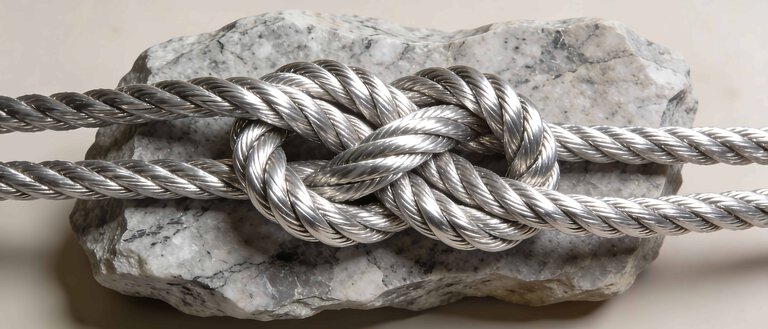
Original Hook the Horizon schematic. The point is the two opposing barrels and final jam, not a decorative knot silhouette. I care about the mechanism, not the picture.
Best jobJoining mono to mono, fluoro to mono, or braid to a mono/fluoro leader when I want something I can actually tie in the field, cold hands and all.
Big tradeoff
Two opposing barrels means more bulk than an FG or a well-tied Alberto. No way around it.
Material note
Slick braid usually wants more wraps than the leader side does. I count them for a reason, not out of superstition.
Guide question
If the knot’s going to run through small guides over and over, profile might matter more to me than how fast it is to tie. Different day, different answer.
WHAT THE KNOT IS REALLY DOING
Each line grips both strands, then the two knots jam against each other.
If you already know a plain Uni, this one clicks fast, because it’s just two of them facing off. Overlap the two lines, tie a Uni with the first tag wrapping around both, then do the same thing from the other direction. Snug both barrels, pull the standing lines, and they slide together and lock.
Which means there are two moments to check, not one, and the first is the one that gets skipped. Each Uni has to form clean on its own before you pull the final join together. Once a sloppy barrel is jammed up against the other one, nothing you do from the outside reaches it anymore.
Tie the second Uni like the first one isn’t there
- Overlap the two lines by several inches so you’ve got room to work.
- With the first tag, make a Uni loop and wrap that tag around both lines and back through its own loop. More wraps on slick braid, fewer on a thicker leader.
- Snug the first Uni, but don’t slide it all the way into the other line yet.
- Do the whole thing again with the other tag, coming from the opposite direction.
- Pull the two standing lines apart so the two snugged barrels slide together and jam.
- Pull-test both sides, look the meeting point over, then trim both tags.
The other three joins, and what each one asks of you
FG
Thinner, and superb for repeated guide passage. It also leans hard on your tension and your patience.
Alberto
Compact braid-to-leader join built on a folded leader loop with outbound and return braid wraps.
Blood
Smooth when the two lines are close in diameter; gets awkward the further apart those diameters drift.
WATCH + VERIFY
Watch each barrel form before the final slide — that’s the part worth slowing down for.
Wired2Fish — Double Uni tutorial · NetKnots — animation · Take Me Fishing — tying steps · Sufix/Rapala — line guide
I still watch one of these when I haven’t tied a Double Uni in a while, mostly to remind myself not to rush the second barrel just because the first one came out clean.
Open the deeper knot workflowJob, material, route, dressing, seating, pull-test checks and the standardized comparison record.
THE SIX-MOVE CHECK
Job → Material → Route → Dress → Seat → Test
- Job. Name what the connection has to do before choosing the knot.
- Material. Confirm the line, leader, rope, wire, and hardware actually suit this structure.
- Route. Trace every pass before tightening anything.
- Dress. Put strands, wraps, and loops in their intended order with no accidental crossings.
- Seat. Tighten in the order this knot needs. More force does not repair bad geometry.
- Test. Inspect the finished shape, load it by hand when appropriate, and retie if anything moves or fails the article-specific checks.
Practice / pass test. Tie this knot three clean times without rushing. A tie passes only when it matches this article’s What to check before you trust it geometry, shows none of the listed failure clues, and survives the stated load/inspection test. If you cannot tell why one attempt is better than another, keep practicing—the lesson is recognition, not memorization.
KNOT SPEC
Double Uni Knot — the short answers
- ALSO CALLED
- Double Grinner in Britain and Ireland, where the Uni is called the Grinner. Sometimes written as the Uni-to-Uni. Used everywhere, and it is the default line-to-line knot taught to beginners in both fresh and salt water.
- KNOT TYPE
- Line-to-line knot — two opposing Uni barrels slid together and jammed
- WHAT IT CONNECTS
- Joins main line to leader, mono to mono, fluoro to mono, or braid to a mono or fluoro leader. Not a terminal knot, though the single Uni it is built from is.
- LINE TYPES
- Mono, fluorocarbon and braid, in most combinations. It is happiest when the two lines are within a few sizes of each other. Slick braid slips unless its barrel gets extra wraps, and very heavy leader makes an awkward, bulky barrel.
- STRENGTH BAND
- Moderate to Solid, and the most disputed band in this group. One tensile study placed it far below the FG while other published tests rank them close together. It is dependable in the hand, and it is very rarely the weakest part of a rig.
- DIFFICULTY
- Beginner to Intermediate. If you know a single Uni you already know this. Kids learn it readily, and it is the line-to-line knot most likely to be tied correctly by someone learning in poor light.
- STEPS AND WRAPS
- Six moves. Five or six wraps on the mono or fluorocarbon barrel, and six to eight on the braid barrel because braid needs more turns to bite. Count both; they are not the same number.
- TIE TIME
- A boat knot. Thirty to sixty seconds once learned, and it is the fastest of the braid-to-leader group by a wide margin. It can be tied by feel in the dark.
- POOR CONDITIONS
- The best of this group in bad conditions. No sustained tension to hold, nothing to lose track of, and you can set it down halfway through. Cold hands, gloves, wind and low light all cost you less here than anywhere else.
- THROUGH THE GUIDES
- The bulkiest connection in this group. Two barrels side by side make a lump that ticks and can hang in small guides. Fine when the join sits outside the tip; a poor choice when a long leader must cross the guides on every cast.
- LUBRICATION
- Yes, both barrels, before you snug either one. Fluorocarbon barrels in particular are damaged by a dry pull, and a Double Uni gives you two chances to make that mistake instead of one.
- TAG END
- Trim both tags close, about an eighth of an inch, and leave the braid tag a fraction longer since braid creeps. Some anglers leave the leader tag a little proud deliberately so it stands clear of the barrel rather than lying across it.
- TOOLS
- None. Nippers to trim. Nothing else is needed, which is part of why it stays the field default.
- BEST SUITED TO
- Not species-specific — chosen by conditions and rig rather than fish. Common everywhere from trout leaders to inshore and offshore work, and standard for anyone who has to rebuild a leader on the water.
The strength bands are rough on purpose. Published knot tests don’t agree with each other — the same braid-to-leader knot has tested near ninety percent of line strength on one machine and under half on another, because the line brand, its diameter, how fast it got cinched, whether it was wet and whose hands tied it all move the number more than the knot does. Use the band to compare this knot with the others, not as a number to quote.
FIELD INTELLIGENCE
Where it earns its place, and where it costs you
Advantages
- The easiest line-to-line knot to tie correctly under pressure, with nothing to hold and nothing to lose track of.
- Two independent barrels, so each one can be inspected and snugged before they are joined.
- Wrap counts can be tuned per side, letting slick braid have the extra turns it needs.
- Works across mono, fluorocarbon and braid in most combinations.
- Quick to relearn after months away, because it is only the Uni you already know, twice.
Disadvantages
- Clearly the bulkiest of the braid-to-leader knots, and that bulk is the reason people move on from it.
- The lump catches in small guides and can slap the tip on the cast.
- A sloppy first barrel is sealed inside the join and cannot be fixed once the two knots jam.
- It slips on slick braid if the braid side is given the same wrap count as the leader side.
- Uses more line than the alternatives because both sides need working length.
Use a different knot when
- FG Knot — when the leader must run through the guides on every cast and profile decides the day. Whether that is worth the practice is the argument I have with myself here.
- Alberto Knot — when you want a slimmer braid-to-leader connection without the FG learning curve
- Blood Knot — when joining two mono lines of similar diameter and you want a smooth in-line join
- Albright Special — when the size difference is too large for two matched barrels, such as backing to fly line
WHAT TO CHECK BEFORE YOU TRUST IT
The Double Uni earns its place when the leader’s gone, the fish have started, and conditions are wrong for anything fussier. Nothing else in this group can be tied that reliably by feel. The useful check is the first barrel: snug it fully and look at it before the second one exists, because once the two jam together nothing reaches the inside of either. And give the braid more wraps than the leader. The tradeoff is bulk, plainly. You accept a lump at the join in exchange for a knot you can build on the worst day of the season.
What actually makes it fail
- The braid barrel given too few wraps, so it slides down the leader under load instead of gripping.
- One barrel snugged carelessly and then sealed inside the join where it cannot be inspected or fixed.
- Pulled together dry, cooking the line inside both barrels — worst on fluorocarbon.
- Barrels riding over one another instead of meeting square, which loads one side unevenly.
- A tag trimmed flush on braid, letting the barrel creep open over a session of casting.
How to test it, and how it ages
Check each barrel as you build it: wraps even, none crossed, the tag emerging cleanly. Wet both, snug each one on its own, then pull the standing lines apart steadily so the barrels slide together and meet square. Look at the join — two neat barrels touching, not one climbing over the other. Then load it against a bent rod with a steady pull. If either side moves at all under that pull, cut it off; a Double Uni that creeps once will creep again.
Over a session: Holds well over a session, but the braid side is worth a look after every few fish. Braid barrels can work slightly open under repeated casting, and the join collects weed and grit that grinds the leader where it enters.
Troubleshooting
Why does it keep slipping on braid?
The braid barrel needs more wraps than the leader barrel. Take it to seven or eight, wet it, and snug it hard on its own before joining.
Why does it hang in my guides?
Because it is bulky, and no amount of trimming changes that. If the join has to cross guides every cast, tie an FG or Alberto instead.
Why did it fail when both barrels looked fine?
One of them was probably snugged loose and then hidden by the join. Inspect and seat each barrel separately before you pull them together.
Can I use it to join very different diameters?
Not well. Past a few sizes apart the barrels stop matching and the heavy side makes a clumsy knot. Use an Albright or Alberto there.
Why does the leader break right at the barrel?
Almost always a dry pull. Wet both barrels before snugging, especially with fluorocarbon.