The rod loads, and every part of you says hit it.
That’s exactly the moment a circle hook feels wrong. With a typical J-hook, a sharp hookset drives the point home. A circle hook’s curved point and shape are meant to move toward the corner of the fish’s mouth as steady pressure comes onto the line, so the move is a lot less dramatic: let the fish tighten the line, reel into the weight, and raise the rod smoothly.
It feels almost rude not to swing.
The shape is doing some of the work
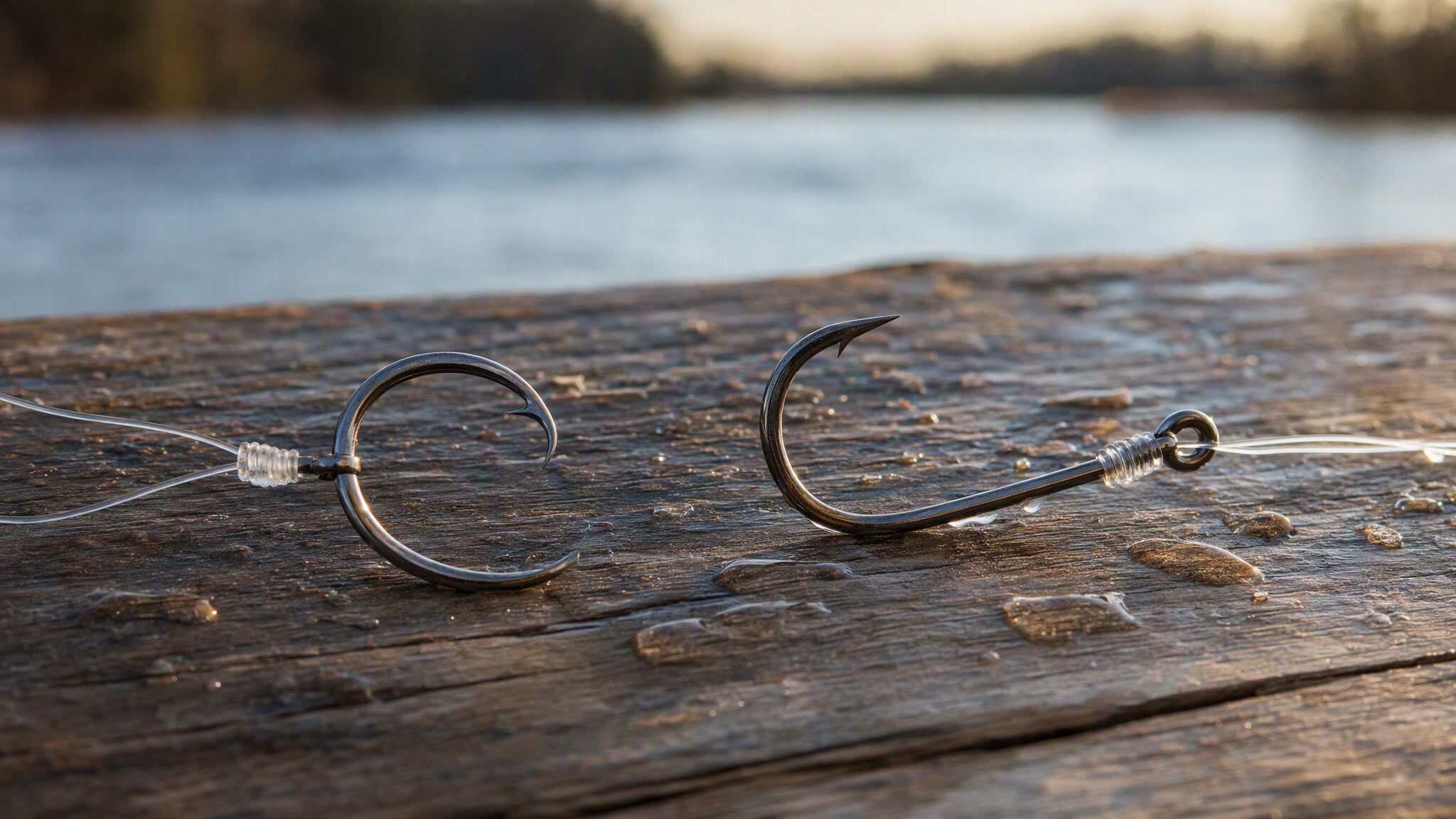
A circle hook’s point turns inward toward the shank instead of pointing more openly away from it.
That inward geometry is designed to reduce deep hooking and catch more often in the jaw or corner of the mouth once steady tension comes on. Florida Fish and Wildlife’s current fish-handling guidance keeps the instruction simple: don’t snap-set a circle hook; reel and maintain tension instead. That’s a big part of why circle hooks are so widely used in catch-and-release and in a lot of bait fisheries.
NOAA Fisheries currently recommends circle hooks among the gear choices that can improve released-fish survival, and notes that some fisheries require them. Their catch-and-release guidance is worth reading before any trip where the fish are going back.
A hard snap can pull the hook past the place it needs to turn
This is where most of the adjustment happens.
Jerk hard the instant you feel a bite and you can pull a circle hook straight out before its shape has any chance to work toward the jaw. Keep the rod where you can come tight, reel until the weight builds, and lift smoothly instead of snapping it home.
That doesn’t mean waiting around while a fish swallows the bait. You’re swapping the violent hookset for controlled pressure, not for doing nothing.
If you grew up bass fishing with a big upward swing, your hands may need a few fish before they believe any of this.
Hook size still has to match the bait and the job
“Use a circle hook” isn’t enough by itself.
The gap has to stay open after the bait’s on. If a chunk of bait fills the gap or covers the point and bend, the hook can’t rotate and catch cleanly. Pick a size that holds the bait without burying the part of the hook that does the work.
The field note on matching hook gap to the bait applies here almost perfectly. Bigger fish don’t automatically call for an absurdly large hook; the hook has to fit the bait, line, target, and regulations.
Inline and offset aren’t the same thing
Look down the shank of an inline circle hook and the point lines up with it. On an offset hook, the point kicks out to one side.
That difference can matter for fish care and for regulations. Some fisheries specifically require non-offset circle hooks, and a package that says “circle hook” on the front doesn’t promise it meets that rule. Read the actual regulation for the species and water you’re fishing. Tackle rules can get a lot more specific than “I bought a fishing license,” which is the whole reason for doing a water-specific regulation check.
Barbless is a separate decision
A circle hook can be barbed or barbless.
NOAA’s Pacific Islands research and outreach on barbless circle hooks emphasizes easier removal and reduced harm to released fish and protected species.
Barbless won’t fix poor handling, tackle that’s too light, or a fish fought to exhaustion. It’s one piece of it. If the fish is going back, have pliers or a dehooker in reach before the bite, because the release really starts before the hook is ever in the fish.
Circle hooks aren’t automatically better for every lure
They shine in a lot of natural-bait situations, where a fish picks up the bait and moves off under steady pressure.
That’s not a reason to swap every J-hook on every jig, crankbait, fly, or active lure. A jig hook has to work when you’re actively driving the point, and treble-hook lures come with their own geometry. Flies have different hook styles, and different rules on top of that.
Matching the hook to how you’re actually fishing is the same idea the gear systems pieces keep coming back to. Circle hooks are a good conservation tool. They don’t need to turn into somebody’s next one-true-way argument.
Current can make the timing feel different
In moving water, surf, or a drifting bait, the line may already have some tension on it before the fish fully commits, which makes the old snap reflex even harder to sit on.
Keep the line under control and watch what the rod is actually doing. A quick tap isn’t the same thing as the rod loading steadily. When the fish moves off and the pressure builds, reel into it and lift.
If you keep missing fish, check bait size, hook exposure, and whether you’re coming tight too early before you decide the whole hook style is bad. You aren’t supposed to go passive. You’re letting the hook finish the part it was designed to do.
Practice the non-hookset
If you’re teaching somebody on circle hooks, tell them what’s going to feel strange before the first bite, not after the first miss.
Don’t say “do nothing,” because they do have to respond. Tell them to keep the line under control, let it come tight, reel, and lift.
Then let them miss one without making a thing out of it. A missed fish costs a lot less than somebody who’s now nervous every time the rod bends.
Once the rod loads and the fish stays connected without the big swing, the shape of that hook makes more sense than the diagram on the package ever did.