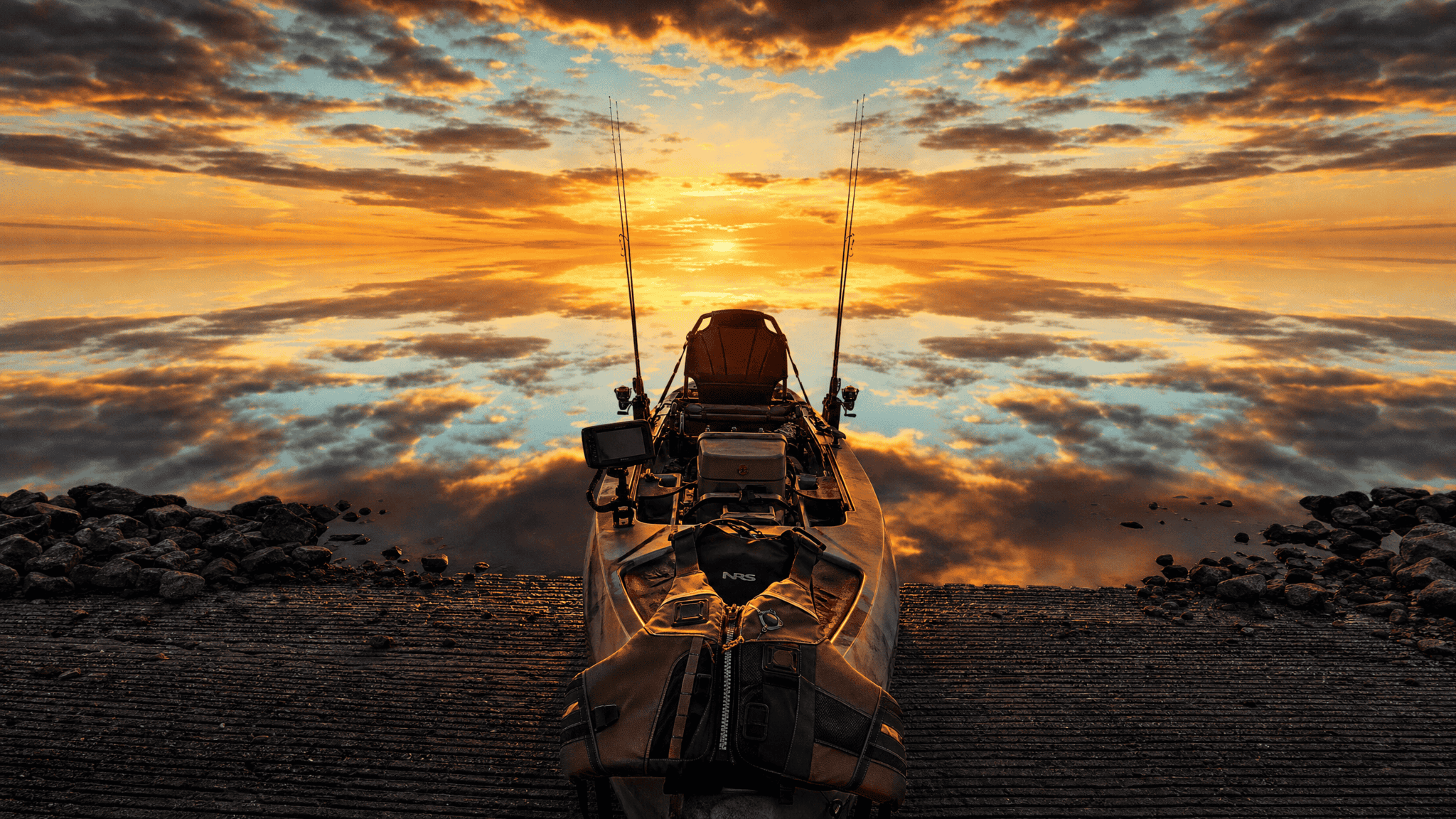
A fishing kayak can hold a lot of stuff.
Rod holders, crates, electronics, an anchor system, a net, three rods, and enough tackle to make the boat look employed.
None of that helps if the first time you find out how the kayak behaves sideways is when a boat wake hits you with a hook in your hand.
Make the first kayak fishing outing a paddling day.
Wear the PFD for the whole practice
Put on a properly fitted, appropriate life jacket before you launch, and keep it on.
Don’t skip it because the water’s shallow or you plan to stay close to shore. Practice is where you build the habits you’ll want when something unexpected happens.
The National Park Service and the American Canoe Association both treat wearing a PFD as basic paddling safety. Local laws can add specific carriage or wear requirements, so check the rules for your water.
Find boring water on purpose
The first practice spot should be protected and legal, easy to get out of, and not above your skill level.
No strong current or heavy boat traffic. No cold open water, no offshore plan, and no weather moving in.
You’re trying to learn the boat, not prove it can survive your optimism.
Check the forecast before you launch, and tell someone where you’re going and when you expect to be back. The ACA’s Smart Start for Safe Paddling is a free course that covers trip planning, float plans, weather, hazards, temperature, and rescue skills.
Paddle until the basic movements stop being questions
Go forward at an easy pace, stop, and back up. Turn both directions, first wide and then tighter. Paddle into a light breeze and back with it. Come into shore slowly, then leave again without scraping the paddle across everything nearby.
Pay attention to how long the kayak keeps coasting after you stop paddling, and how a light breeze starts swinging the bow around.
Then try the awkward move fishing will eventually ask for: reach behind the seat and see what that does to your balance before there’s a hook or a wave involved.
Later that’s fishing information. Right now it’s boat-control information.
Learn the stability without trying to flip it
In safe, controlled water, with proper instruction or a partner, feel how the kayak responds when your weight shifts.
Move your hips a little. Reach toward one side while keeping your center under control, then turn around like you’re reaching for a rod behind you.
Every kayak feels different. A wide fishing kayak can feel rock solid at first, but it still has limits.
Better to find the normal range of movement now than to let a fish or a dropped tool find it for you.
Practice getting back in
This is the important part.
Self-rescue technique depends on the kayak, the water, the conditions, your clothing, and you. Learn the right method for your boat from qualified instruction, then practice it in controlled conditions with another capable person there. Don’t capsize on purpose in cold water, current, boat traffic, or weather you aren’t equipped to handle.
The NPS tells kayakers to be capable of self-rescue and to practice before counting on it in exposed water. Its kayak safety guidance also covers weather awareness, PFD use, cold-water protection, and paddling with others.
Your first capsize shouldn’t also be your first emergency.
Now add one fishing movement at a time
Once regular paddling feels controlled, leave the hooks off and act out the fishing.
Reach for a rod and put it back. Grab the net, open the tackle box, turn to look behind you. Pick something up off the deck, then move the paddle out of the way and get it back.
You’ll find out fast which gear spots make you twist. Move those now.
A crate that looks perfect in the garage may be exactly where your elbow wants to go on the water.
The paddle needs a home
Fishing creates a simple problem: both hands want other jobs.
Make sure you can secure the paddle quickly without it drifting off or getting tangled in line. Practice pulling it out of the holder without looking behind you.
If the wind starts moving the kayak while you’re pretending to fish, stop and fix the boat. That’s the habit you want later. Boat control comes before finishing the cast.
Keep hooks out of the first lesson
Hooks add one more hazard to a small platform that won’t hold still.
A lure can catch your PFD, the seat, the line, the net, your clothes, or you. A fish can pull hard right when you’re reaching for pliers, and a snag can load up the rod while the boat keeps moving.
Learn the boat first.
Then bring one simple setup on the first real fishing trip. The kayak fishing beginner guide covers how tackle and safety fit together once you get there.
Cold water changes the practice plan
A calm spring or fall day can look harmless while the water is cold enough to make a capsize serious very quickly. Dress for ending up in the water, not for how warm the parking lot feels. If the water temperature makes self-rescue practice unsafe without proper clothing, supervision, and instruction, don’t use that day to experiment.
Practice the parts you can do safely and get qualified help for the rest. A rescue you learned once in warm, protected water still needs honest limits when the lake is cold, windy, deep, or far from shore.
Come back before you’re tired
Fatigue chips away at your balance and judgment, and at how hard you can paddle.
Your first practice doesn’t need to turn into a five-hour trip just because the weather stayed nice.
Turn around while you still feel good. Notice whether the trip back takes longer than the trip out, and think about what the wind did and which movements felt awkward.
If the kayak still feels like more boat than you want right now, fishing without a boat is a real option, and the common situations page is worth a look before your next trip either way.
The next fishing trip will be better because the kayak isn’t the new part anymore.


