The gravel is lighter than everything around it.
Not white. Just clean. An oval patch in a run where the rocks upstream and downstream are darker with algae and silt.
In fall, that difference can be a trout redd — a spawning nest.
Don’t step on it.
A redd can hide in plain sight
Female trout and salmon use their tails to move gravel and dig a shallow depression where eggs are deposited and fertilized, then move gravel back over the eggs.
All that digging turns the stones over, so the disturbed area often looks cleaner and brighter than the streambed around it.
Shape and size vary with species, fish size, current, and substrate. Don’t expect every redd to look like the neat oval from a diagram.
Trout Unlimited’s guide to recognizing redds recommends looking for cleaned gravel in suitable flowing water and explains why anglers should avoid walking through those areas.
Walking across one can damage more than the gravel
The eggs are underneath.
Boot pressure can crush them. Wading can also kick up fine sediment that settles into the gravel and cuts down the flow of oxygenated water around developing eggs.
If you think a patch might be a redd, route around it. Don’t test it with your boot.
Give the cleaned patch and its edges some space too. Redd boundaries aren’t always obvious from above, and the eggs stay buried after the adults move on.
Spawning fish are easy to see for the wrong reason
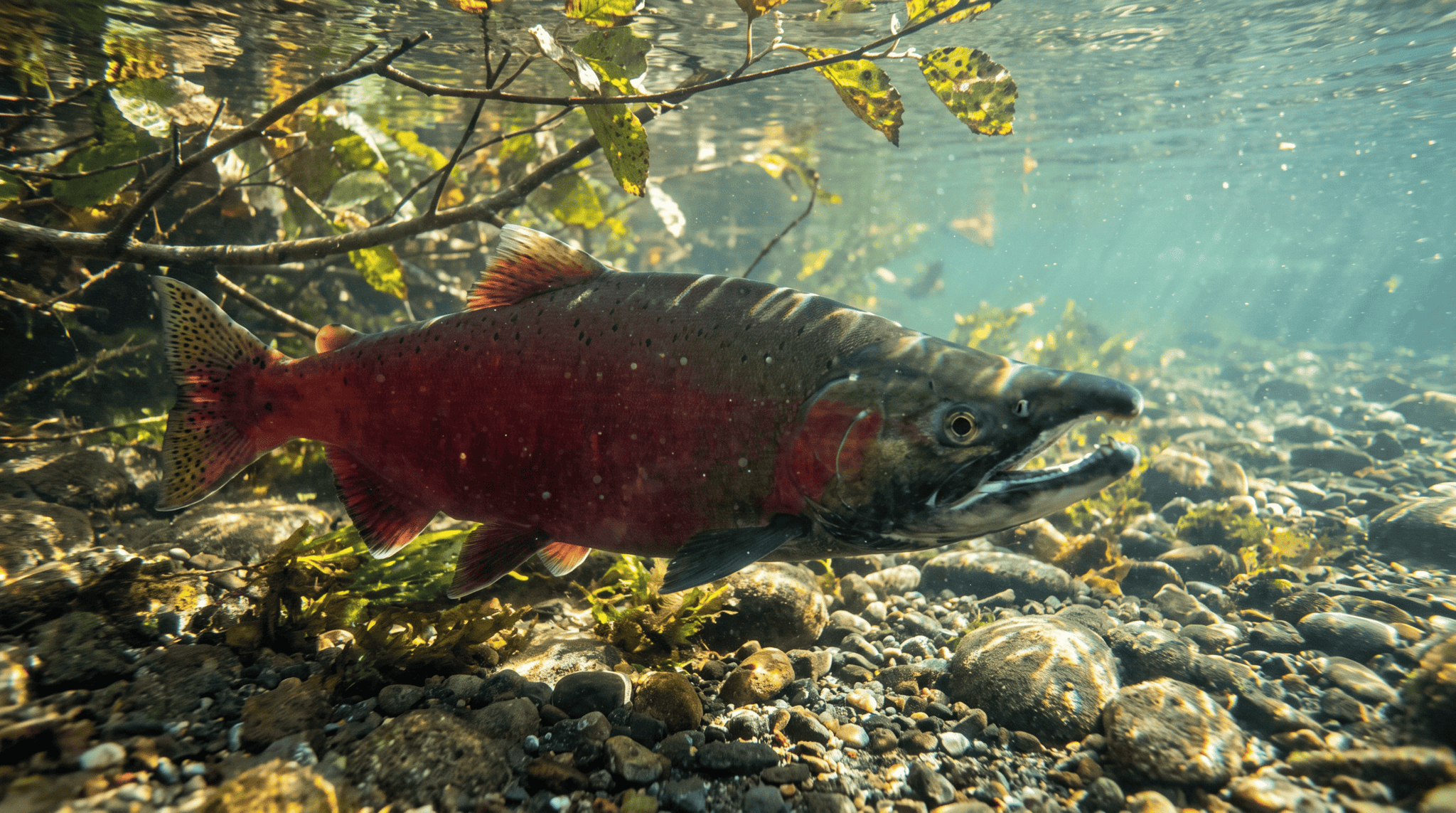
Fish on or near redds can be unusually visible, which makes them tempting. They may also go after objects near the nest.
Leave them alone.
There’s plenty of water that isn’t an active spawning bed. Move upstream or downstream and fish for trout that are feeding normally, not fish burning energy to reproduce.
This isn’t about winning an argument over whether a fish technically can be caught there. It’s about not making the easiest fish in the run pay for your afternoon.
The calendar depends on the species
Different trout and salmon spawn at different times.
Brown trout and brook trout commonly spawn in fall. Rainbow trout often spawn later, frequently in late winter or spring depending on the population and water. Cutthroat timing varies by subspecies and system, and salmon runs have their own schedules.
So “redd season” isn’t one national weekend.
Know which species live in the stream and check local agency information, the same kind of water-specific check you’d do for regulations. If spawning is possible, look at the gravel before you wade through it.
Clear water makes the clue easier, not certain
A bright gravel patch is a reason to slow down.
It isn’t automatic proof of a redd, though. Current can clean gravel, and so can people, animals, or a recent high-water event that exposes lighter stones.
So look at the context before deciding, which is how I try to handle most clues on the water anyway. Is the gravel a size fish could actually move? Is there enough current to carry oxygen through it without blasting the eggs away? Are spawning fish around, or other cleaned patches in the same reach?
If you’re unsure, avoiding the patch costs almost nothing.
Fish around the spawn, not through it
Fall trout fishing doesn’t have to stop because some fish are spawning.
Look for fish feeding away from active redds. Pools, deeper runs, and banks can still hold trout that aren’t on nests.
Don’t use an egg pattern as an excuse to fish right behind active spawners. Eggs are real forage, but piling casts around an occupied redd keeps the pressure on the spawning area, and there’s plenty of other water.
Move off and let the nest be a nest.
Wading is part of the fishing decision
Anglers spend a lot of time thinking about where to cast and not much about where their feet are going.
In spawning season, your route through the river matters as much as the presentation. Get in where you can see the bottom and cross somewhere that avoids cleaned gravel. If the river’s too deep, fast, or murky to pick a safe route, stay on the bank.
Most catch-and-release prep is about what happens once a fish is hooked. Redd awareness starts earlier. Sometimes the kindest fish handling is not creating the interaction at all.
The redd still matters after the adults leave
The spawning fish may be gone before the vulnerable part is over. Eggs stay buried in the gravel while they develop, and newly hatched fish can stay down in that substrate before they emerge.
So an empty redd isn’t just an abandoned patch of riverbed. If you can still pick out a recently used spawning area, keep your boots out of it. The fish were the easy warning sign, and the part worth protecting is still there after the warning swims off.
A late-season wading route deserves the same care as the day you actually watched fish spawning there.
You are looking at next season
A clean patch of gravel can hold eggs you’ll never see, which makes it easy to walk over and easy to forget.
Notice it anyway.
Step around the cleaned gravel and give the spawning area enough room that your next cast goes to fish in ordinary holding water, not the nursery.