The clock starts the second the fish leaves the water, and nothing anybody does after that makes it run slower.
SEQUENCE PLATE · HANDLING
The clock starts at the hookset.
Most of a good release has already happened by then. It happened when the hooks got picked and the drag got set, when somebody figured out where the fish would actually be landed, and when the pliers went somewhere a hand could find them without a search party.
Rules for this water, this species, today
I use current fish and wildlife agency information for the exact water, date, species and method I’m fishing. Some fish have to go back. Some carry special handling or reporting rules, and some are managed differently because they’re invasive or meant to be harvested. Warm water, low flow, disease concerns, spawning fish, deep-water capture and emergency closures can also change whether fishing there is even a good idea that day.
The regulation check happens before the cast, not while you’re holding a fish and trying to remember.
Gear that actually ends the fight
Rod, reel, line, leader and hook need to be strong enough for the fish you might actually meet and the cover it’s going to run for. Too light and the fight drags on, and the length of the fight is exactly the part that costs the fish. Too heavy or badly matched and you’re straightening hooks and popping knots instead.
I go over knots, line, hooks, split rings and drag before I fish, not after something fails. A small lure will also find something bigger or toothier than what you had in mind, so the tackle has to handle the fish that might show up, not just the one you’re hoping for.
I test the drag with the actual rod and line. It should give line smoothly — not locked down, and not so loose the fish runs the whole show. You can adjust mid-fight, but the first hard pull shouldn’t be how you find out it’s wrong.
Hooks I can actually get back out
Local hook rules come first. After that I choose with removal in mind, because removal is where the time goes.
Multiple exposed trebles, heavy wire, trailing hooks and deeply taken bait all slow handling down. I carry pliers and cutters strong enough for the hooks I actually use. A dainty pair of forceps looks perfectly capable clipped to a vest and won’t touch heavy hardware when it counts.
Where it’s actually going to happen
I pick where I can net, unhook, support and release a fish before I cast. Bank height, current and footing decide most of that, and in a boat the layout does.
The nearest bit of bank is rarely the best one. Move when you can instead of forcing the fish into a bad corner, and if a spot won’t allow safe handling, fish it from somewhere else.
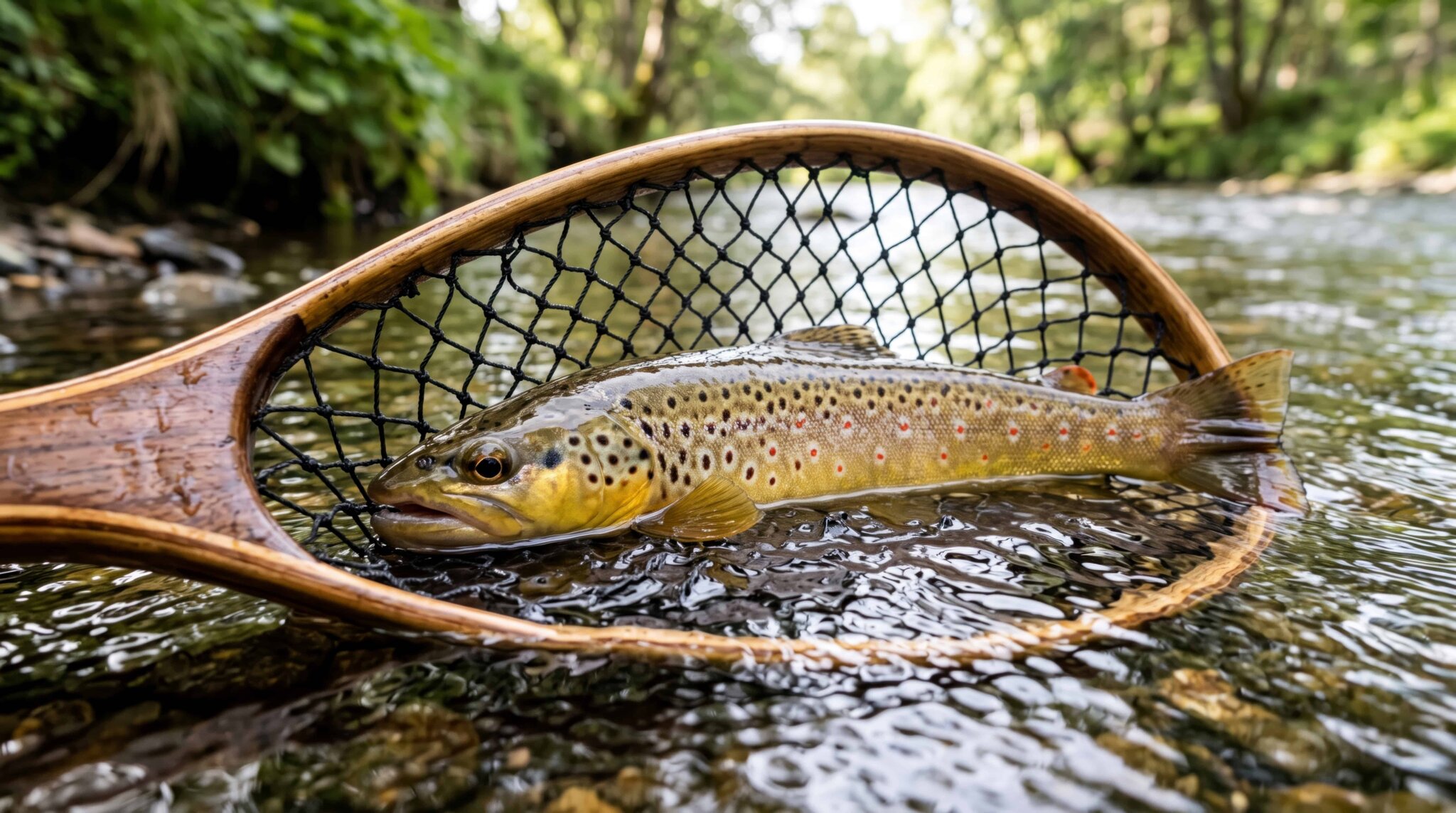
The net has to suit both the fish and the place. Too small and it folds the fish or leaves hooks swinging outside the mesh. Too short a handle and somebody makes a reach they shouldn’t. Leading the fish into the net head first beats chasing it from behind with the hoop. Pliers, cutters, measuring gear and any required reporting tools go where a hand finds them right away — buried under lunch and three tackle trays doesn’t count.
With other people along, hand out jobs before it matters. One person runs the rod, somebody else takes the net or the tools, and the camera waits until the fish and the hooks are both under control.
Pressure, then patience
I keep useful pressure on without pushing the gear past what it can take. Long stretches of slack, or playing a fish out longer than it needs just for the experience, run up the clock on the fish. Side pressure usually steers a fish more safely than high-sticking does.
Then I slow down as it comes close. That’s where hooks come flying, line wraps, and somebody lifts wildly. Efficient doesn’t mean frantic.
Hands last
A fish with several exposed hooks can hurt itself and whoever leans in to help. Hands stay off until the fish and the lure have both actually stopped moving.
The net, the rod position, the leader, or a hold that fits the species settles it down. When a hook won’t come out clean and safe, cutting the hook or the hardware beats twisting the whole lure around in there. The lure is the cheapest thing in that whole scene, and it’s not close.
Wet, supported, low to the water
I wet my hands before I touch the fish. I stay off the gills, don’t squeeze the body, and keep it off dry dirt, hot rock, snow, ice and rough boat carpet.
Bigger or long-bodied fish get supported with both hands, and I don’t hang a heavy one vertically by the jaw unless current species-specific guidance actually backs that. Advice really does differ by species, so it’s worth knowing the guidance for what you might realistically catch instead of a general rule you half-remember.
The measuring board and camera are ready before the fish comes out. Measure quickly, and use the legal method where one’s required. For a photo, crouch near the water, support the fish, and take one or two frames. If the camera isn’t ready, the fish goes back anyway. Nobody gets a second lift because somebody blinked.
I also check the picture for anything I don’t want out there — landmarks, filenames, live location data.
Some days the water itself is the problem
Warm water, low flow, poor water quality, crowding and long fights all cut into a fish’s odds of recovering. There’s no single temperature number that covers every species and every water, so current agency closures and local guidance beat a rule of thumb.
Fish brought up from deep water can have species-specific barotrauma concerns. Learn the correct local method and carry the required equipment before going after them on purpose. Beside the boat, with a fish already up, is the wrong place to be inventing a venting or descending plan for the first time.
When fish are recovering poorly, or the water’s obviously stressed, I change species, cut the session short, or just stop.
Letting go
The fish goes back into suitable water, upright, supported gently until it has its balance and swims off on its own. No forcing it back and forth, and no recapturing it for another video.
If a fish is badly injured or isn’t going to recover, follow the current rules and agency guidance for that water.
Hands shaking at the net is normal, especially the first few times the whole sequence is on you, and it’s the part that settles down fastest. A plan worked out ahead of time gives your hands something to follow while the rest of you catches up.