The dry towel on the boat seat is about the worst thing you can grab a fish with. Dry cotton grips the slime and pulls it off, and dry hands do a smaller version of the same thing. Wet your hands before you unhook, measure or photograph a fish, and most of what touches it is water instead of skin.
That slime isn’t dirt, and it isn’t decoration. It’s the fish’s skin barrier — a mucus layer carrying antibodies that keeps parasites and bacteria from settling on the scales, and it does the osmotic work of holding the right amount of water inside a body that lives surrounded by water. Wipe a patch off and that spot is open to exactly the stuff the slime was keeping out.
Most of the damage happens around the handling, though, not during it. Keep the fish over water or a wet surface so a drop is a splash instead of a fall onto rock or a deck. Hold it horizontal with a hand under the belly instead of letting it hang from the jaw — its organs are built to be held up by water, not by a skeleton designed for gravity. And fingers stay out of the gills, period. Gill tissue is delicate and bleeds easily, and a fish bleeding from the gills often doesn’t survive the release, even when everything after that is done right.
Wet hands also can’t fix the decision that came before them. A fish coming up from deep water has a bigger problem than slime, and getting it back down is the part that matters. On a hot afternoon in warm water, the best handling is the handling that never happens. Catch-and-Release Starts Before the Fish Is Hooked gets into those calls, and the note on not pumping a fish picks up once it’s back in the water.
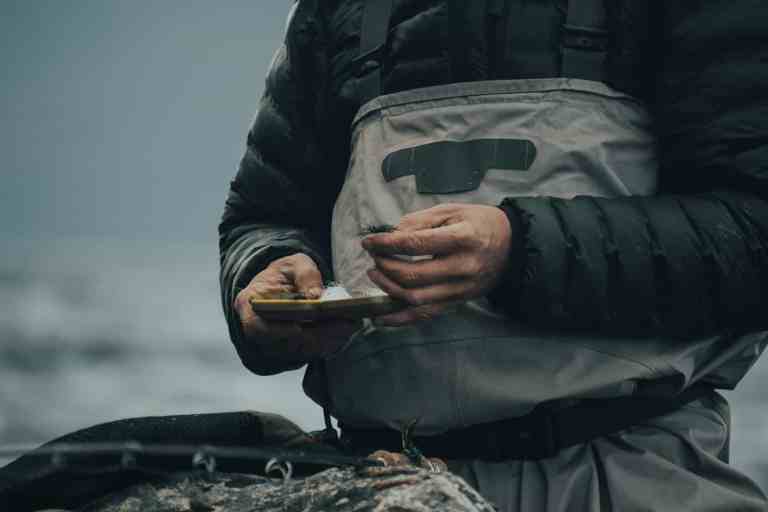
The rest is being ready before you lift. Pliers out, net wet, camera already on and framed, tape unrolled, all before the fish leaves the water. Almost every long air exposure I’ve seen was somebody digging through a bag with a fish in the other hand. I treat the whole out-of-water part as one held breath — mine — and it keeps the time about right without a stopwatch.
FIELD OBJECT
This one should leave the page.
The article is the long version. These are the pieces worth carrying into the next trip.
The 30-second version
A dry towel is about the worst thing you can grab a fish with, and dry hands aren’t far behind. Wet them first, and have everything ready before the fish leaves the water.
RIGHT TOOL, NEXT
Field Ops Desk
Turn the field note into a pre-trip, on-water, or debrief decision instead of leaving it as reading.