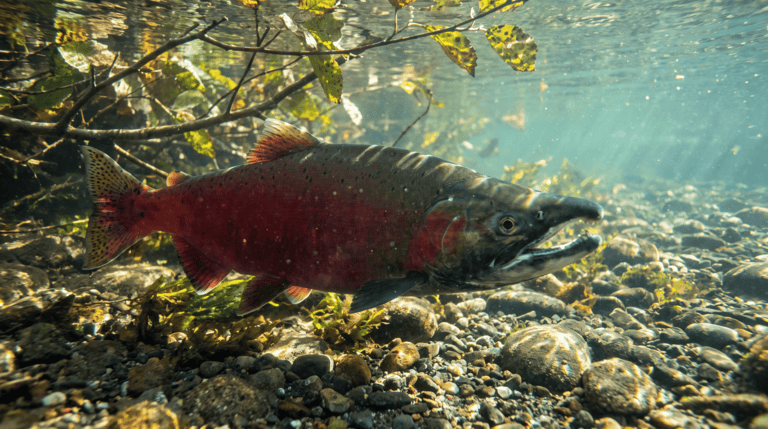
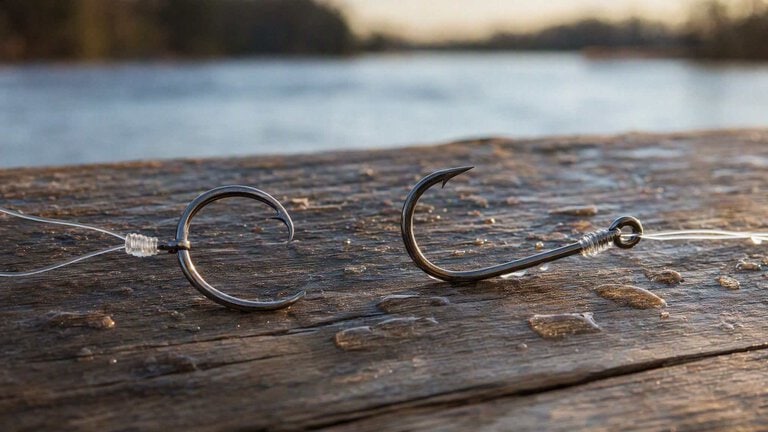
You unhook the fish, hold it in the water, and let go.
It tries to swim down. Then it comes right back up.
That isn’t a fish that needs another minute beside the boat. A fish brought up fast from deep water can suffer barotrauma — gases inside its body expand as the pressure drops, and that can make it hard or impossible for the fish to get back down on its own.
If you fish deep saltwater, or any fishery where the managing agency recommends recompression, you need a release plan before the fish hits the surface. Freshwater isn’t automatically the same story, and some species, like crappie, are especially vulnerable. Minnesota DNR’s freshwater barotrauma guidance, for example, tells anglers targeting sensitive fish in deeper water to plan for legal harvest or fish shallower, instead of treating marine-style fixes as universal.
What barotrauma can look like
Signs vary by species and how bad it is. NOAA Fisheries lists bulging eyes, a bloated body, the stomach pushed out of the mouth, lifted scales, sluggish swimming, and trouble returning to depth.
You don’t need to see every sign. A fish that keeps floating back up after release needs help even if it looks fine otherwise.
NOAA’s current catch-and-release guidance, updated August 4, 2026, notes that fish caught deeper than roughly 30 feet can experience barotrauma effects and recommends getting affected fish back to depth as quickly as possible.
Why deeper water changes the release
Pressure increases with depth, and a fish living down there is adapted to it. Bring it up quickly and the gases inside its body can expand as the pressure drops.
Some species handle that better than others. Some just can’t adjust fast enough on a quick trip up.
That’s why holding a barotrauma-affected fish upright at the surface doesn’t fix the main problem. It needs to get back to the pressure where those expanded gases compress again.
A descending device reverses the trip
A descending device holds the fish and carries it back down through the water column, then lets it go at the target depth.
There are several designs: lip-grip styles, inverted hook systems, weighted release devices, and baskets. Which one you use matters less than having one that fits the species and size of fish you’re likely to catch, and knowing how to use it before the trip.
A descender buried under three tackle bags isn’t release equipment yet. Keep it rigged where you can grab it.
Depth matters more than surface patience
Normal catch-and-release habits still apply: minimize air exposure, handle with wet hands, support the fish, and don’t fight it longer than necessary.
Once barotrauma’s involved, though, the release needs another step. Get the fish back down.
NOAA identifies descending devices, release weights, and release baskets as recompression tools. The point is to return the fish to depth quickly so pressure can help reverse the gas expansion.
Don’t spend several minutes trying to “revive” a fish at the surface when the reason it can’t leave is pressure.
Venting is not the casual alternative
Venting uses a hollow needle to release gas from the fish’s body cavity. It’s used in some fisheries and situations, but it takes the right location, equipment, and technique. Done wrong, it can injure internal organs or just add another wound.
NOAA says venting is an option when rapid release at depth isn’t possible, and points anglers to established venting guidance.
Where the managing agency recommends recompression for that fishery, use the approved descending method instead of improvising with a needle. Where agency guidance is different — including some freshwater fisheries — follow the species-specific rule. Required release equipment and methods can differ by region and species, so look up the real rules for where you’re fishing.
The tackle choice begins before the bite
Fishing deep with gear too light for the target can make every release harder.
Use tackle strong enough to bring the fish up under control without exhausting it. Have the dehooker ready, and know whether the fish is legal to keep before it spends extra time on deck. If it makes deployment faster, keep the descending device attached to its own rod or line.
Catch-and-release starts before the fish is hooked in shallow water too. Deep water just adds pressure to the list of things you have to plan for.
Know which fish are especially vulnerable
Bottom and reef species caught from depth are common barotrauma cases, including many rockfish, snapper, and grouper fisheries.
Species respond differently, and so do regulations. Before a deep-water trip, look up the release guidance for the species and region you’re actually fishing instead of leaning on a method you learned in another state or fishery.
The water-specific regulation check matters here because release equipment can be part of the legal gear requirement, not just a good idea.
The device has to match the depth you actually fish
A descending device only helps if the line, weight, and release can reach the depth where recompression works for the fish you catch. Before the trip, rig it and test the release mechanism, and make sure there’s enough dedicated line to get below the surface layer quickly.
That matters on a rocking boat. A fish shouldn’t be waiting in a net while somebody untangles a release weight from the bottom of a tackle bag. If deep-water release is a realistic part of the day, the device belongs with the working gear, and the people who might have to use it should already know how.
The release is not complete when the fish leaves your hand
A fish floating beside the boat is still your problem.
If current guidance for that fishery calls for recompression and a deep-caught fish can’t get down on its own, keep handling to a minimum and use the approved descending method right away. If the agency says something different for that species or water, go with that.
That’s the whole release.