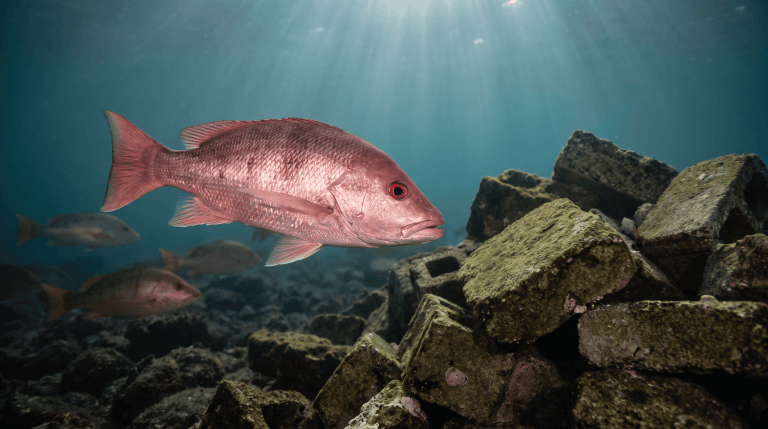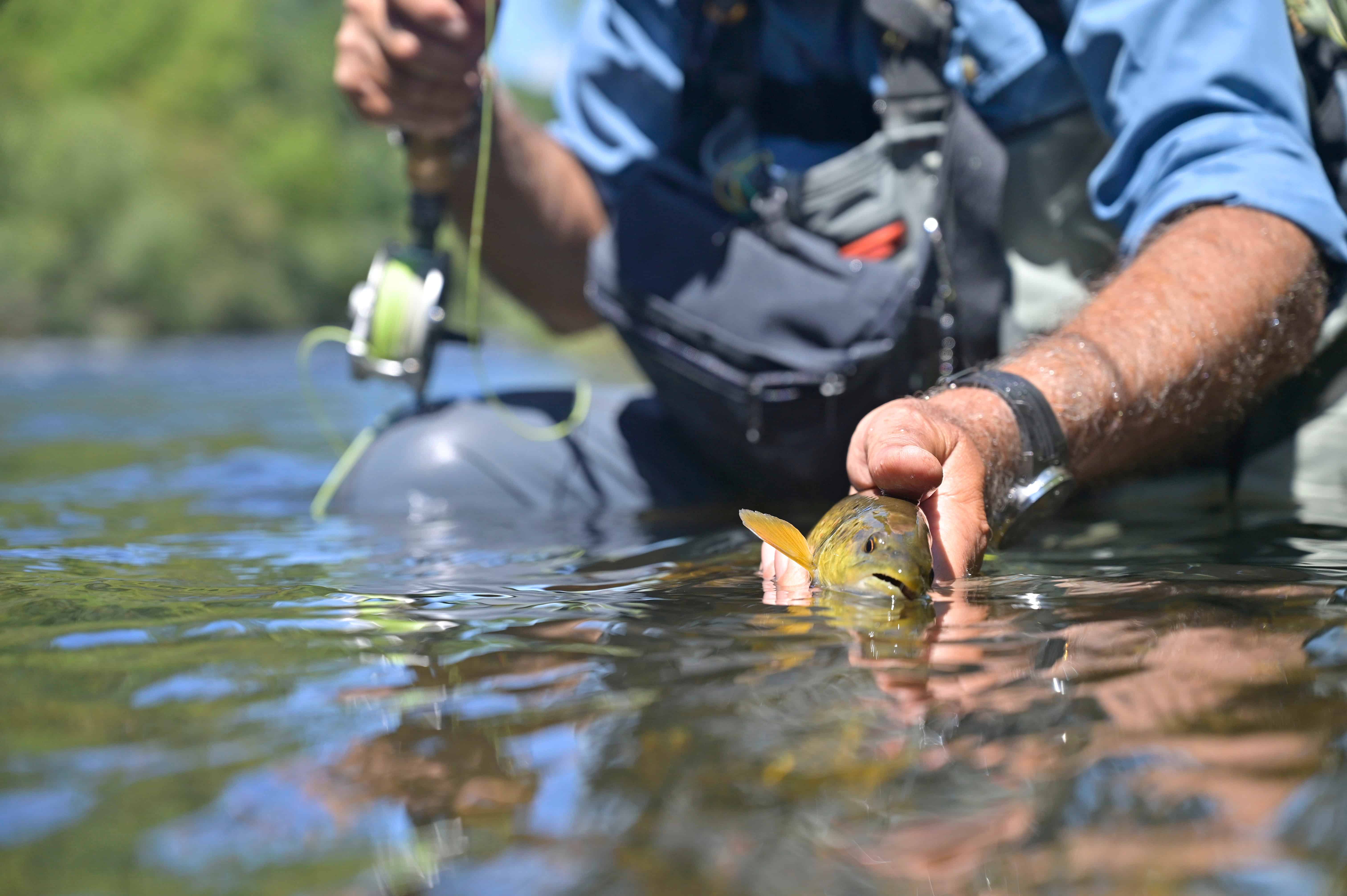
Head into the current, belly down, hands mostly still. That’s most of it. The back-and-forth pump nearly everybody gets shown at some point looks a lot more helpful, which is kind of the problem.
Gills are set up for water to travel one direction: in through the mouth, across the gill filaments, out under the gill cover. The blood in those filaments runs opposite to that flow, and that opposite arrangement is how a fish pulls so much oxygen out of water in the first place. Drag the fish backward and you’ve reversed the water against the whole setup, shoving it the wrong way past thin tissue on a fish with nothing left in reserve. Every pump gives it a little water the right way, then takes the good of it back.
In moving water, cradle it lightly with its head facing into natural current and let the river do the work. In still water, hold it upright and still, or ease it slowly forward — never back for another pass. Upright matters as much as direction. A fish held on its side or upside down can’t work its gill covers properly no matter what the water is doing.
The fish tells you when it’s ready, not the clock. It holds itself upright without being cradled, the gill covers settle into a steady rhythm instead of gaping, and it makes one deliberate push away instead of drifting off sideways. When you feel that first real tail beat against your palm, open your hand. If it rolls, catch it and give it longer. The first time a fish tips belly-up the second you let go, it’s a rotten feeling, and it’s fixable right then: get it upright, face it back into the water and wait. Letting go of a fish that’s already rolling isn’t a release. It’s just the end of your part in it.
Warm water changes all of this. It holds less oxygen, so recovery gets harder and the window shrinks. A fish that took a long fight and a long air exposure on a hot summer afternoon may not come back at all, and no amount of holding fixes that. Catch-and-Release Starts Before the Fish Is Hooked is about cutting that exhaustion down before reviving is even a question, and wetting your hands first keeps the handling from piling on. On those afternoons the real fix is shorter fights, no photo session, and leaving that water alone through the heat of the day instead of getting better at reviving.
FIELD OBJECT
This one should leave the page.
The article is the long version. These are the pieces worth carrying into the next trip.
The 30-second version
Pushing a tired fish back and forth sends water through its gills the wrong way half the time. Face it into the current, keep it upright, and let the fish tell you when it’s ready.
RIGHT TOOL, NEXT
Species & Presentation
Carry the species behavior and presentation question into a narrower water-to-fish-to-presentation handoff.