Stand under a store overhang during a summer thunderstorm and watch the parking lot for a minute. Every drop hitting that pavement is leaving, and all of it is headed downhill toward some creek, lake or river.
FIELD PLATE · WATERSHED
Water arrives carrying whatever it crossed.
Roofs, roads, sidewalks, driveways and parking lots don’t let rain soak in the way open soil does. It runs off faster, reaches drains and channels sooner and picks up whatever’s sitting on the surface along the way. The creek behind a shopping center and the lake downstream look like two separate places. The water’s taking one route through both.
Pavement speeds everything up
Impervious surfaces get stormwater to streams faster. That can mean sharper flow peaks after storms, eroded channels, moved sediment and changed habitat. Even perfectly clean rain turns into a physical force once a developed area funnels it toward the same outlet, and a stream shaped by slower runoff can respond badly when the watershed starts delivering water like somebody opened a valve.
Fish don’t feel flow as a graph. They feel depth, velocity, whether they can reach cover and side channels, and how hard they’re working to hold position. When a small stream spikes and drops fast, that flashier pattern can scour banks, move fine sediment, rearrange wood and strip out the stable shallow margins small fish and aquatic insects use. Streams rise after rain on their own. The development question is how much faster and bigger that pulse gets.
What the water picks up on the way
Oil and fuel residue, tire and brake wear, metals, road salt, fertilizer, pet waste, sediment and trash can all wash off developed surfaces, and the exact mix depends on the place and the storm. Storm drains often discharge toward surface water instead of getting the same treatment as household sewage. Anything spilled next to one gets a ride the next time it rains.
Temperature rides along too. Summer rain on hot pavement can warm up before it reaches a stream, and in a small coldwater creek a quick jump adds stress when fish may already be close to their thermal limits. How much depends on storm size, the amount of pavement, shade, pipe length, groundwater influence and the creek itself. A shaded, groundwater-fed tributary handles the same pulse very differently than a small exposed concrete channel.
Pollutants also build up on surfaces between storms, so early runoff can wash a concentrated load into drainage before later rain dilutes it. That doesn’t make the first minute of every storm the dirtiest under every condition. It does mean timing matters when somebody’s evaluating water quality. A sample from a dry Tuesday can’t describe what the creek goes through in a thunderstorm.
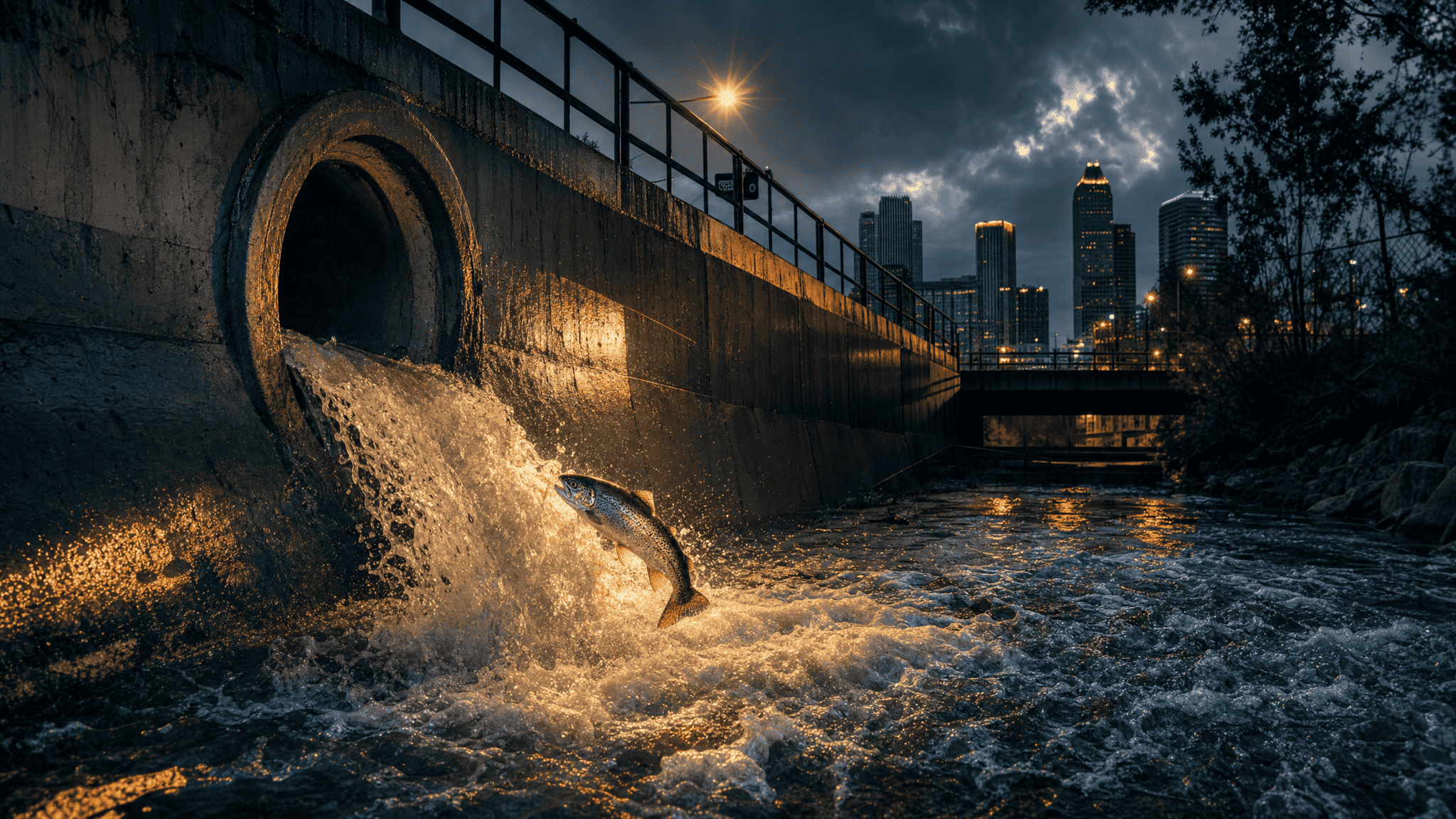
A storm drain is the end of a small watershed
When a pipe pours into a creek, the useful question is what area feeds it. It might be several streets, roofs, parking lots and landscaped yards that don’t look connected from the sidewalk. That drainage area is a little watershed tucked inside the bigger one, so tracking a sediment plume that keeps showing up usually means following the network upstream instead of staring at the outlet.
The pipe is where the route ends. It isn’t necessarily where the problem started.
Slow it down, soak it in
Rain gardens, bioswales, permeable pavement, retention and detention basins, restored wetlands and street trees are all after some version of the same thing: slow runoff, store it, soak it in or treat it before it moves downstream. Every one has limits. Soil, groundwater, winter, maintenance, space, the kind of pollutant and the size of the storm decide whether a design actually works. The basic idea is to make rain act less like it hit a roof and more like it hit a landscape.
Maintenance decides whether it keeps working. A clogged inlet, a basin full of sediment, dead plantings, a blocked overflow or a neglected filter can turn good stormwater design into expensive scenery. A lot of these controls depend on temporary storage, infiltration, filtration or slowing water down, and once sediment or debris eats that capacity, later storms can bypass much of the treatment — well before the structure looks broken.
Small urban creeks get channelized, buried, straightened and treated like drainage ditches. They still carry fish, insects, sediment, nutrients and water into bigger rivers. Restoring one can stabilize banks, add shade, reconnect a little floodplain and improve water before it reaches a fishery people actually drive to. The creek behind the grocery store isn’t a destination. It’s upstream of one.
Watching a storm from somewhere dry
High water right after a storm isn’t an invitation to wade out and investigate. From somewhere safe, though, a storm shows you how the watershed is plumbed: which drains are running, where sediment comes in, whether an inflow looks different in clarity or temperature, which banks are eroding and how long the creek stays high after the rain quits. The Sky Can Settle Down Before the Water Does gets into why that last one can drag on. Compare what you see with official gauges or monitoring data when they exist. One storm doesn’t prove a trend. Repeated looks tell you which questions are worth checking against better data.
A town’s drainage map can look like somebody dropped spaghetti on it. Finding the pipes that empty into the one stretch you fish is a much smaller job, and it’s where most of the useful questions start.
The prevention side is deliberately boring. Keep oil, chemicals, paint and other waste out of storm drains. Pick up fishing line and trash before the rain moves it. Fertilize a lawn for what it actually needs instead of the most the bag allows, and fix a vehicle leak before it turns into gutter runoff. At the community level, notice how new development handles runoff and whether older drainage is getting upgraded or just patched. Nobody takes a hero photo of a cleaned-out catch basin, and that’s most of what stewardship looks like in town anyway.
It’s easy to picture conservation happening in some remote forest or empty coastline. A lot of water quality gets decided where people park cars, walk dogs, salt sidewalks and route drains. Good stormwater design is fish-habitat design, even when there isn’t a fish anywhere on the engineering plan.