The Method · 5 of 6. Fishing is full of sentences that sound finished. “They always go shallow when it blows.” “That bank’s dead.”
Most of those are part something seen once, part something heard secondhand, and a fair amount of hoping. I label the mix so it can’t quietly turn into a law I never actually tested.
The four labels I use
Observation. What I can see, measure, or photograph without arguing about it: wind direction, water color, a fouled hook, a closed gate, a lure that never reached bottom. Observations can still be wrong if the instrument is wrong — but they’re where I start.
Sourced. A regulation, a species fact, a forecast, a map, a tool output, someone else’s named report. I credit it and check whether it’s current. A closure notice from last week isn’t today’s closure notice.
Inference. The useful guess: fish might be using the downwind edge because bait’s stacked there. Guesses are allowed. They just don’t get to wear an observation’s clothes until somebody actually tests them.
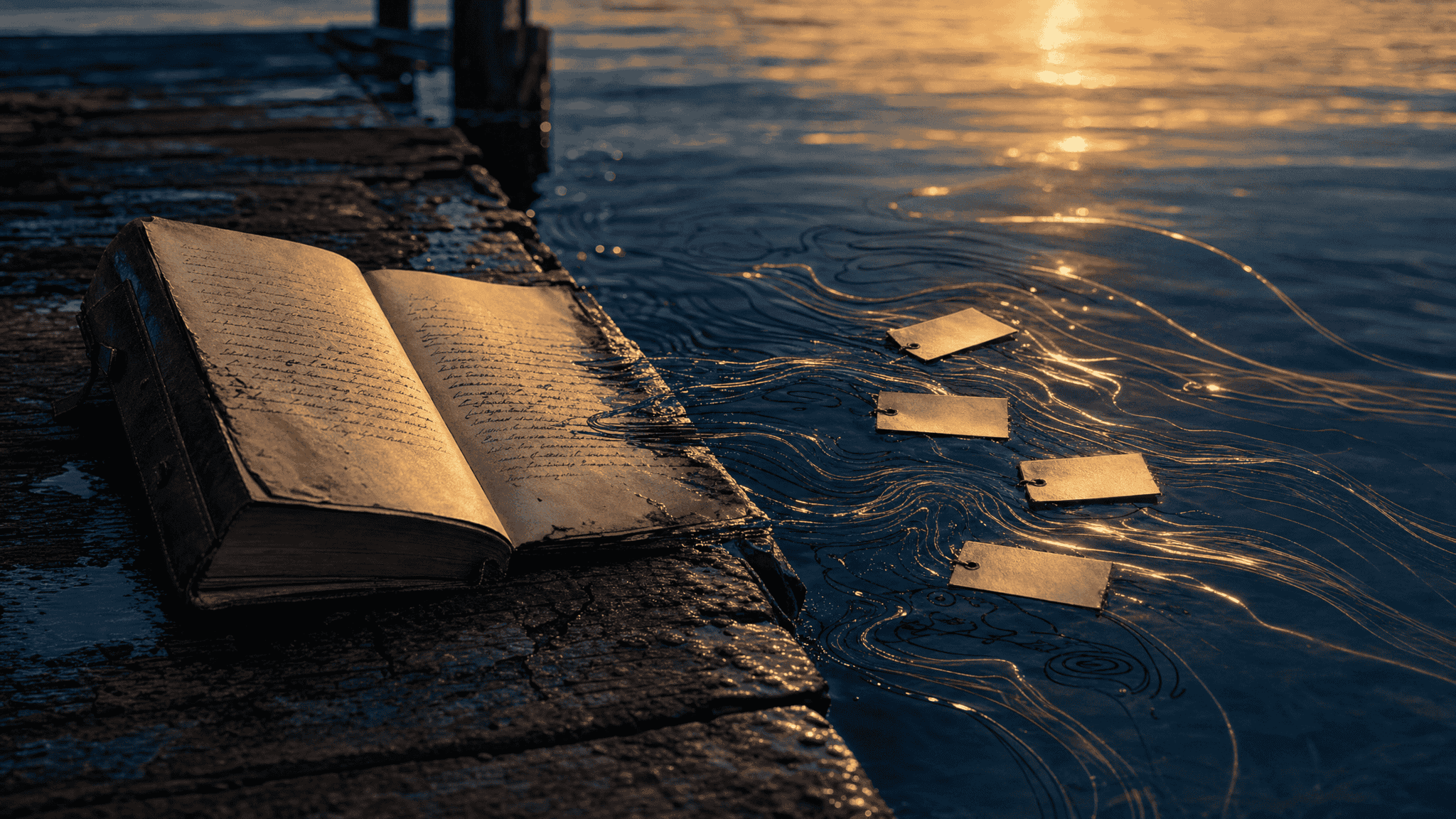
Unknown. The honest leftover. I don’t know if they moved, if the lure never got down there, or if the window already closed. Writing that down doesn’t mean the day failed — leaving it out is how a note ends up lying to you six months later. Photos hit the exact same wall — what a photo can and cannot carry is a smaller, more annoying version of this whole problem.
If you’re just starting to keep notes, don’t stress about getting the labels perfect. Even circling which lines are guesses puts you way ahead of a notebook that just says “they were deep.”
A surprise isn’t a confession
I still get surprised by fish, a lot. One shows up somewhere the map said was empty, or a blank happens where the forecast was smug about it. The surprise stays in the note. I don’t sand it down into a tidy lesson until it’s actually happened more than once.
One fish proves one fish. A photo proves a fish existed at a moment. It doesn’t automatically prove species, size, location, or that the lure still on the hook is the one that actually did the work.
Corrections stay visible
When I get a regulation or a window wrong, or put a gear claim out ahead of the evidence, I fix it where people can see it. The smallmouth pre-spawn temperature window on this site is under revision right now for exactly that reason — the water didn’t agree with the tidy version I’d written down.
On your next field note, try labeling the sentences you actually care about. If one won’t take a label, it’s probably doing too much work. Piece six is the last one, and it’s about what doesn’t get written down at all.


