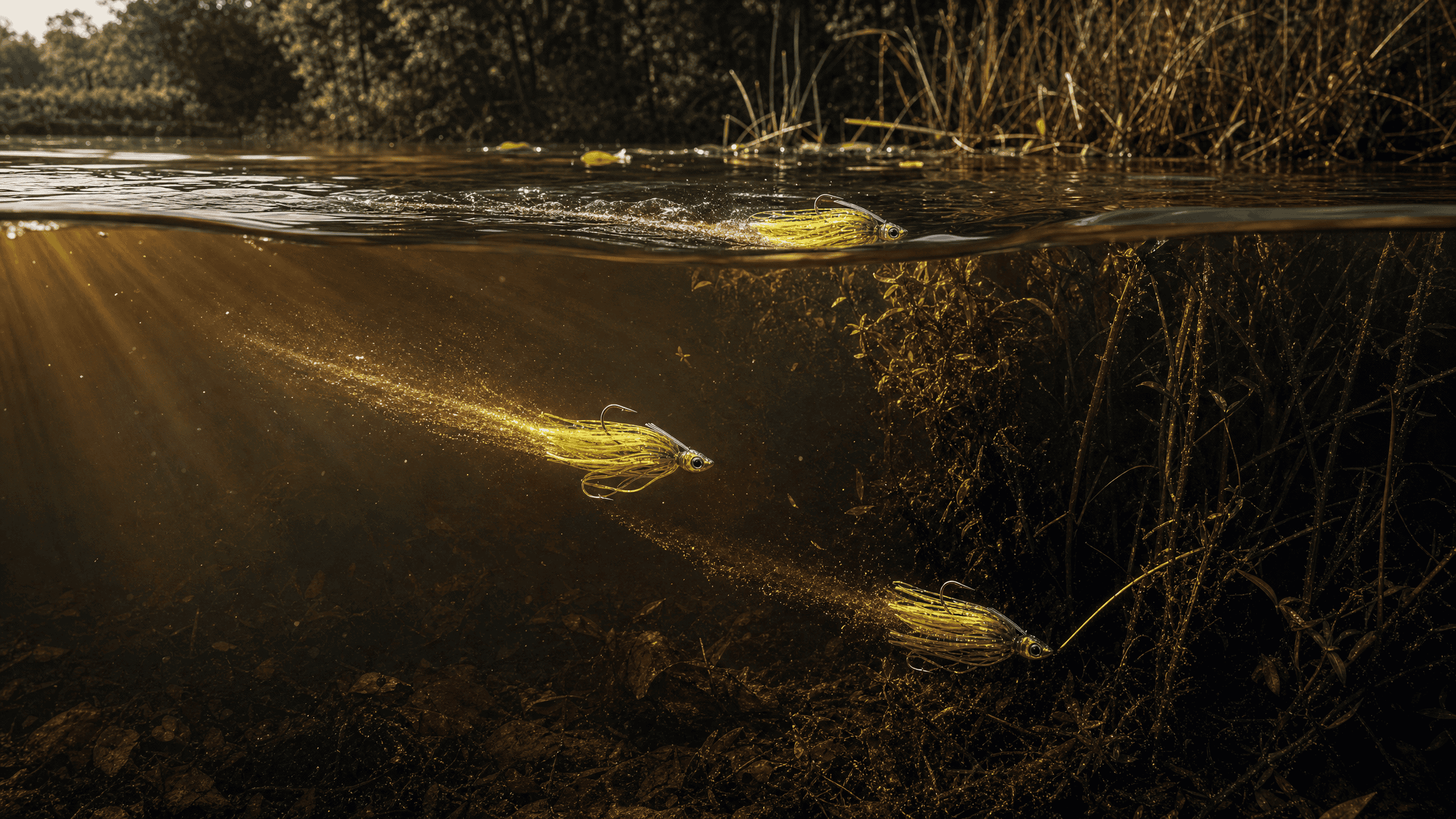
Field note. Stained-green pond, late summer, and a steady wind blowing straight into a reed and weed edge. You can watch the trash line stack up on the downwind bank while the upwind side looks cleaner and a lot emptier.
Three retrieves, one lane
Leave everything alone except how the jig comes back. Same jig, same color and leader, same wind-stacked bank the whole time. The three worth comparing: a slow crawl that stays in contact with the bottom, a medium swim that climbs up through the water column, and a hop that keeps jumping the lane between weed clumps.
The grass answers before the fish do
The slow crawl stays down in the edge and comes back with grass. Annoying, but grass on the hook at least tells you where the jig was. The medium swim spends more of its time above the weeds, which means less time where a fish sitting in that shade would actually see it.
The hop skips the lane entirely, and you spend half your time picking weed off the hook instead of fishing. At that point it’s basically a rake with a hook on it.
A weedy edge that fouls your lure every other cast can make you feel like you’re doing something wrong. Mostly the weeds are just showing you how deep you’re running, which open water never bothers to tell you.
None of that needs a fish attached to be useful. What’s worth keeping is which retrieve actually stays in the water you think you’re fishing.
One pond isn’t a retrieve rule
This is how a weedy edge tends to sort retrieves, not the record of one afternoon. It doesn’t say anything about color or brand, and it definitely doesn’t mean every pond wants a slow jig — change the wind direction and the lane changes with it.
If the lure isn’t in the lane, change the retrieve before you blame the paint job. Write down where it stays in contact and where it comes back fouled, and that counts for something even with no fish on the stringer.
Next: Stillwater frame · One decision, one test · Tackle Link
FIELD OBJECT
This one should leave the page.
The article is the long version. These are the pieces worth carrying into the next trip.
The 30-second version
Run one jig three ways along a wind-stacked weed edge and the color question fades fast. What matters is how long each retrieve stays in the lane, and the hop barely does.
What to watch
- Three retrieves, one lane
- The grass answers before the fish do
- One pond isn’t a retrieve rule
Field card
- Three retrieves, one lane
- The grass answers before the fish do
- One pond isn’t a retrieve rule
RIGHT TOOL, NEXT
Field Ops Desk
Turn the field note into a pre-trip, on-water, or debrief decision instead of leaving it as reading.