ORIGINAL HOOK DIAGRAM
Watch the doubled line, not just the hook.
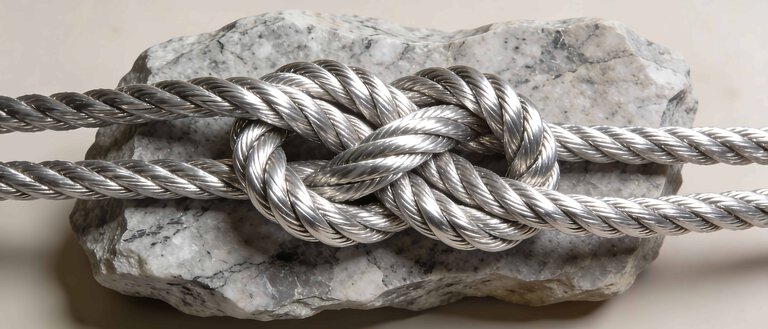
Original Hook the Horizon instructional diagram. It shows the load path schematically rather than reproducing any third-party illustration.
What it’s for
Line to hook, lure, swivel, or snap. Anything that can be passed cleanly through the loop.
Line fit
Braid, mono, or fluoro, as long as the eye takes doubled line and the knot seats clean.
Main tradeoff
The whole piece of tackle still has to pass through the loop. Large lures, treble hooks and tight rigging space make that tradeoff obvious very quickly.
Inspection clue
The doubled strands should sit parallel. Cross before it seats? Cut it off.
WHY IT WORKS
It spreads the load before it ever asks the line to turn hard.
The line goes through the eye doubled, so the connection doesn’t start with one skinny strand taking the whole hit right at the hardware. That doesn’t make it foolproof. If the doubled section crosses on its way down, one strand ends up grinding across the other under load. There’s a second way to spoil it, which is letting the loop finish trapped against the bottom of the eye. Do that and you’ve built the exact ugly load the doubled line was there to prevent.
The Palomar earns a look before the tag is trimmed. A good one is compact and even, two strands lying flat beside each other with nothing sticking out sideways.
TIE IT CLEANLY
Six moves. The look-over is part of the knot.
- Make the doubled section. Double up enough line to work with comfortably and run the loop through the eye. Small eye? Pass it through once, then back through from the other side, so the strands stay parallel.
- Tie a loose overhand. Loose, not cinched. The hook or lure hangs below the open knot.
- Pass the hardware through the big loop. Make sure the loop clears the hooks, split rings, treble points, all of it, instead of snagging halfway. Feeding a trebled crankbait through takes a couple of attempts. That’s just what it costs.
- Move the loop above the eye. It’s a small move, and it’s the one thing keeping the loop from getting pinched underneath the eye as the knot closes.
- Wet it and pull evenly. Both sides down together. Don’t yank one strand tight while the other’s still slack.
- Look it over, pull-test, then trim. Parallel strands, tight seating, no trapped loop, no scuffed line.
Crossed strands, and the other reasons to cut it off
Crossed doubled strands
One strand loads against the other instead of sharing the pull. Retie.
Loop trapped below the eye
The loop shouldn’t finish as a separate bight pinched against the bottom of the hardware.
Hardware caught on the way through
A treble, split ring, blade, or skirt can twist the loop before it tightens. Stop and reset it.
Damaged line next to a perfect knot
No knot rescues a nicked leader or a rough eye. Check the line and hardware, not just the knot.
COMPARE BEFORE YOU COMMIT
Palomar vs. the ones sitting right next to it
Improved Clinch
Reach for it when you want a snug terminal knot and feeding the whole lure through a loop isn’t practical, or just isn’t appealing.
Uni / Grinner
Reach for it when an adjustable wrap count and one familiar do-everything structure beat doubled-line simplicity.
Trilene
Reach for it when you want doubled contact through the eye but would rather wrap the tag around the standing line than pass the lure through a big loop.
HOW TO CHECK THE TIE
Use the videos to check the hand path. The look-over still matters.
A Palomar can look finished before the doubled strands are seated evenly. Check for crossed or bunched line at the eye, then load the knot before trusting it. The useful habit is the inspection, not how quickly the knot was tied.
Wired2Fish — Palomar Knot tutorial and videos · Rapala — Jacob Wheeler Palomar video · NetKnots — Palomar animation and steps · Take Me Fishing — Palomar guide
Open the deeper knot workflowJob, material, route, dressing, seating, pull-test checks and the standardized comparison record.
THE SIX-MOVE CHECK
Job → Material → Route → Dress → Seat → Test
- Job. Name what the connection has to do before choosing the knot.
- Material. Confirm the line, leader, rope, wire, and hardware actually suit this structure.
- Route. Trace every pass before tightening anything.
- Dress. Put strands, wraps, and loops in their intended order with no accidental crossings.
- Seat. Tighten in the order this knot needs. More force does not repair bad geometry.
- Test. Inspect the finished shape, load it by hand when appropriate, and retie if anything moves or fails the article-specific checks.
Practice / pass test. Tie this knot three clean times without rushing. A tie passes only when it matches this article’s What to check before you trust it geometry, shows none of the listed failure clues, and survives the stated load/inspection test. If you cannot tell why one attempt is better than another, keep practicing—the lesson is recognition, not memorization.
KNOT SPEC
Palomar Knot — the short answers
- ALSO CALLED
- Palomar. No meaningful regional aliases; it is the same name in freshwater bass circles, saltwater inshore and tournament use worldwide.
- KNOT TYPE
- Terminal knot tied in doubled line
- WHAT IT CONNECTS
- Line to hook, lure, swivel, snap or split ring. Not a line-to-line knot.
- LINE TYPES
- Braid, monofilament and fluorocarbon. Braid is where it is most often recommended. Not for wire, not for fly line.
- STRENGTH BAND
- High. Sits at the top of the terminal-knot group on braid and mono, and is one of the few knots that hold up well when tied in a hurry.
- DIFFICULTY
- Beginner. Usually the first knot people learn after the clinch, and the one most likely to survive being learned badly.
- STEPS AND WRAPS
- Six moves, no wrap count to remember. That absence of a count is the reason it stays reliable under pressure.
- TIE TIME
- Fast — a boat knot, not a home knot. Twenty to thirty seconds once learned, provided the lure will pass through the loop.
- POOR CONDITIONS
- Good with cold hands and in low light because there is nothing to count. Wind and rough water are fine. The one thing that ruins it is a big lure and a small working space.
- THROUGH THE GUIDES
- Compact for a terminal knot, so it clears guides easily. It is tied at the hook, though, so guide passage rarely matters.
- LUBRICATION
- Yes, always. Wet it before the final pull. Fluorocarbon in particular loses a large share of its strength when cinched dry, because the heat and friction of a dry pull damages the line inside the knot.
- TAG END
- Trim close, roughly an eighth of an inch. Leave a fraction more on braid, which creeps under load more than mono does.
- TOOLS
- None. Nippers or clippers to trim, and that is the whole kit.
- BEST SUITED TO
- Everything from panfish to offshore. Especially favored by bass anglers on braid and by anyone fishing heavy cover, where a snug hardware connection matters more than lure freedom.
The strength bands are rough on purpose. Published knot tests don’t agree with each other — the same braid-to-leader knot has tested near ninety percent of line strength on one machine and under half on another, because the line brand, its diameter, how fast it got cinched, whether it was wet and whose hands tied it all move the number more than the knot does. Use the band to compare this knot with the others, not as a number to quote.
FIELD INTELLIGENCE
Where it earns its place, and where it costs you
Advantages
- No wrap count, so it is hard to get wrong when you are cold, rushed or fishing in the dark.
- Doubled line through the eye spreads the load instead of asking one strand to take the whole hit at the hardware.
- Holds its strength on braid, where many wrapped terminal knots slip.
- Compact and quick, which makes it a genuine bite-window knot.
Disadvantages
- The whole lure has to pass through the loop. Trebled crankbaits, big swimbaits and heavy jigs make that slow and awkward.
- It needs an eye large enough to take doubled line, which rules out some small flies and fine-wire hooks.
- It cinches the lure tight against the eye, so it kills the free swing that some jerkbaits and streamers want.
- The doubled strands can cross on the way down and you will not always feel it happen.
Use a different knot when
- Improved Clinch or Trilene — when the lure is too large or too awkward to feed through a loop. Sorting those four by eye geometry is a separate piece.
- Uni / Grinner — when you want one structure that also handles line-to-line and spool work
- Non-Slip Loop or Rapala Knot — when the lure needs to swing freely rather than be locked to the eye
- Snell — when you want the pull to come off the hook shank rather than the eye
WHAT TO CHECK BEFORE YOU TRUST IT
The Palomar is the knot most people should default to, and the reason is not raw strength — it is that it fails gracefully when you tie it badly. There is no wrap count to miscount, so a tired angler at dusk ties much the same knot as a fresh one at the bench. The useful check is not the knot itself but the two strands: parallel means good, crossed means cut it off. The second thing to watch is where the loop finishes. Trapped under the eye, it builds exactly the hard single-strand bend the doubled line was there to prevent.
What actually makes it fail
- Crossed doubled strands, so one strand grinds across the other under load instead of sharing it.
- The loop finishing pinched below the eye rather than seated above it.
- Cinching dry, which cooks the line inside the knot — worst on fluorocarbon.
- A treble point, split ring or skirt catching the loop and twisting it as it closes.
- Line already nicked by a rough eye or by structure, which no knot rescues.
How to test it, and how it ages
Wet it, seat it with a steady pull on both the standing line and the tag together, then look before you trim: two parallel strands, tight to the eye, nothing sticking out sideways. Follow with a firm steady pull against the rod, not a jerk. A sharp snatch tells you nothing useful and can damage a knot that would have held.
Over a session: Stable. It does not loosen with casting the way wrapped knots can, but check it after any fish, any snag and any contact with structure. Braid in particular polishes and flattens where it turns through the eye.
Troubleshooting
Why does it keep breaking right at the hook?
Almost always dry cinching or crossed strands. Wet it, pull both sides down together and look at the strands before you trim.
Why will it not seat evenly?
You are pulling one side ahead of the other. Take both the standing line and the tag between your fingers and draw them down as one.
Why does the loop end up under the eye?
The loop was not moved above the eye before the final pull. It is one small deliberate move and skipping it is the most common mistake.
Why can I not get the lure through the loop?
The doubled section is too short. Start with more line doubled — it costs a few inches and saves the fight.
Why does it fail on the hookset and not the fight?
A hookset loads faster than a fish does, so it finds a knot that was seated loose. Seat it properly and it will take the set.