Snell a hook and the pull stops ending at the eye. It runs down the shank, which changes how the hook loads under pressure, so the shape of the hook gets a vote before your favorite of these three knots does.
DECISION LESSON · SNELLS
The hook geometry decides whether snelling is useful before the tying method matters.
- Job: put the load down the hook shank rather than stopping at the eye.
- Hook: eye direction, eye clearance and shank length have to suit the snell.
- Leader: diameter and stiffness affect how easily the wraps form and seat.
- Conditions: bench-built rigs reward control; a field retie may reward the version your hands already know.
- Failure cost: crossed wraps or a bad exit angle change the load path, so inspect the finished hook before bait ever goes on.
Pass: you can choose Traditional, Uni or Easy Snell from hook geometry and tying conditions, not habit.
ORIGINAL HOOK DIAGRAM
Eye size and where you are standing decide this
Three snell knots on one decision path. All three put the pull on the hook shank rather than the eye, which is the point of snelling at all. They differ in wrap direction, how many times the leader passes the eye, and whether you can realistically tie one on a moving boat.
The fast answer
Traditional Snell: I use it when the straight pull down the shank is the whole reason I’m snelling in the first place, and I’m comfortable with the classic wrap sequence.
Uni Snell: for when the Uni is already automatic in your hands. Moving a motion you own onto the shank beats learning a new one.
Easy Snell: the simplest wrap path of the three, which is worth a lot when you’re tying on the water.
And if what you actually need is a loop that holds bait, or a hair rig, none of these three is the answer. Go to the Egg Loop or the Knotless Knot instead.
What actually changes the choice
Hook geometry first
A snell loads the hook through the shank instead of treating the eye as a simple anchor point. So eye orientation, which direction the leader passes through it, keeper placement, and how much usable shank you’ve got all matter more here than they would with a Palomar or anything in the Clinch family. I check the hook before I even reach for leader material.
If the line can’t get through the eye and lie flat along the shank, switching to a different snell won’t fix that. The hook is the problem, not the knot, and no amount of retying changes that.
Familiar mechanics matter
The Uni Snell makes sense to me when the Uni is already in my hands without thinking about it. The Traditional is worth learning when its wrap pattern and straight pull suit the rig I’m building. The Easy Snell is there for when I want the shank benefit without adding more hand choreography than the job actually needs. There’s no ranking hiding in any of that. It’s just a question of which motion you already own.
Material changes wrap control
Braid works in snell systems, but slick limp braid needs a deliberate wrap count and careful seating or it creeps on you. Mono and fluorocarbon hold alignment against the shank more rigidly. Go heavy or stiff enough and small eyes and short shanks get awkward fast.
Field comparison
- Traditional Snell: a bench knot more than a field retie. I check for clean side-by-side wraps down the shank and a correct line exit.
- Uni Snell: medium field tieability. I check the Uni barrel for crossed wraps, rolling, or braid creeping under load.
- Easy Snell: the easiest of the three to tie in the field. I check whether the wraps stayed organized and pulled down cleanly.
When this is not a three-knot decision
- Need a bait-holding loop: compare the Egg Loop Knot.
- Need a carp-style hair rig: compare the Knotless Knot.
- Need a normal eye-only terminal connection: compare Palomar, Uni / Grinner, or Improved Clinch.
Finished-knot diagnosis
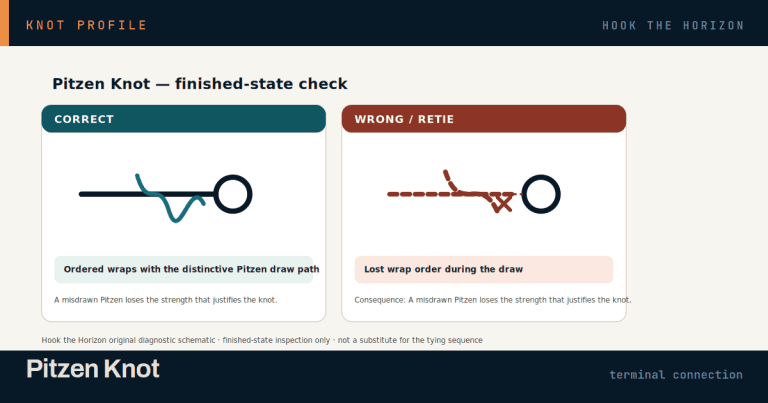
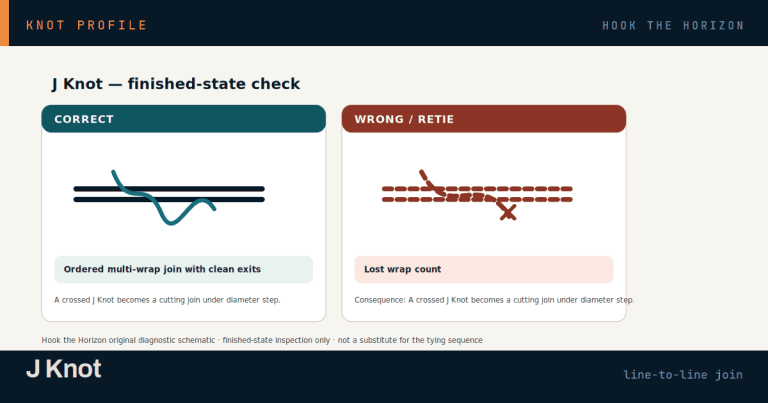
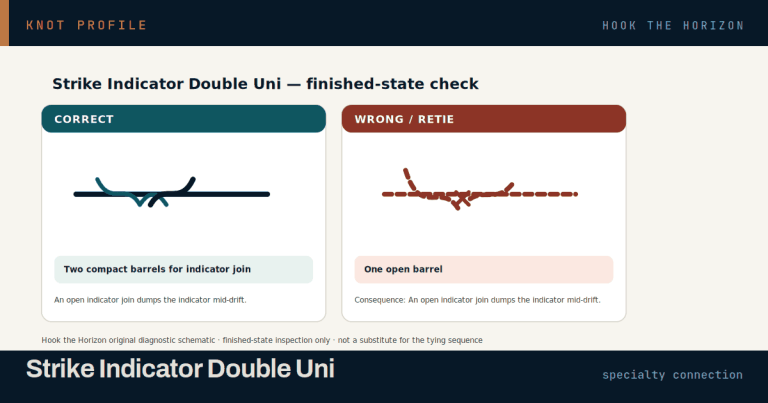
A sound snell shows orderly wraps down the shank, no crossovers piling load into one spot, and a leader exit that keeps the hook pointing where you meant it to. What tells me to cut it off and start again: crossed wraps, a short tag getting dragged into the coil, wraps climbing back toward the eye, or line leaving at an angle that twists the hook the second you put pressure on it.
Open the full profiles
Source note: the method details live on the individual knot pages. There are no strength rankings here, and you shouldn’t trust anyone who hands you one without telling you how they tested it.
FIELD OBJECT
This one should leave the page.
The article is the long version. These are the pieces worth carrying into the next trip.
The 30-second version
Check the hook first: the leader has to pass the eye and lie flat on the shank. After that, the pick between the three comes down to what your hands know.
What to watch
- The hook geometry decides whether snelling is useful before the tying method matters.
- Eye size and where you are standing decide this
- The fast answer
- What actually changes the choice
Field card
- Job: put the load down the hook shank rather than stopping at the eye.
- Hook: eye direction, eye clearance and shank length have to suit the snell.
- Leader: diameter and stiffness affect how easily the wraps form and seat.
- Conditions: bench-built rigs reward control; a field retie may reward the version your hands already know.
- Failure cost: crossed wraps or a bad exit angle change the load path, so inspect the finished hook before bait ever goes…
RIGHT TOOL, NEXT
Knot Analyst
Carry the connection problem into a knot choice built around line, hardware, conditions, and failure mode.