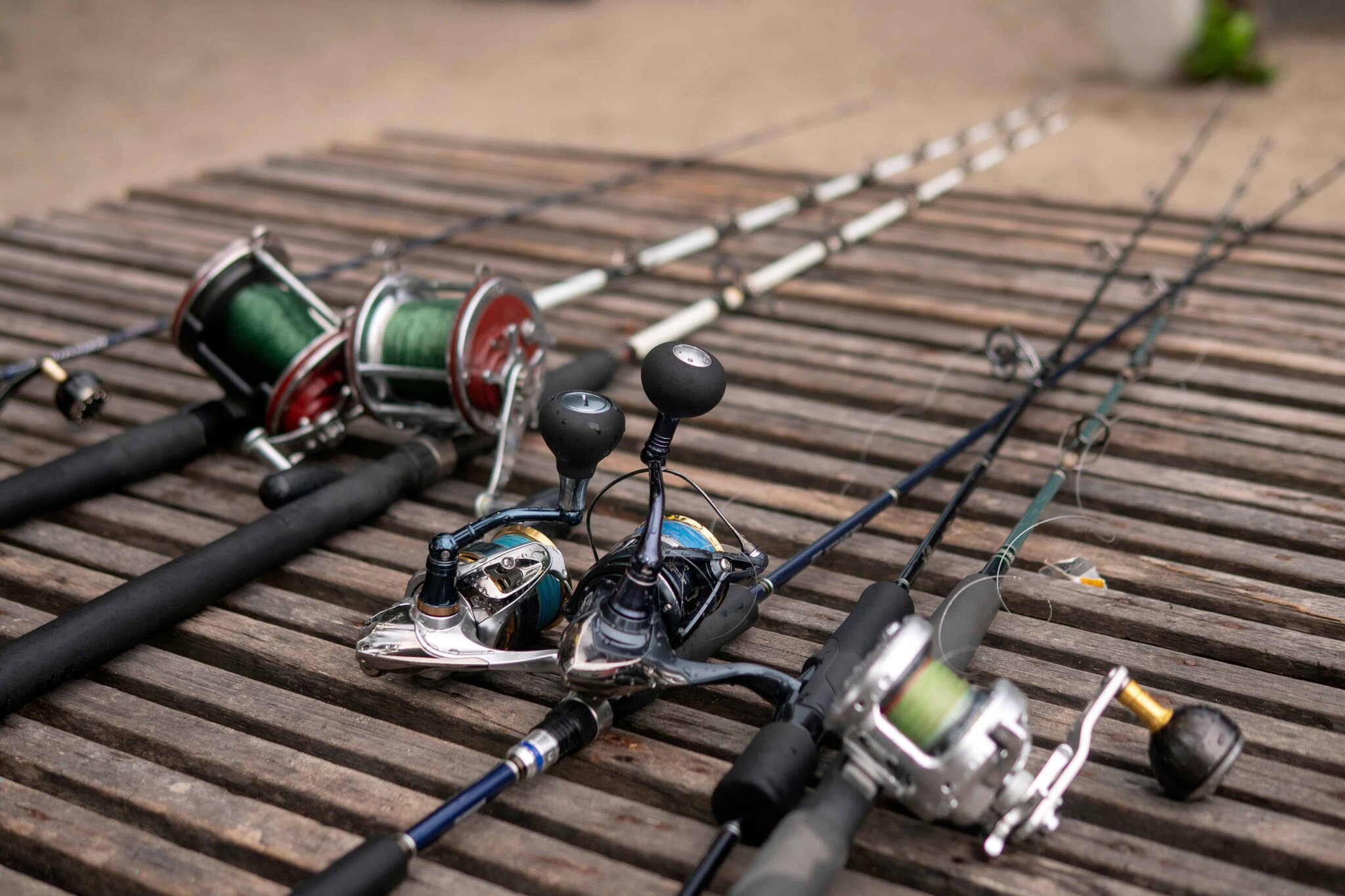
A spinning rod, reel and line can all be perfectly good parts and still make a miserable outfit together. Clip a 1/8-ounce jig to a rod too stiff to load with it and the cast can die twenty feet out. Nothing’s broken. The parts just disagree about the job.
SYSTEM PLATE · TACKLE
A setup only works as well as the weakest supported link.
Everything on the outfit pulls on everything else, from rod and reel down through line, leader and hook to the fish you might need to turn before it reaches a stump. Matching logos look tidy on a rack. They don’t settle any of that.
Say the job out loud
“I need a medium spinning rod” doesn’t give you anything to check against. A job does: throwing 1/8- to 3/8-ounce lures around sparse grass from a bank, braid to a leader, landing bass without ripping light hooks loose. Now there’s something to hold a rod up against. Once the job’s named, the next question is which part of the setup gives out first under it, and it’s rarely the part with the price tag.
The trout version of that sentence is different — small spinners and light jigs in current, with enough give to protect fine line. The walleye version is different again, whether that’s vertical jigging, live-bait rigs or long casts with small plastics. One rod can cover a few of those jobs, but only where the mechanics really overlap, not because a box said “all-purpose.”
The rod comes first
Power
Power is how much force it takes to bend the blank, and nobody ever agreed on what the labels mean. One company’s medium-light can sit about where another’s medium does. So the lure-weight and line ratings, and how the blank actually loads with a lure on it, are worth trusting a lot more than the word printed above the handle.
You want enough power to load the lure, drive the hook you’re using and steer a fish away from whatever it’s headed for. Go too heavy and light lures never load the rod — that part’s obvious fast. The part that isn’t obvious is small hooks tearing free, because a stiff blank has no give left when a fish surges right at your feet. Too light shows up differently: soft hooksets, and a fish in heavy cover getting to pick its own direction.
Action, and why it isn’t a ranking
Action is where the rod bends. Fast keeps most of the bend near the tip, and moderate spreads it farther down the blank. It’s a separate thing from power, so a medium-power rod can be fast or moderate, and neither action is the upgraded version of the other.
Fast gives crisp lure control and quick hooksets, which suits a lot of single-hook fishing. Moderate keeps steadier pressure on, and that’s worth a lot when a crankbait’s hanging by small trebles and a fish is shaking its head six feet from the net. Pick for the hook you’re driving, not the word that sounds more advanced.
Length
Longer rods cast farther, pick up line faster, and give you more leverage when current or weeds push the line around. Shorter rods win in tight cover and small boats, or on a brushy bank where the cast has to land in a spot instead of a general direction.
Seven feet shows up constantly because it splits the difference for a lot of spinning fishing. It isn’t a rule, though. On a creek with brush hanging over it, shorter is just the better tool.
Reel, line and leader
The reel number is a family label, not a spec
Reel size numbers aren’t standardized. Brands don’t even number their reels the same way, and one company’s 2500 can differ from another’s in weight, spool diameter and capacity. Compare the actual specs, not the number on the side plate.
The reel has to hold enough line for the job, have a spool that handles your line’s diameter without fighting it, carry a drag that suits the fish, and weigh something the rod can live with all day. Oversize it and you’re hauling capacity you’ll never touch. Undersize it and you get tighter coils, less line, and a drag working outside the range it was built for.
Line changes everything downstream of it
Braid has very little stretch and runs thin for its strength, so you get feel and capacity — and a less forgiving setup, which makes the drag setting and the leader matter a lot more. Mono stretches more and rides higher in the water than fluoro, and that’s genuinely useful with some presentations, not a consolation prize. Fluorocarbon is denser and usually tougher against abrasion, but it can be stiff, and depending on diameter and formula it can misbehave coming off a spinning spool.
Nobody wins that argument in general. Choose line because its behavior suits the presentation. If you’re running braid to a leader, that knot has to go through the guides clean all day, not just on the first cast.
A leader has to be solving something
Abrasion resistance, lower visibility where it matters, a different sink rate, some distance between the lure and bright main line — those are real jobs. Every leader also adds a knot, which is one more thing that can fail or hang in a guide mid-cast.
Run the shortest length that does the job unless there’s a specific reason for more. Clear water can justify longer, and sharp rock puts abrasion first. In heavy weeds, straight braid is often just cleaner.
Load, hooks and drag
Weight, hooks, drag
The lure rating on the blank tells you what it was designed to load. Fishing near the edge of that range is fine. Throwing something way past it over and over can damage the rod.
Line diameter matters here too. A tiny jig on heavy mono may never sink or cast right. A heavier lure on very light line casts beautifully right up until the first sudden shock load, and then it’s not beautiful anymore.
Then the hook. A thin-wire exposed hook takes far less force to bury than a heavy hook tucked inside a thick soft plastic, and that gap should steer rod power, line stretch and drag setting together. A setup too stiff for small trebles pulls them out. One too soft for heavy single hooks in cover can’t drive them, and then struggles to control whatever does stay pinned. Getting a hook to stick is a whole-setup problem, not just a rod problem.
Drag belongs right here, not in some emergency chapter at the back of the manual. Lock it down and light line becomes the weakest thing you own. Leave it loose and you lose hooksets and let fish reach cover. Set it before you fish, then adjust for the line, hook, fish and water. Braid to a light leader leans on the drag for shock the braid won’t absorb, while mono already gives you some stretch for free. There’s no perfect number, just the one that suits what’s tied on that day.
Balance isn’t the one-finger trick
Everybody balances a rod on one finger in the aisle and treats where it tips as a verdict. What actually matters shows up later on the water: reel weight, rod length, where your hand really sits on the grip, and the angle the technique makes you hold it at.
A setup that feels tip-heavy on the rack can be fine held low through a retrieve. Another can balance perfectly on a finger and wear out your wrist after two hours of fishing tip-up. Judge it standing the way you’ll actually be standing.
Putting it together
Build around your worst constraint
Every general-purpose setup has holes in it, and the trick is putting them where the setup rarely has to go. Figure out what your water is loudest about. A bank with limited room mostly asks for casting range, while docks and weeds are a control and abrasion problem, and hiking into a trout creek makes weight matter more than almost anything. Let that pick the compromises.
The order I build in
Presentation first: lure weight, hook type, the depth and cover you expect. Then a rod that loads those lures and gives you the control you need, and a reel with the capacity, spool size, drag and weight to match. Line gets picked for how it behaves, and a leader only goes on if you can name its job. Then take the whole thing out and throw the lures you actually plan to fish, not a practice plug.
Start with short casts and watch for anything that surprises you, like line coming off messy, the knot catching in the guides, or a drag that stutters. If something’s wrong, find the part most likely at fault before replacing the whole outfit.
For a first setup, all of that can feel like way too much to get right at once. Most of it forgives you, though. The rod’s the only piece that’s hard to walk back, and line, leader and lure weight are cheap to change as the job gets clearer, so get the rod close and let the rest teach you.
A pricier rod, a bigger reel or a new brand is worth it once you can name the problem it solves. Until then it isn’t a shopping list. It’s wanting something new, which is allowed — it just won’t fix the cast.