“Slow it down” sounds precise right up until two people try it. One eases off the handle while the current keeps sweeping the lure across the seam just as fast as before. The other keeps reeling but starts pausing long enough for the bait to drop a foot. Same advice, and now there are two lures doing unrelated things.
FIELD PLATE · SPEED
Slow it down describes your hand, not the dashed line.
What matters is the speed and depth the lure actually ends up at, and the path it takes getting there. Your hand is part of that, and some days it’s the smallest part.
The handle is one input
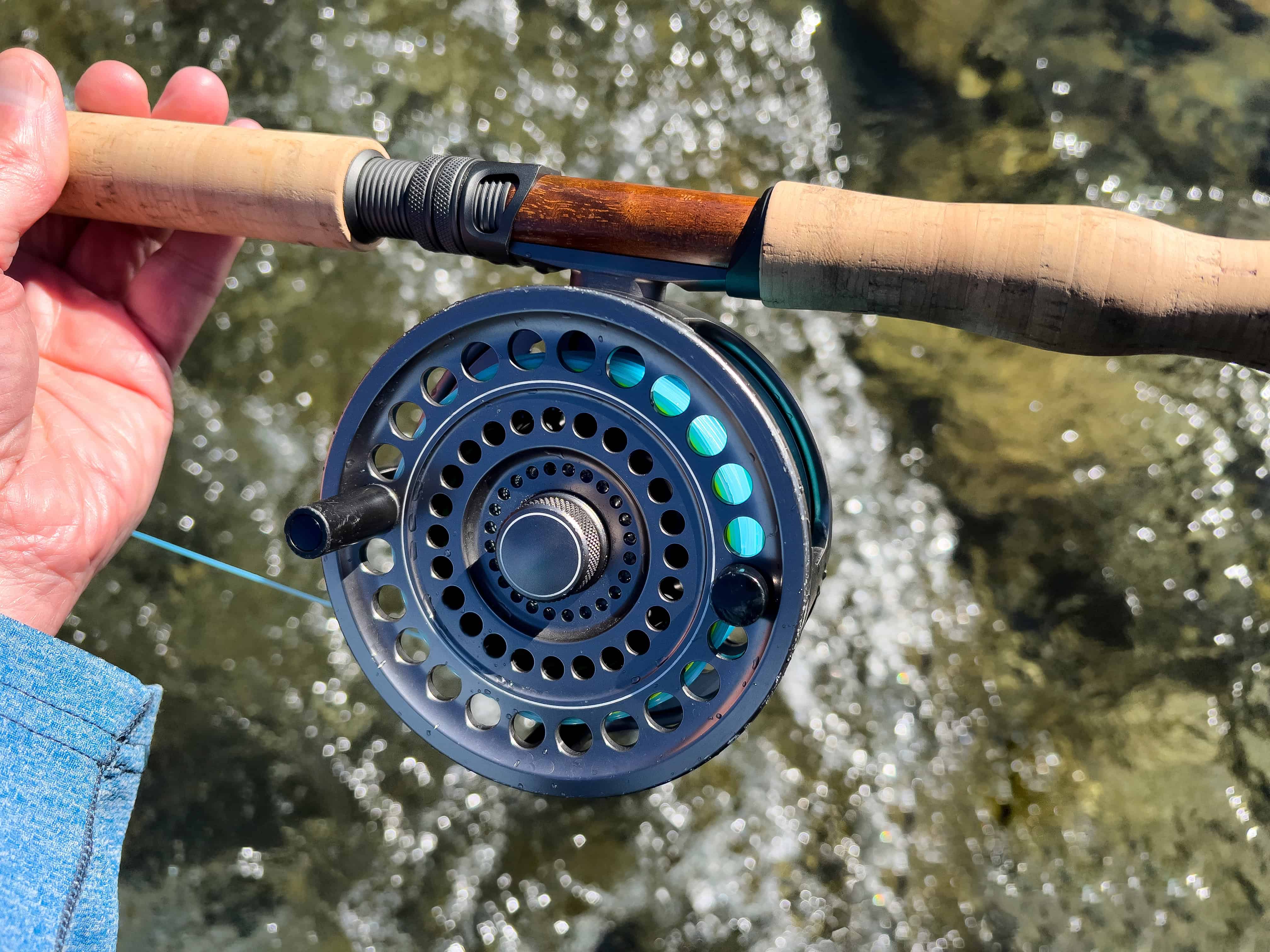
Gear ratio tells you how many times the spool or rotor turns per handle turn. How much line actually comes back depends on spool size, how full the spool is, and line diameter. Right after a long cast the spool is at its emptiest, so each turn picks up the least line it will all retrieve. As line winds back on, the working diameter grows, and the same hand speed brings the lure in faster near your boots than it did at the splash.
Manufacturer line-recovery numbers are fine for comparing two reels on a shelf. They’re not a speedometer bolted to the crankbait.
Calibrate somewhere you can see it
Make short casts where you can actually watch the lure, in clear shallow water beside the bank or the boat. Reel at what feels slow, then fast, and watch for the moment it starts to roll, dig, or give up the depth you thought it had. Then stop and see what the pause does.
Not being able to tell fast from slow yet is a visibility problem more than a skill problem. Ten minutes over clear water sorts out a lot of it, and I still do it with new lures.
Current can make a slow retrieve fast
Reel with the current and the lure can race while you’re barely turning the handle. Pull against it and the lure works hard and goes nowhere. Cast across and it speeds up the second the line tightens into the swing.
Watch the line more than your hand. A big bow drags the lure out of the lane, and mending or a shorter cast will often slow the lure down better than easing off the reel does.
If fish are holding beside a seam, the speed that counts is the lure’s speed through that one small piece of water, not its average from splashdown to your feet.
Wind reaches the lure through the line
A long cast with a light lure, a high rod tip and a crosswind is about the worst version. The line bows, the bait lifts, and a paused lure gets pulled sideways. I’ve lost more good retrieves to that combination than I’d like to admit.
Weight buys control, but it also changes depth, fall rate, action and snag risk, so fix the line before you add lead. A lure that keeps leaving the path during the pause is usually a line-management problem wearing a retrieve-speed costume.
The rod may be doing most of it
With a hop, a sweep or a twitch, the rod can move the lure farther than a handle turn does, and the reel is mostly gathering slack.
I try to give them separate jobs: the rod makes the action, the reel restores contact. When both are going at once, I can’t tell what the lure did or which movement got bit. Jigs, soft plastics and jerkbaits all live here.
You’re moving too
A drifting boat moves the lure with the reel stopped, and a kayak swinging in the wind will pull the bait sideways through an entire pause. Wading and walking the bank change the line angle as you go.
“Slow and steady” doesn’t mean much when the platform is sliding across the feature. Sometimes the fix isn’t the reel at all. It’s an anchor, a shorter drift, or a different place to stand.
Speed changes depth
A spinnerbait runs higher as speed goes up. A crankbait needs a certain amount of forward pull just to reach its working depth. A weighted soft plastic stays near bottom longer when the pause gets longer.
If the lure quits touching bottom or swings up above the seam, it’s going too fast or coming in at the wrong angle. Depth comes out of the whole setup, which is why cranking slower fixes one thing and quietly breaks another.
Resistance is feedback
A crankbait pulls harder once it reaches running depth. A jig climbing a slope feels heavier than the same jig on flat bottom. Weeds add drag gradually, well before the lure is obviously fouled.
So don’t force the handle into perfect uniformity while the water is changing the load on it. Suddenly lighter can mean it cleared bottom, picked up slack, or got hit. Heavier can mean it’s digging, fouled, or entering faster water. Your reel hand should be listening as much as it’s turning.
Pauses count as speed
Five quick turns and a long pause can cover less water than a constant slow retrieve, and fish often react to the stop or the first movement after it.
Use a rhythm you can say out loud, like five turns and a two-second pause. It’s comparable to itself, so if something eats it, you’ve got something to repeat. You don’t need every inch of line accounted for, just enough to know which part of the movement lined up with the fish.
Four versions worth running
- A steady pace that keeps the lure stable and in the target depth.
- Slower line pickup or a longer pause.
- A faster pass, watching whether the lure rises, rolls, or loses control.
- Roughly the same average pace with one pause, twitch, or short burst added.
Keep the cast angle and target area similar. Watch bottom contact, follows and strikes, and whether the lure stays in water worth fishing. You’re not hunting one perfect speed for that lure forever. You’re finding what keeps it where fish can answer it in the conditions you’ve got today.
The lure will tell you when the speed is wrong
Rolling, blowing out, losing depth, or throwing a bow you can’t control — those are answers. Change one thing first, then check the lure itself for a bent hook, a cracked bill or weeds. Twenty casts spent on a speed problem that turns out to be one strand of grass is a rough way to spend a morning.
Where the speed actually comes from
The handle, the rod, the current, the wind and the boat are all feeding into it at once, and they keep shifting while you fish. So when somebody says to slow it down, the useful question back is: slow what?
And when the water goes quiet, run the same cast again, same angle and same count, before deciding the fish are refusing everything. If the lure comes back looking different, the retrieve moved. The fish didn’t have to.
FIELD OBJECT
This one should leave the page.
The article is the long version. These are the pieces worth carrying into the next trip.
The 30-second version
Handle speed and lure speed aren't the same number. Between your reel hand and the lure there's current, wind, line, and a rod that's doing more of the moving than you'd think.
What to watch
- The handle is one input
- Calibrate somewhere you can see it
- Current can make a slow retrieve fast
- Wind reaches the lure through the line
Field card
- A steady pace that keeps the lure stable and in the target depth.
- Slower line pickup or a longer pause.
- A faster pass, watching whether the lure rises, rolls, or loses control.
- Roughly the same average pace with one pause, twitch, or short burst added.
RIGHT TOOL, NEXT
Tackle Link Analyst
Follow the load path and find the part of the setup that actually limits the rest.