The first time somebody shows you a Texas rig it looks like a solved problem.
Bullet weight, worm hook, point tucked back into the plastic, and suddenly you can drag a bait through a laydown that would have collected an open hook in three feet. It genuinely does that. It’s one of the more useful things anybody invented.
What doesn’t get mentioned in the same breath is that you just put a quarter inch of soft plastic between your hook point and the roof of a fish’s mouth, and that plastic has to move out of the way before anything gets hooked.
The honest accounting
What you gain: access. Cover holds fish because cover keeps them alive and fed, and the thickest cover often holds the most or the biggest. An open hook can’t go in there. A weedless rig can, and a mediocre bait in the right place beats a perfect bait in the wrong one.
What you lose: hookup percentage, and some sensitivity in the moment of the set. The point has to penetrate the plastic before it penetrates anything else. On a good set with a sharp hook and a soft bait that’s nearly instant. On a lazy set with a stiff bait and a dull hook it’s a fish that came unbuttoned and you telling yourself it was a small one.
You’re not getting weedlessness for free. You’re buying it with hookups, and whether that’s a good deal depends entirely on the cover.
Which means the first question is about the cover, not the rig
Open water, scattered rock, a clean flat, a sand bottom — an open hook is better and there’s no reason to give up the percentage.
Sparse weeds, scattered wood, the outside edge of a laydown — skin-hooking often does the job. That’s where the point goes back through the plastic but only just under the surface, so it’s protected from weeds but takes almost no force to break through on the set. Best of both, and underused.
Heavy matted vegetation, brush piles, flooded timber, dock posts — fully buried point, and accept the trade.
The mistake people make isn’t choosing weedless. It’s defaulting to weedless everywhere because it’s what they learned, and quietly paying the hookup tax in water that didn’t require it.
Rigging it so it actually works
Details that decide whether the set penetrates:
Sharp hook, checked often. A weedless rig asks more of the point than an open one and a point dragged over rock all afternoon isn’t the point you started with. Run it across a thumbnail — if it doesn’t stick, it isn’t sharp.
Rig it straight. A worm threaded crooked spins on the retrieve and twists your line, and it’ll sit wrong when a fish takes it, too. Lay the hook against the bait before you thread it to find where the point should exit.
Don’t bury it deeper than you have to. The point needs to be just under the surface of the plastic, not driven into the middle of it.
Soft plastic helps. A very firm bait resists the point, while softer material tears away instantly. That’s part of why some of the classic worm and creature materials are as soft as they are.
Peg the weight or don’t, on purpose. A pegged bullet weight keeps the whole rig compact for punching through mats. An unpegged one slides, which lets the bait fall separately from the weight and often looks better on the drop. Different jobs.
The set
More than you think, and in the right direction.
A lot of weedless fishing happens with slack line and a bait on the bottom. Before you swing, reel down to take up slack so the rod is loaded against the fish. Setting into slack produces a dramatic motion and no hook penetration.
Then set hard and keep pulling. This isn’t a trout hookset. With braid, heavy cover and a buried point, you’re driving a hook through plastic and then through a jaw, and half measures are where fish come off.
One hookset doesn’t fit every rig, and weedless plastics sit at the hard end of the range.
Gear has to match, or the rest doesn’t matter
A soft rod can’t drive a buried hook, and light line stretches enough to absorb the set at distance.
The standard setup for heavy cover exists for a mechanical reason: a rod with backbone, braid with essentially no stretch, and enough of both to pull a fish up out of the stuff you just dropped into. Fishing a heavy Texas rig on a light spinning setup is a recipe for hooking fish and losing them in the cover, which is worse than not hooking them.
It’s tackle as a chain all over again: every link has to be able to do this job.
The other kind of weedless
The same trade shows up everywhere, not just in bass plastics.
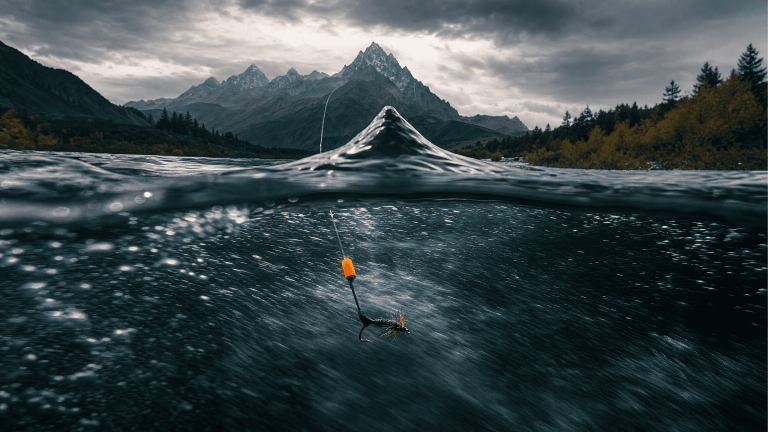
Weed guards on jigs, bendbacks and weedless flies, upside-down hook designs, snag-resistant spoons — every one of them is making the same purchase: access, paid for in penetration.
And in every case the right question is the same one: is the cover here bad enough to justify what I’m giving up? Sometimes yes, emphatically. Sometimes you’re fishing a weed guard over clean gravel because it was already tied on.
Catch yourself doing that second one. It’s the quiet version of a decision nobody ever actually made.
FIELD OBJECT
This one should leave the page.
The article is the long version. These are the pieces worth carrying into the next trip.
The 30-second version
Burying the hook point gets you into cover you couldn't fish otherwise, but it also puts plastic between the point and the fish. Whether that trade is worth it depends on the cover.
What to watch
- The honest accounting
- Which means the first question is about the cover, not the rig
- Rigging it so it actually works
- The set
Field card
- The honest accounting
- Which means the first question is about the cover, not the rig
- Rigging it so it actually works
- The set
- Gear has to match, or the rest doesn't matter
RIGHT TOOL, NEXT
Species & Presentation
Carry the species behavior and presentation question into a narrower water-to-fish-to-presentation handoff.