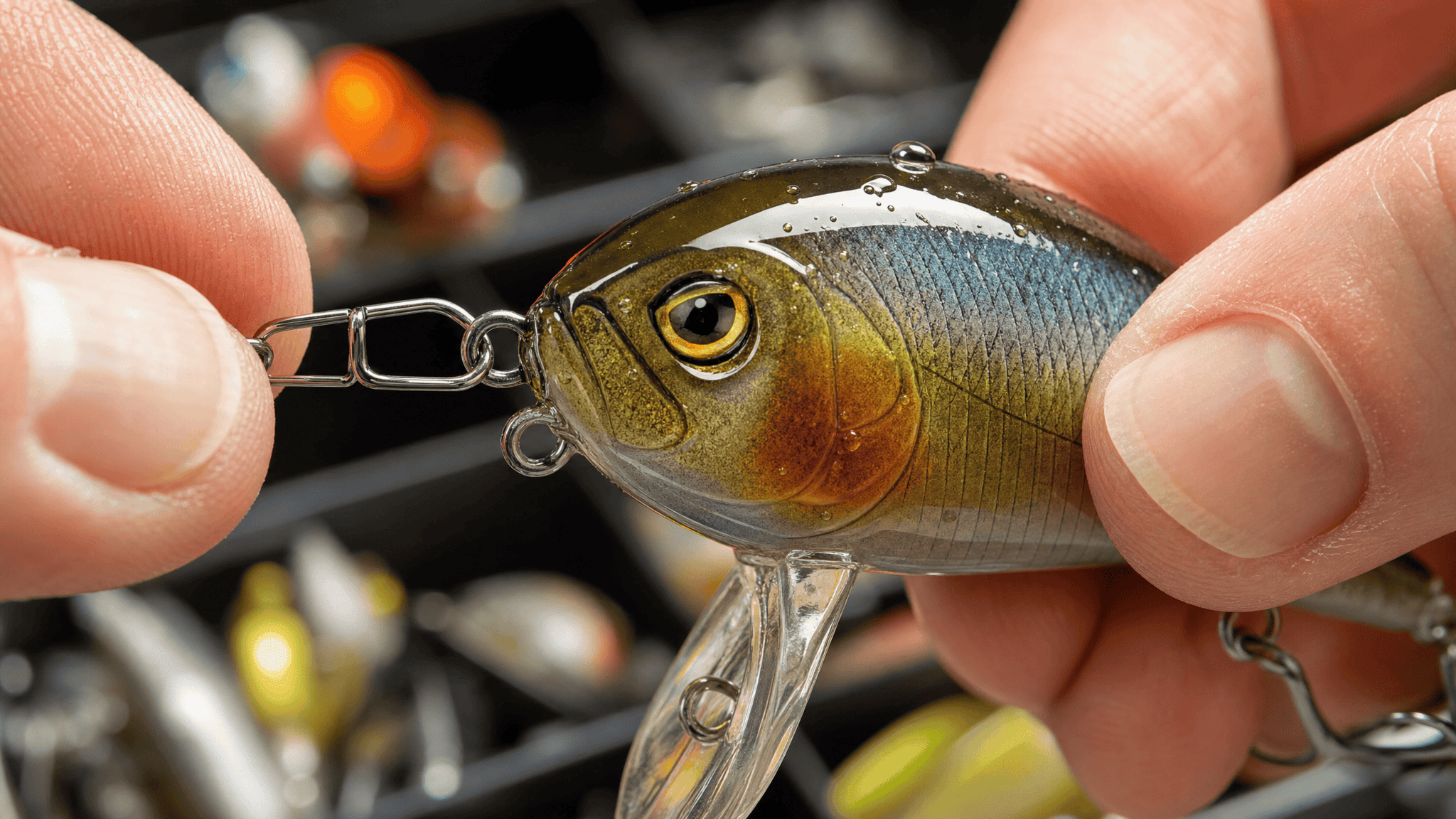
What’s the snap actually for? It does two different jobs, and most people clipping one on only want one of them. Job one is fast lure changes. Job two is a free-swinging connection, so a lure with a fixed line tie can pivot instead of getting locked in whatever direction the knot cinched it. Those are separate problems, and the second one has a better answer than more hardware.
If you want free swing, tie a non-slip loop. It gives the lure the same freedom a snap does with nothing metal hanging off the nose to flash, add weight, or spring open. On a jerkbait, a small jig or most single-hook hard baits, the loop beats the snap at everything except speed.
If you genuinely want fast changes, use the snap, but go smaller than feels safe. The default mistake is a snap rated way above the line, because big hardware looks reassuring. An oversized snap is a lump of metal on the front of the bait — it can throw off a small lure’s balance and change the nose-down attitude a crankbait was designed around, and weeds love having something to gather on. You want the smallest snap that comfortably beats the line’s breaking strain, not the biggest one in the pack.
How they actually fail
Cheap snaps fail quietly. The wire springs open under steady load, usually mid-fight at the worst possible moment, and the fish leaves wearing your lure. Or a hundred casts of vibration work the latch loose until it opens on its own, and a lure just vanishes halfway through a retrieve. A snap that’s opened once is finished. The wire doesn’t go back.
It’s also one more link sitting right in the highest-load path of the whole rig, which is one more thing to inspect. Find the Part of Your Setup Most Likely to Fail is the full version of that check.
Where I’ll use one without arguing is searching. When the whole point of the session is cycling through six lures to find out which kind the fish want, retying six times in the wind costs more fishing time than the snap costs in how the lure swims. Testing a new lure without wasting the session keeps those swaps deliberate instead of twitchy. Once something works, the snap comes off and that lure gets tied on direct.