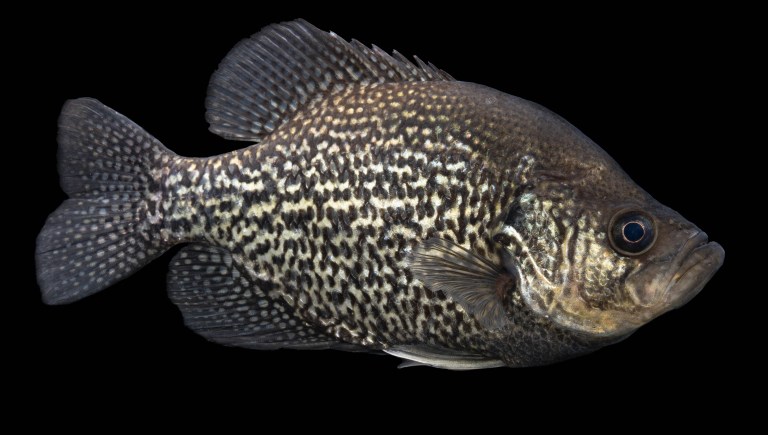
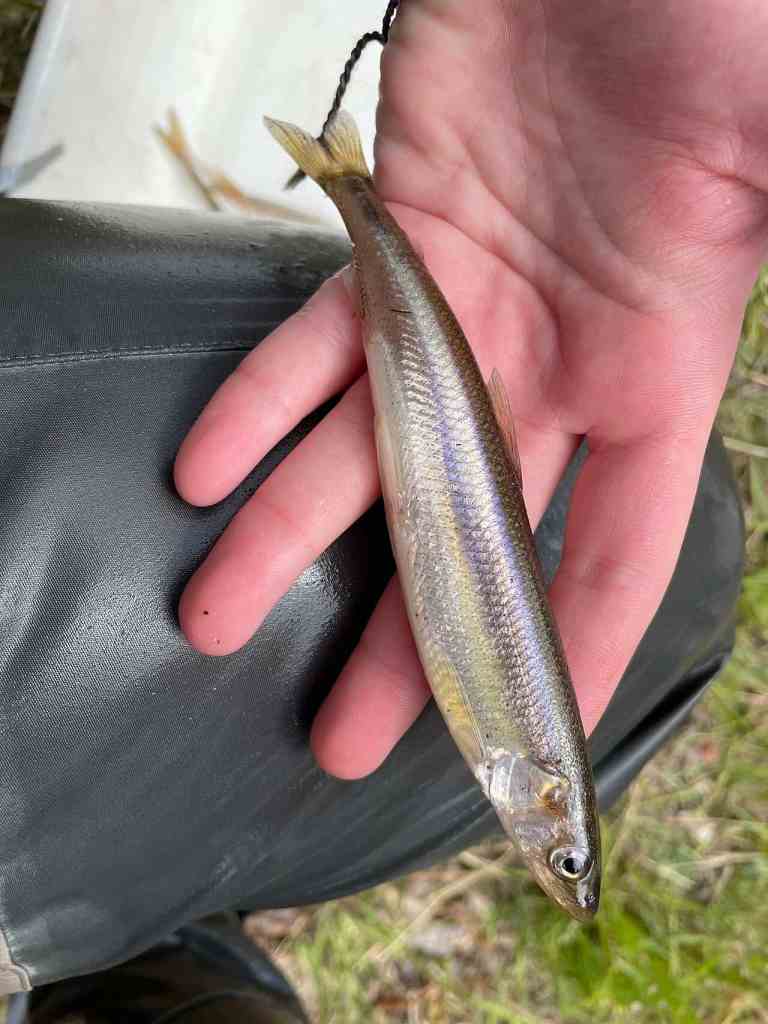
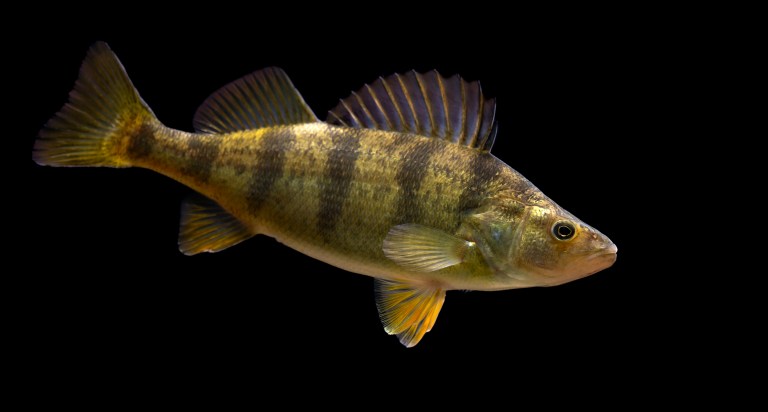
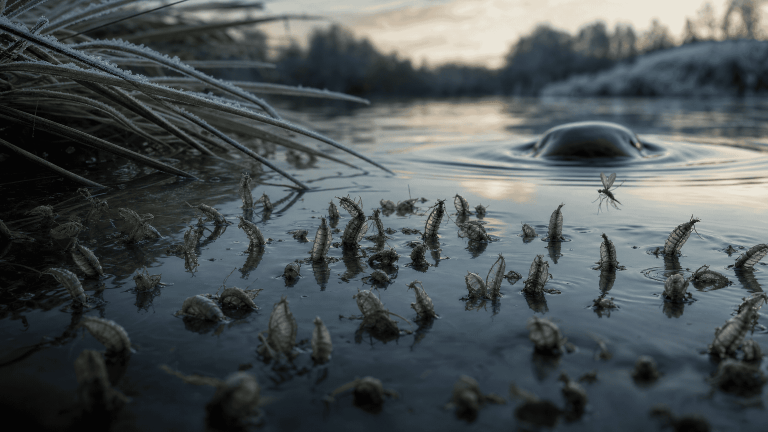
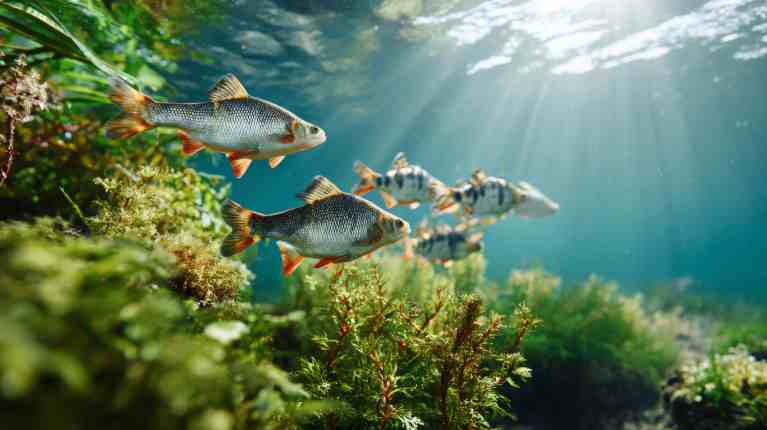
Look at the mouth before anything else. On a warmouth it’s bigger than a sunfish mouth has any business being, and it explains most of the fish: this is a small predator, not a nibbler, and it picks cover like one.
Think of a warmouth as a small bass living in the stuff a bass angler would hate to cast into. They use dark backwaters, swamp edges, soft-bottom ponds, oxbows, vegetation, root tangles, cypress knees, logs, and undercut banks. They have a larger mouth than most sunfish, feed heavily on insects, crayfish, and small fish, and reward a lure placed into one ugly opening instead of five feet beside it.
Species: Warmouth, Lepomis gulosus. Native range and legal status vary; introduced populations occur outside parts of that range.
The cover-first plan
- Pick one object: stump, knee, root, pad edge, log end, culvert shade, or undercut bank.
- Identify the opening: cast to the side that has depth, shade, and a path out.
- Choose a compact lure: small enough for a sunfish, strong and weed-resistant enough for bass cover.
- Let it pause: many bites come after the fall or when the lure stops beside the object.
- Pull immediately: turn the fish before it crosses roots or wraps vegetation.
Not every dark sunfish is a warmouth
Warmouth are stout, large-mouthed sunfish with mottled olive-brown sides and several dark or reddish lines radiating from the eye. The mouth reaches to or beyond the front of the eye, and the body looks more elongated and bass-like than a bluegill. The opercular flap is dark with a narrow pale or reddish margin.
Rock bass are a frequent confusion. Warmouth have three anal-fin spines; rock bass have six. Green sunfish can also have a large mouth and cheek lines but generally show different fin edging, body shape, and coloration. Use the closed mouth, side, cheek, pectoral fin, and anal spines together.
Where oxygen, shade, and prey overlap
Warmouth tolerate slow, dark, acidic, and moderately turbid water, but they still need usable oxygen. In a swamp or backwater, the best pocket may be near a subtle inflow, an opening in vegetation, a shaded bank with slightly deeper water, or hard cover that supports insects and crayfish.
Don’t assume the thickest vegetation holds the most fish. Solid mats can go oxygen-poor underneath, especially in hot, still weather or when plants are dying back. Fish the edges and holes, and anywhere water moves. Bait, bugs and surface activity can tell you which pocket is alive, and so can the smell.
Warmouth are often solitary or loosely grouped around individual pieces of cover. One fish from a stump is a good reason to fish the next stump—not proof there’s a school under the first one.
Before you write off a solid mat, push a paddle or rod tip through it. If it smells like rot underneath, the oxygen left before you showed up.
Seasonal movement in shallow systems
Spring warming pulls fish toward protected cover and potential nesting habitat. Warmouth often spawn near vegetation, wood, rubble, and detritus over softer bottom rather than requiring a clean sand colony. During this period, males can be aggressive near nests; avoid repeatedly removing guardians from a small area.
In summer, early and late periods expand the feeding lane. Midday shade can make the bite extremely object-specific. Rain may add water, food, and oxygen to backwaters, but heavy runoff can also produce unsafe current or a sharp water-quality change.
Autumn reduces vegetation and concentrates fish around remaining green cover and wood. Winter fish often occupy the deepest stable pocket available and respond to slower, smaller presentations. In tiny systems, a one-foot depth difference can be the seasonal migration.
Natural bait for a predator-shaped mouth
Worm pieces, crickets, crayfish pieces, small minnows where legal, and insect larvae can work. Rig them compactly so the point remains exposed. Under a float, set the bait at the cover’s level and keep it beside the object rather than dragging across every branch.
A tight-line presentation beside a log or cypress knee allows immediate control. Lower quietly, watch the line, and lift when it jumps or moves sideways. If fish swallow hooks, react sooner, increase hook size, or switch to a small artificial.
Small jigs and soft plastics
A compact jig or weedless soft plastic is one of the most useful warmouth tools. It can imitate an insect, crayfish, or small fish and can enter cover with fewer snags than a treble-hooked plug. Choose enough weight to penetrate the edge without crashing into soft bottom.
Pitch past the opening and let the lure fall along the object. Shake it in place, make one short hop, then retrieve and repeat. Warmouth often reveal themselves quickly. If there is no response after several accurate presentations, the next object is usually a better adjustment than a new color.
Spinners, plugs, and topwater
Small inline spinners and beetle-style spins cover open lanes between vegetation. They need enough speed for the blade to work but should not be burned past a fish holding in shade. A compact crankbait can deflect from wood, though exposed treble hooks make it a poor choice in tangled roots.
Topwater insects, tiny poppers, and frogs can work in low light or under canopy. Keep the movement short and deliberate. A loud lure may help in dark water, but repeated splashes into one confined pocket can shut it down.
Fly fishing the gaps
Short rods, accurate roll casts, bow-and-arrow casts, and weed-resistant flies are more useful than distance. Try foam bugs, weighted nymphs, small crayfish patterns, and compact streamers. Use a leader strong enough to pull a fish through stems.
Let a fly settle beside wood before stripping. In dark water, the fish may locate displacement and silhouette rather than fine color. If the fly disappears without a splash, tighten smoothly—an explosive trout-style hookset can break light tippet or move the fly out of the mouth.
Tackle: ultralight power with cover strength
A light rod is appropriate, but the weakest two-pound line is not automatically sporting when every fish has a root within reach. Four- to eight-pound line or an equivalent fly leader may land more fish and leave less tackle in the habitat. Use single hooks where they improve release and snag resistance.
At the bite, pull sideways into the open lane. Keep the rod loaded and do not allow the fish to turn around the object. A warmouth is small enough to lift only when tackle, hook placement, and distance make it safe; otherwise use a net or hand-land it at water level.
Next-cover decisions
- Bite on the fall: repeat with the same weight and entry angle at the next object.
- Fish bumps but misses: shorten the trailer or reduce lure bulk before downsizing the hook.
- No fish beneath a solid mat: check edges, inflow, or healthier vegetation for oxygen.
- Every fish wraps roots: strengthen line and begin the pull earlier.
- Only tiny sunfish attack: move to deeper wood or use a slightly larger prey profile.
- Water is extremely hot or fish recover poorly: stop fishing that pocket.
Handling and regulations
Warmouth dorsal spines are sharp. Wet hands, control the fish without squeezing, remove hooks with forceps, and return unwanted fish quickly. A jaw grip can control a larger fish briefly, but support the body and do not torque the jaw.
Warmouth may be included in combined panfish limits, classified differently by state, or nonnative in a particular drainage. Check the exact water’s season, bag, length, bait, and transport rules. Never move them to a pond or use them as live bait without explicit legal authority.
FEEDING · SHORT STRIKES, DARK WATER
Crayfish and small fish that wander too close to a stump. It will not chase anything far, so the cast has to land in the ugly spot.
Dark habitat is a cover relationship, not proof that the species feeds only at night.
Field notes and sources
Record cover type, opening size, shade, depth, vegetation condition, water movement, clarity, lure entry angle, fall rate, strike timing, and escape direction. Those details show whether the fish wanted “black plastic” or, more usefully, a slow fall beside the shaded end of submerged wood. I haven’t caught a warmouth yet, so the cover and approach parts above are reasoning from that mouth and that habitat, with the biology sourced below. A few pages of notes like that from real pockets would beat my reasoning fast.
Three anal-fin spines on a warmouth, six on a rock bass — count before you argue about color.
Species references: USGS warmouth profile, Virginia DWR warmouth profile, and Iowa DNR species information. Use current local regulations for any actual trip.
FIELD OBJECT
This one should leave the page.
The article is the long version. These are the pieces worth carrying into the next trip.
The 30-second version
A warmouth has a mouth too big for a sunfish and eats like a small predator, so it’s usually tucked into cover you’d rather not cast at, waiting beside one opening.
What to watch
- The cover-first plan
- Not every dark sunfish is a warmouth
- Where oxygen, shade, and prey overlap
- Seasonal movement in shallow systems
Field card
- Pick one object: stump, knee, root, pad edge, log end, culvert shade, or undercut bank.
- Identify the opening: cast to the side that has depth, shade, and a path out.
- Choose a compact lure: small enough for a sunfish, strong and weed-resistant enough for bass cover.
- Let it pause: many bites come after the fall or when the lure stops beside the object.
- Pull immediately: turn the fish before it crosses roots or wraps vegetation.
RIGHT TOOL, NEXT
Species & Presentation
Carry the species behavior and presentation question into a narrower water-to-fish-to-presentation handoff.