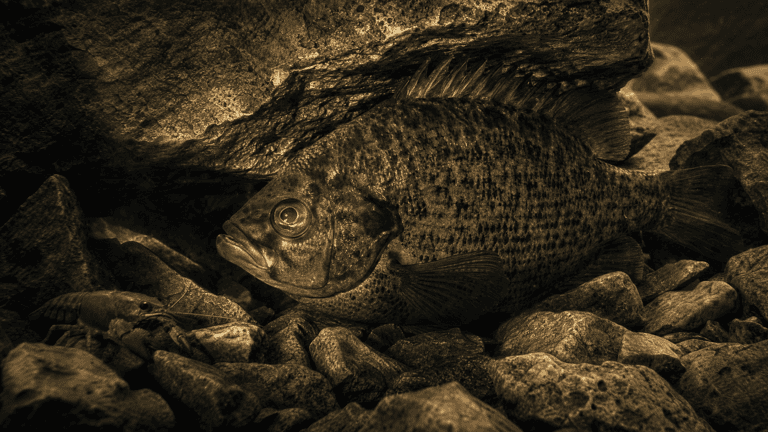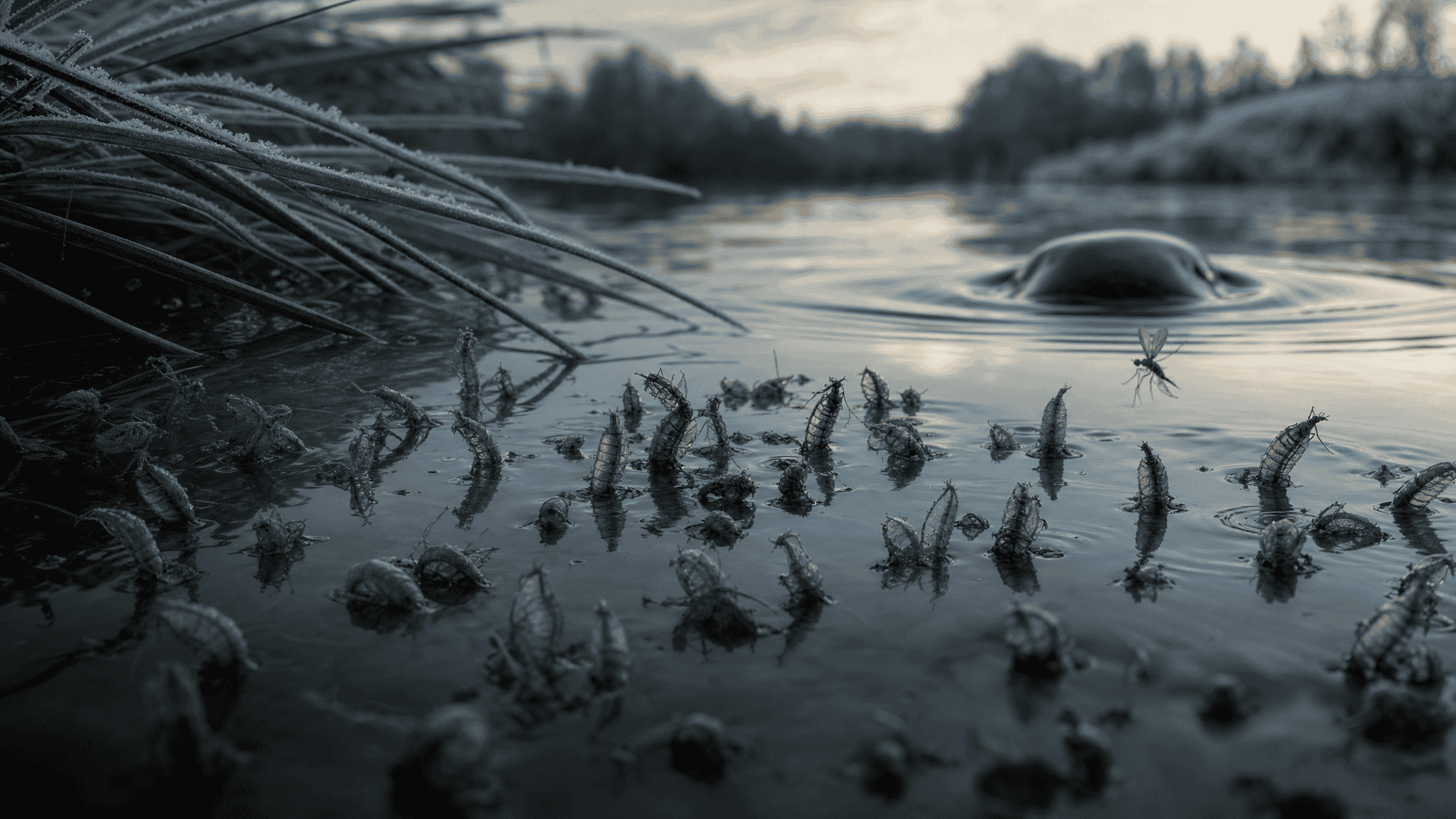
A fish keeps rising in slow water on a cold afternoon, over and over, and you can’t find a single bug on the surface. Your eyes are fine. That fish is a good bet to be eating midges — insects that can each be smaller than a grain of rice and are still among the most consistently available foods in a lot of trout water.
FIELD PLATE · FORAGE
Silhouette and movement beat a confident guess.
The math is on the midge’s side
Midges hatch in enormous numbers, often daily. Mayflies, caddis and stoneflies might only show up seasonally on the same water, but on a lot of tailwaters and spring creeks there are midges around in some number nearly every day. A trout doesn’t need each bite to be big when the bites never stop coming, so fish can key on them far more heavily than their size suggests, even in months when nothing else is hatching.
That’s also why this hatch gets walked past. A fish sipping steadily, barely leaving a ring, with no bigger insects in sight doesn’t look like much from the bank. Nothing on the surface is big enough to notice.
The life stages that matter
Midge larvae live down in the bottom sediment. The larva is the worm-like stage before the insect changes shape, and it’s a steady subsurface food most of the year.
The pupa is the in-between stage, rising toward the surface to emerge. It often hangs in the surface film for a while — stuck between water and air longer than a fully emerged adult sits on top — and that’s what makes it so vulnerable. It’s frequently the most productive stage to imitate, which makes sense once you picture it. A bug half out of its old life is an easy meal.
Adults are tiny and delicate, and they often cluster in visible swarms over the water. That’s about the only time midges bother making themselves obvious.
Reading a midge rise
Subtle and repeated, with hardly any surface disturbance — that kind of rise is a strong clue for midges, especially in cold or slow water where bigger insects aren’t active.
I watch for a fish parked in one spot and coming up on a rhythm instead of chasing. Steady and unhurried fits something small and abundant. A fish that has to chase is eating something scarce.
Size 22 doesn’t leave much room to be wrong
The naturals are so small that fish keyed on midges tend to get selective about exact size and profile. A slightly mismatched pattern during a bigger hatch sometimes still works. A slightly mismatched midge often doesn’t, because there’s less room for a fly to be close enough.
Tippet matters more here too. That’s the fine end section of leader the fly ties to. Heavier tippet can affect how naturally a tiny fly drifts, so going too heavy for the fly size costs me more with midges than it would with bigger patterns.
Cold water is midge water
Midges tolerate cold water better than most other aquatic insects, which is a big part of why they’re often the only hatch that matters on winter tailwaters and spring creeks. Cold-weather trip, nothing else happening, fish still rising anyway? Midges are the first thing I rule in, not out.
What tying them taught me about fishing them
Drop a midge pattern on the carpet and you can pretty much consider it a gift to the carpet. The useful lesson at the vise is how little material a size 20 or 22 needs before it stops resembling the natural. Two extra wraps of thread and the fly gets fat in a way the real bug never is. The fish I’m trying to fool has been looking at the real thing its whole life, and I’ve been looking at it for maybe an hour under a lamp, so I’d trust the actual rise and the naturals in front of you over anything I could tell you about a general pattern for the season.
Threading tippet through a hook eye that small can make anybody question the whole hobby. It’s not just you. Tie on before your hands get cold, and hold the hook up against the sky instead of the water so you can actually see the eye.
Stage and where the bug sits in the water will tell you more than a neat species name. Hatch Match: Midges helps narrow down what you’re seeing without pretending you’ve nailed the ID.
Entomology basis: Penn State Extension — benthic macroinvertebrates and native fish · University of Minnesota Extension — Chironomid midges. Midge life cycles and emergence timing vary by species and water.