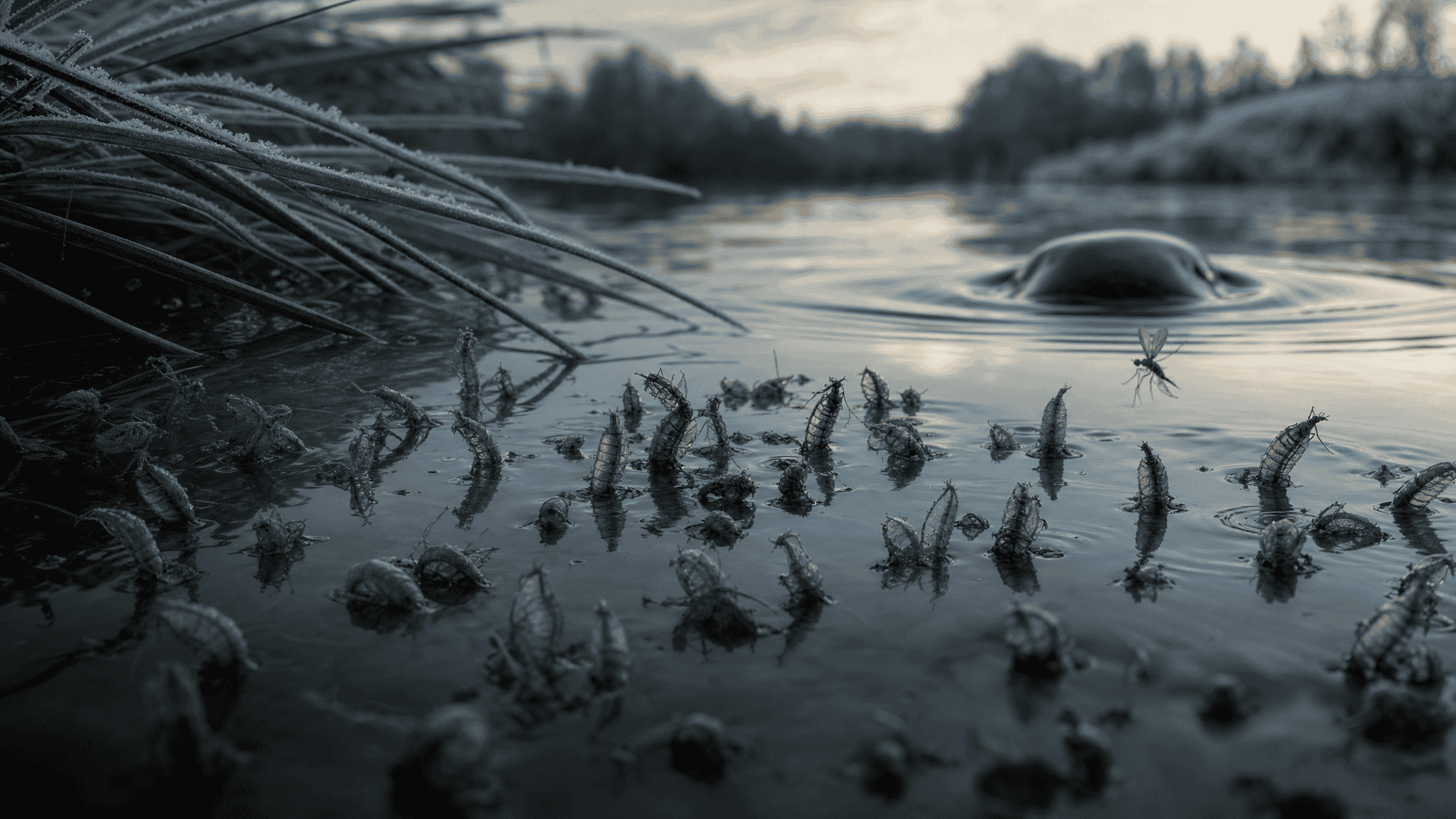
Forage group · midges. The small stuff that is on the water when the famous hatches are not. Midges are why a still winter lake, a tailwater, and a stained pond can all have a surface dimple that is not a mayfly.
This is an observation guide, not a Latin exam. If you cannot see what is actually on the water, say unknown and fish smaller, slower, or leave the hatch guess alone.
What you can actually see
Clusters of tiny adults in surface film. Pupae hanging in the top inch like a comma. Trout or panfish sipping with almost no splash. A day that has no hatch and still has rings. In ponds, chironomids do the same job in deeper water.
Mayflies have tails and upright or dun wings you can often count. Midges look like mosquitoes that went fishing. If you are not sure, you are not sure. Mayflies and this page can both be wrong on the same afternoon.
What to match, without a 40-fly box
| Stage you think you see | Job of the fly or lure | Drop the call when |
|---|---|---|
| Adults in the film | Small, flush, not a wake-maker | Fish are breaking under the film, not in it |
| Pupae / hanging | A slow rise through the last foot | Nothing is in the top foot and you have not checked deeper |
| Nothing visible, cold stillwater | Small and slow near the depth they are sitting | You have not confirmed fish are even using this depth |
Ponds and tailwaters, not just spring creeks
A farm pond in June can have a midge problem from your point of view and a feast from the bluegill’s. A tailwater in January can have the same insect doing all the work while your hopper box stays closed. Look at the film, then the rise form, then decide whether size or depth is the variable.
Next: observation guide · full midge field guide · Hatch Match tool · terrestrials