By fall, the weed bed that looked like a jungle in July can look tired.
Brown stalks, loose pieces drifting around, openings where there weren’t any. A lure that used to tick clean green plants now comes back wearing something that looks like wet compost.
The tempting move is to give up on vegetation completely.
Sometimes that’s right. Other times the better move is to quit treating the whole bed like it’s aging at the same speed.
Green and brown are different clues
Not every aquatic plant dies back at the same time. Different species grow, peak, and die back on their own schedules, and depth, light, clarity, weather, and the lake itself all affect what’s left.
That can leave healthy green patches right beside areas that are collapsing.
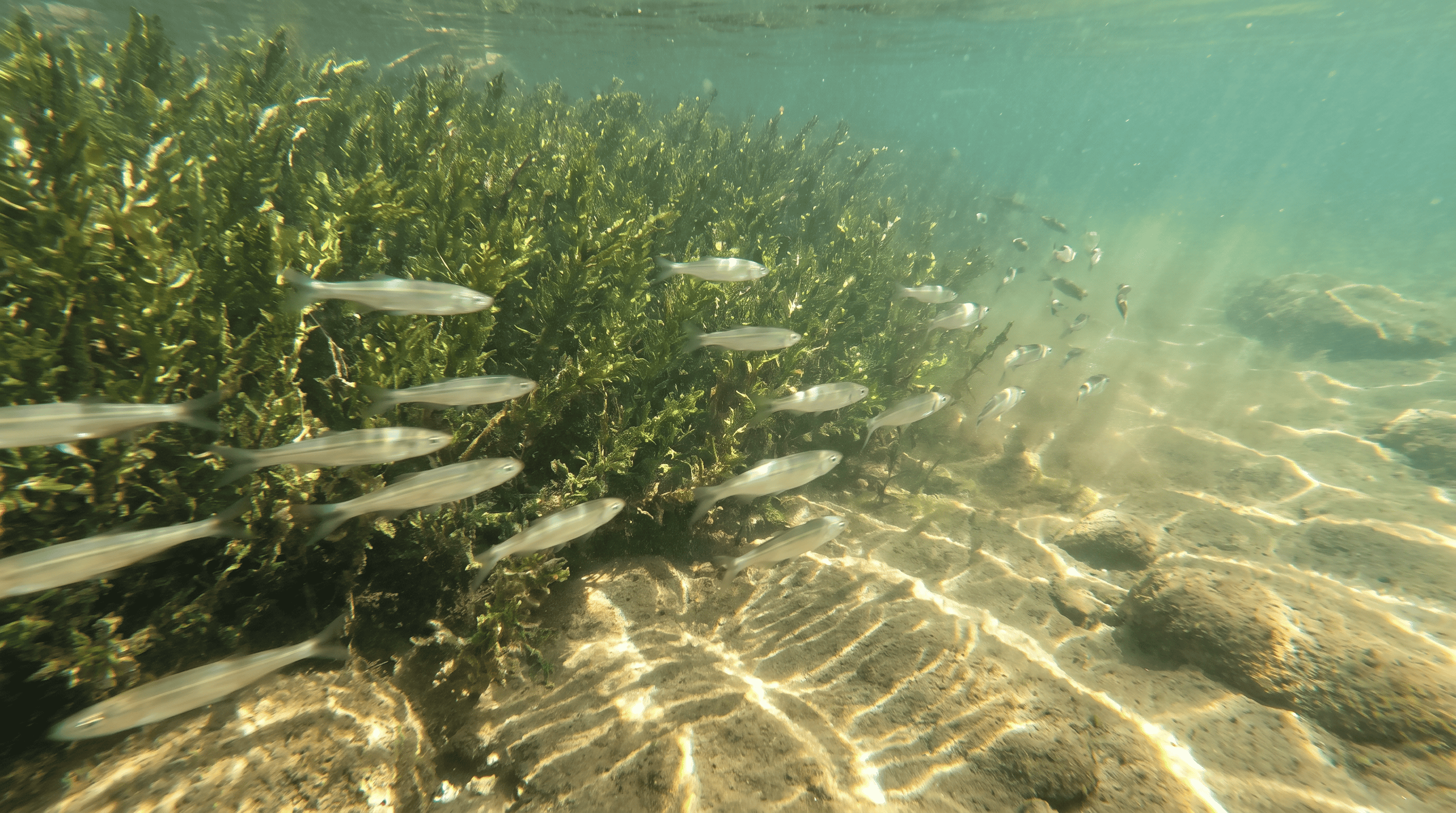
Those remaining plants still give cover and support food. Minnesota DNR notes that aquatic vegetation is basic fish habitat — insects, minnows, young fish, and predators all use it.
So if ninety yards of shoreline is brown and falling apart and one little point still has firm green plants, I want to know what’s going on around that point before I leave the whole bay.
Do not turn oxygen into a magic explanation
Decaying organic material can use up dissolved oxygen as microorganisms break it down. EPA and USGS both document that process, especially where a lot of organic material decomposes in warm or poorly mixed water.
That does not mean every brown weed bed is an oxygen desert.
Water movement, temperature, depth, plant density, time of day, lake productivity, and mixing all matter. By fall, cooling and wind can also increase mixing. Fall turnover is its own subject.
On the water it’s simpler. If a dying bed looks stagnant, smells bad, has no bait, and gives you nothing, don’t invent a reason to stay. Go check healthier vegetation or water that’s moving better.
The remaining edge may have moved
Summer fishing teaches you an outside weed edge at twelve feet.
Then fall shows up, and some of the deeper vegetation can thin out or disappear as light, temperature, and water conditions change (and some species just quit earlier). The edge that matters may end up shallower, patchier, or tied to a different plant.
Don’t keep casting at the old spot because it was good in August.
Use a lure, electronics, or your eyes to find where living plants actually stop now. If the weeds come back crisp in one area and mushy in another, that’s a real difference worth mapping.
A Weed Bed Has Edges Inside the Edge explains the summer layout. In fall, some of those edges disappear and new ones show up.
Bait gets a vote
A beautiful patch of green plants with nothing alive around it is still only one clue.
Watch for minnows flicking at the surface, bluegill tucked into openings, perch on the screen, or birds working nearby. Anything that says food is using what cover is left.
A patch with cover, clean water, and bait has more going for it than a patch that’s just green.
This is where fall lake fishing can actually get simpler. The fish don’t need every summer acre of weeds to stay useful. They need enough habitat and food to make a smaller area worth using.
A falling lure can tell you what the plants cannot
Vegetation changes how a lure falls.
A jig dropping through healthy stalks may tick, hang for a second, then fall again. In collapsing weeds it’s more likely to bury in loose junk and come back fouled. A moving bait can run clean over one patch and load up instantly over the next.
Pay attention to that feel, not just what’s on the hook when it comes back. The lure is sampling the bed for you.
If one line stays clean enough to fish and another fouls every cast, the clean line may be the better place even before a fish agrees.
Cold mornings can change when the shallows matter
Fall doesn’t automatically mean “deep.”
Cooling water can pull bait and predators through shallow vegetation, especially when sun warms a protected area or wind pushes food toward a bank. Other days the shallows are empty and the fish sit farther out.
Fish the conditions in front of you. The fishing-windows piece is worth a look here, because the best hour can slide later as mornings get colder.
Dawn has excellent marketing. The lake is allowed to prefer 11:20.
One warm afternoon does not bring July back
A sunny fall afternoon can warm a shallow bay and make the leftover weeds look alive again. That can move bait and predators shallow for a while. It doesn’t mean the whole summer pattern is back.
Figure out what changed during the day. Did the protected water warm up, or did wind push into the bay? Did bait show up? Did one green patch start producing while the brown bed stayed dead? A short window is useful if you know it’s a window. Carrying it into the next cold morning as a permanent rule is how yesterday starts bossing around today’s lake.
Leave the dead bed when it stops earning casts
Nobody hands out a prize for proving fish can live in ugly vegetation.
If the plants are collapsing, your lure can’t fish clean, there’s no bait, and pass after pass shows nothing, move.
Start with the nearest healthy vegetation, then compare it with the first hard-bottom transition or open water still connected to the old bed. You’re following whatever the dying weeds uncovered, not working down a checklist.
Fall shrinks some habitat and uncovers other pieces. What’s worth your attention is which ones you’ve still got, not whether the July map is still right.
The green patch isn’t automatically where the fish are.
It’s just a better question than a hundred yards of brown.
FIELD OBJECT
This one should leave the page.
The article is the long version. These are the pieces worth carrying into the next trip.
The 30-second version
Fall weeds don't die all at once. A green patch with bait around it can be worth a lot more than the brown bed it's sitting in.
What to watch
- Green and brown are different clues
- Do not turn oxygen into a magic explanation
- The remaining edge may have moved
- Bait gets a vote
Field card
- Green and brown are different clues
- Do not turn oxygen into a magic explanation
- The remaining edge may have moved
- Bait gets a vote
- A falling lure can tell you what the plants cannot
RIGHT TOOL, NEXT
Species & Presentation
Carry the species behavior and presentation question into a narrower water-to-fish-to-presentation handoff.