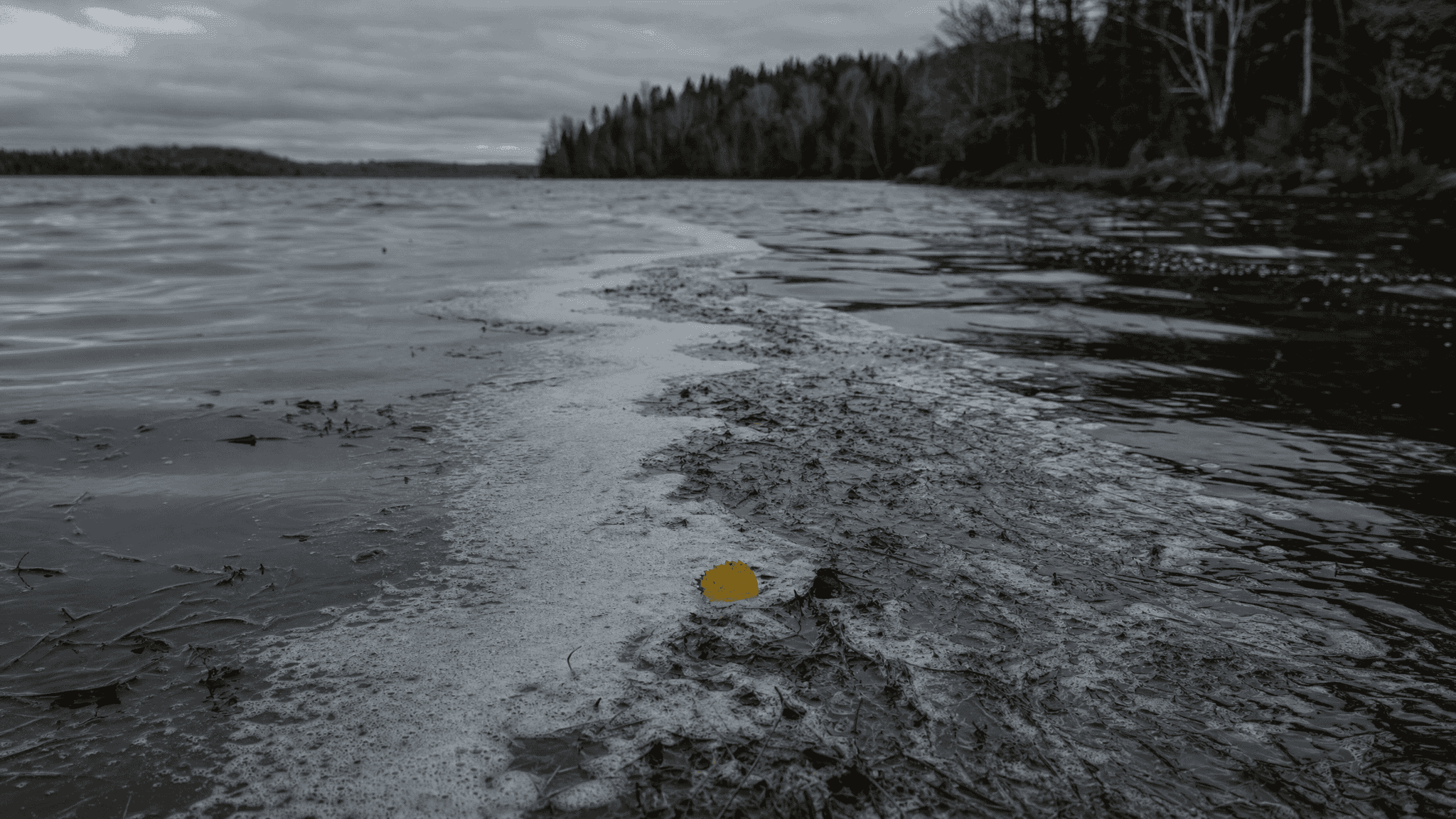
The spot that carried you all summer goes quiet sometime in early fall, and nothing on the surface explains why. A lake can fish consistently through September and then seem to shut off inside a couple of days. Same lure, same water, same depth that had been money for months, and nobody’s home. When the surface gives you no obvious clue, put turnover on the suspect list before you start blaming every piece of tackle you brought.
FIELD PLATE · DEPTH
Depth, path, and speed are one presentation.
If that’s what’s going on, the usual adjustments won’t do much. A different lure or a different time of day doesn’t touch a problem that’s happening to the whole lake at once.
Summer stacks the lake
Through summer, most lakes settle into layers. On top sits a warm, well-mixed layer. Under it is a transition band called the thermocline, where temperature drops fast, and below that is cold bottom water that’s often short on oxygen.
Warm water is lighter than cold water, and that’s what keeps those layers apart all summer. Fish and oxygen mostly concentrate in the upper layers, and the thermocline itself is often right where suspended fish and forage end up holding.
Then the whole thing mixes
As the air cools in fall, the surface layer cools and gets denser. Once the surface water gets close enough in temperature to the deep water, the whole column can mix top to bottom, and wind helps drive it.
That mixing hauls oxygen-poor, nutrient-heavy bottom water up through the lake. If you’ve spent the summer using the lake’s temperature and oxygen structure like a map, turnover redraws that map and doesn’t bother telling you.
The thermocline you were relying on is temporarily gone, and oxygen levels are all over the place. Fish that had settled into predictable depth bands scatter or just go inactive while everything settles back down.
Your August depth doesn’t mean much now
Fishing one depth all summer made sense because that’s where the thermocline sat. Turnover wipes that structure out. The fish probably aren’t gone — the map you were using to find them changed underneath you.
That’s not the same as a slow day from a pressure swing or a cold front. It’s a real, if temporary, disruption to how the whole lake is put together.
A turnover week has a way of making you second-guess every lure you trusted all summer. Leave those lures alone. They weren’t wrong in August, and they’ll be useful again once you find where the lake put everything this time.
From the bank
Some lakes show it plainly: clarity changes fast, there’s a smell, and sediment and debris stirred off the bottom come up to the surface. Other lakes show almost nothing. On those, the only real tell is that a depth and pattern that worked all summer stops producing in early-to-mid fall for no reason you can see.
Riding it out
While turnover’s actively happening, fishing tends to be genuinely rough through the whole water column. Accepting that beats burning through every lure you own trying to argue with it.
Once the lake finishes mixing and settles back out — which can take anywhere from days to a couple of weeks depending on the lake’s size and the weather — fish typically redistribute into new fall patterns, often shallower than where they sat all summer, because the whole column cooled evenly.
In the meantime, shallower water, moving water and structure that doesn’t depend on a thermocline existing are better bets than going back to the depth that worked in August.
Every lake does this on its own schedule
When turnover shows up and how hard it hits varies with a lake’s depth, size, latitude and weather. The smaller, shallower lakes I fish have turned over faster and less dramatically than the bigger, deeper water, which is worth knowing but isn’t a promise about the next lake.

So before you reorganize the tackle box, check the calendar and a thermometer. Turnover is a whole-lake condition first and a lure problem a distant second, and it sits with temperature, wind and the rest of the seasonal slide in fishing conditions.


You must be logged in to post a comment.